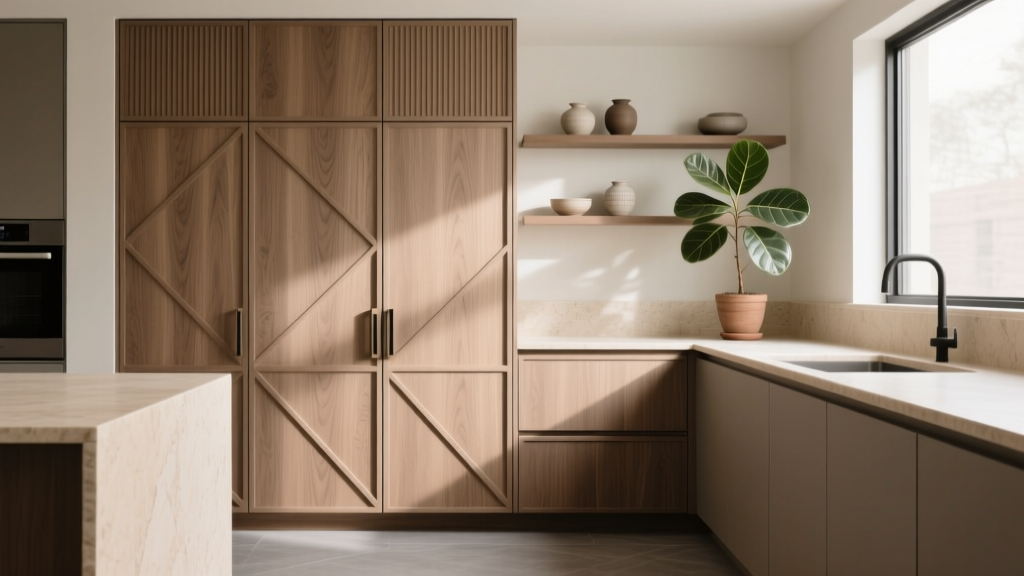
Kitchen Textured Cabinet Door Trends - The Decor Mag
Cabinet doors take up more visual real estate than almost anything else in a kitchen. When you swap a flat slab for a textured cabinet door, the entire room can feel richer, more custom, and more intentional—without necessarily changing your layout or major appliances. Texture also helps a kitchen look “designed,” even when you’re sticking to a simple color palette and practical finishes.
Today’s kitchen design trends lean into warmth, tactile materials, and layered neutrals. Textured cabinet doors deliver that character while still supporting timeless functionality principles: durable surfaces, easy-to-clean finishes, and layouts that work for real life. Whether you’re planning a full kitchen renovation or updating a few elements, the right cabinet door texture can bridge modern style and everyday practicality.
This guide covers the most popular textured cabinet door trends, where they work best, what they cost, and how to avoid common mistakes—plus practical measurements, material comparisons, and maintenance advice homeowners can use right away.
What “Textured Cabinet Doors” Mean (and Why They’re Trending)
Textured cabinet doors add physical or visual depth through grooves, relief, grain, weave, or layered materials. Unlike decorative hardware alone, door texture affects how light moves across your cabinetry—reducing the “flat wall of cabinets” effect that can make kitchens feel boxy.
Why homeowners are choosing texture
- Warmth in modern kitchens: Texture softens clean lines and minimal palettes.
- Better at hiding everyday wear: Light texture can disguise minor fingerprints and micro-scratches compared to glossy flat doors.
- Custom look without custom pricing (sometimes): Options like thermofoil reeding or textured laminates can mimic high-end millwork.
- Pairs well with mixed materials: Think quartz + wood tones, or painted uppers with textured base cabinets.
Top Kitchen Textured Cabinet Door Trends for 2026
1) Reeded (Fluted) Cabinet Doors
Reeded or fluted doors feature vertical (most common) or horizontal grooves. This trend has moved from furniture to full kitchens because it reads upscale while staying relatively neutral.
Where it works best:
- Kitchen islands (statement piece without overwhelming the room)
- Pantry wall or tall cabinet bank
- Accent uppers (especially in smaller kitchens)
Practical design guidance:
- Groove depth: Subtle reeding (around 1/16"–1/8" relief) is easier to clean than deep grooves.
- Orientation: Vertical reeding visually increases ceiling height; horizontal can widen a narrow kitchen but shows dust more easily.
- Lighting: Under-cabinet lighting enhances the shadow lines—plan for 2700K–3000K LEDs for a warm, flattering look.
Cost range: Expect roughly $150–$400+ per door for custom reeded wood fronts; $60–$150 per door for some semi-custom options; and $30–$90 per door for certain thermofoil/laminate reeded styles depending on brand and size.
Maintenance: Use a soft brush attachment on a vacuum for grooves, then wipe with a damp microfiber cloth. Avoid heavy waxes that can build up in channels.
2) Shallow-Groove “Micro-Shaker” and Slim Shaker Profiles
Shaker doors remain a timeless favorite, but the trend is moving toward slimmer rails and stiles, plus subtle beveled or micro-groove details. This is a great option if you want texture without a strong statement.
Recommended proportions (good-looking and practical):
- Rail/stile width: 1-3/4" to 2-1/2" for a modern shaker look
- Center panel: Flat or lightly textured woodgrain for durability
Best for: Transitional kitchens, family-friendly spaces, and anyone planning to stay in their home long-term.
Cost range: Typically $80–$250 per door depending on paint grade vs. stain grade, and semi-custom vs. custom.
3) White Oak and Natural Woodgrain Texture
Natural woodgrain is one of the strongest kitchen renovation trends because it brings warmth and authenticity. Rift-sawn or quarter-sawn white oak is especially popular for its consistent grain and calm movement.
Material notes:
- Rift-sawn oak: Straighter, more uniform grain; premium price.
- Plain-sawn oak: More cathedral grain variation; often more affordable.
- Textured finish option: “Wire-brushed” oak adds a tactile surface and hides small marks.
Design pairing ideas:
- Natural oak base cabinets + painted uppers (soft white, greige, or muted sage)
- Oak island + perimeter painted cabinetry
- Oak + matte black or brushed nickel hardware for a clean, modern contrast
Cost range: Wood veneer doors can start around $120–$250 per door; solid wood and premium cuts often land $200–$500+ per door. Finishing quality and veneer matching drive price.
Maintenance: Use pH-neutral soap and water. Avoid abrasive pads—wire-brushed textures can snag fibers and hold residue if scrubbed harshly.
4) Textured Laminates and 3D Thermofoil (High-Performance, Budget-Friendly)
Today’s textured laminates and thermofoil doors can convincingly mimic woodgrain, linen, cement, or soft-touch matte paint. They’re popular for busy households because they’re consistent, durable, and often more affordable than stained wood or specialty paint finishes.
What to look for:
- Thicker edge banding or wrapped edges to reduce chipping risk
- Heat-resistant ratings near ovens and dishwashers (ask your cabinet supplier how they detail those areas)
- Low-sheen matte for a modern look that hides fingerprints
Cost range: Many textured laminate/thermofoil fronts fall around $30–$120 per door, depending on size, brand, and profile.
Maintenance: A mild dish soap solution and microfiber cloth usually does the job. Avoid steam cleaning—excess heat and moisture can stress thermofoil seams over time.
5) Beaded, Ribbed, and Board-and-Batten Inspired Details
These styles add a crafted, furniture-like feel. They can read modern farmhouse, coastal, or updated traditional depending on color, hardware, and countertop selections.
Where to use them:
- Butler’s pantry cabinetry
- Wet bar or coffee station
- Lower cabinets only (to prevent the room from feeling too busy)
Cost range: Similar to specialty shaker or reeded doors—often $120–$350 per door depending on complexity and paint finish.
6) Mixed-Texture Cabinetry (Two-Tone, Two-Texture)
Mixing textures is a current kitchen design trend that also supports organization and function: it visually “zones” the kitchen. Done well, it looks custom and helps large spaces feel layered.
Easy, high-impact combos:
- Reeded island + smooth slab perimeter
- Natural woodgrain lowers + painted micro-shaker uppers
- Textured pantry wall + simple shaker elsewhere
Pro tip: Limit to two door styles and keep finishes coordinated (for example, all warm tones or all cool tones) to avoid visual clutter.
How to Choose the Right Texture for Your Kitchen Layout
Small kitchens: keep texture concentrated
- Use texture on one focal area (island, pantry, or a 30"–36" coffee station run).
- Choose shallow grooves or subtle woodgrain to avoid a busy look.
- Pair textured doors with simple hardware (slim pulls, 5"–8" centers) for clean lines.
Open-concept kitchens: consider how it reads from the living area
- Textured cabinetry adds dimension from a distance—especially with matte finishes.
- If your kitchen is visible from the entry, prioritize texture on the island face or the main cabinet wall you see first.
Practical spacing and measurement tips
- Pull size: For most drawers, choose pulls about 1/3 the drawer width (e.g., 10"–12" pulls on 30" drawers).
- Reveal consistency: Ask for a consistent door/drawer reveal (often around 1/8") so textured lines don’t look misaligned.
- Grain/groove alignment: Confirm whether reeding or grain will run continuously across adjacent doors—especially on a wide island.
Material Comparisons: What Performs Best Day to Day
- Solid wood: Beautiful and repairable; can move with humidity. Best for homeowners who value authenticity and can manage seasonal changes.
- Wood veneer over engineered core: Stable, premium look, often less movement than solid wood; quality varies by manufacturer and veneer thickness.
- Painted MDF: Smooth, stable, great for crisp profiles; edges can dent if abused. Choose durable, catalyzed finishes when possible.
- Textured laminate: Highly durable, consistent, budget-friendly; less repairable if chipped but excellent for busy kitchens.
- Thermofoil (3D wrap): Affordable and seamless; be cautious near high heat and insist on good detailing around appliances.
Budget and Cost Considerations for Textured Cabinet Doors
Costs vary widely by region, cabinet line, and whether you’re refacing, replacing, or going custom. Use these ranges to plan your kitchen renovation budget:
- Cabinet refacing with new textured doors: Often $4,000–$12,000+ for an average kitchen, depending on door count, materials, and hardware upgrades.
- Semi-custom cabinet replacement: Commonly $12,000–$30,000+ for cabinets alone, with textured styles toward the higher end.
- Custom cabinetry with specialty texture (reeded, matched veneer): Frequently $25,000–$60,000+ for cabinets, depending on size and complexity.
Where to spend (and where to save)
- Spend: Island texture, high-touch areas (trash pull-out base, main drawer banks), and durable finishes.
- Save: Use standard shaker for perimeter uppers and reserve specialty texture for one focal run.
- Smart upgrade: Add soft-close hinges and full-extension drawer glides—function is always in style.
Specific Design Recommendations: Colors, Hardware, and Countertop Pairings
Trending (but long-lasting) color directions
- Warm whites: Creamy off-whites that complement woodgrain
- Greige and putty neutrals: Great for textured doors because shadows read softly
- Muted greens and blue-grays: Works especially well on micro-shaker or reeded profiles
- Natural oak tones: From pale Scandinavian to medium, honeyed finishes
Hardware that suits textured doors
- Reeded/fluted: Simple bar pulls, edge pulls, or minimal knobs so the texture is the star.
- Traditional textures (beaded, batten): Classic knobs or cup pulls in brushed nickel, unlacquered brass, or oil-rubbed bronze.
- Tip: Use a hardware template and align pulls consistently—texture can make crooked hardware more obvious.
Countertops and backsplash ideas
- Textured doors + busy stone: Keep one element calmer. If your countertop has strong veining, choose subtler cabinet texture.
- Textured doors + simple quartz: A perfect pairing for a modern, clean kitchen design.
- Backsplash: Handmade-look tile, vertical stack tile, or slab backsplash can complement texture without competing.
Maintenance and Cleaning Tips for Textured Cabinet Doors
- Weekly: Wipe doors with a microfiber cloth and mild soap solution; dry immediately to protect finishes.
- Grooves and reeding: Use a soft detailing brush (or an old soft toothbrush) for crumbs and dust.
- Avoid: Abrasive scrubbers, harsh degreasers, bleach sprays, and excessive water at seams.
- Protect high-wear zones: Add clear bumpers, and consider a durable matte finish around trash/recycling pull-outs.
Common Mistakes to Avoid
- Using heavy texture everywhere: Too much pattern can make the kitchen feel smaller and visually noisy. Concentrate texture on one or two zones.
- Ignoring cleanability: Deep grooves near the cooktop can collect grease. Use subtle texture around cooking zones and save deeper profiles for islands or pantries.
- Mismatched undertones: Warm oak + cool gray paint can look “off.” Match undertones across cabinets, floors, and countertops.
- Skipping sample testing: Always view a door sample in your kitchen lighting (day and night). Texture changes dramatically under warm vs. cool LEDs.
- Not confirming grain/groove direction: Ask how doors are produced so you don’t end up with inconsistent reeding or grain on adjacent fronts.
- Overlooking ventilation and moisture control: Texture won’t save cabinets from steam damage. Use a vent hood that’s properly sized and vented to protect your investment.
FAQ: Kitchen Textured Cabinet Doors
Are textured cabinet doors harder to clean?
Some are. Subtle woodgrain and micro-shaker profiles clean almost like flat doors. Deep reeding or heavy beading takes more time because dust and cooking residue can settle in grooves. If easy maintenance is a priority, choose shallow relief and use texture mainly on the island or pantry.
Do textured cabinet doors make a kitchen look dated?
Not when the texture is paired with simple lines and a cohesive palette. Reeded fronts, slim shaker styles, and natural oak grain are current kitchen design trends that also reference classic millwork. Avoid overly ornate profiles if you want a long-lasting look.
What’s the most budget-friendly way to get the textured cabinet look?
Cabinet refacing with new textured doors is often the most cost-effective approach, especially if your cabinet boxes are in good condition. Textured laminates or thermofoil can deliver a similar visual effect to custom millwork at a lower price point.
Do textured cabinet doors work in a modern kitchen?
Yes. Pair reeded or woodgrain texture with slab-like silhouettes, minimal hardware, and matte finishes. The contrast of clean shapes plus tactile surfaces is a hallmark of modern kitchen renovation design.
What texture works best for resale value?
Slim shaker and natural woodgrain (especially white oak) tend to have broad appeal. If you want something bolder like deep fluting, consider using it on the island only so the kitchen still feels flexible to future buyers.
Next Steps: How to Plan Your Textured Cabinet Upgrade
Start by identifying the one area where texture will make the biggest impact—often the island, a tall pantry run, or a coffee station. Order door samples in your top two to three finishes, test them in your actual lighting, and decide whether your best path is refacing or full cabinet replacement. Then coordinate hardware, countertop movement (veining or pattern), and backsplash texture so each element has room to shine.
Ready for more kitchen design ideas, renovation planning tips, and organization upgrades? Explore more inspiration and practical guides on thedecormag.com.
More Articles
 Kitchen Reeded Glass Cabinet Ideas - The Decor Mag
 Best Kitchen Wrap Storage Solutions - The Decor Mag
 Best Kitchen Oil and Vinegar Storage - The Decor Mag
 Kitchen Curved Architectural Details - The Decor Mag
 Kitchen Marble Countertop Pros and Cons - The Decor Mag
 Kitchen Terrazzo Floor Tile Guide - The Decor Mag
 Best Kitchen Faucet Styles for 2026 - The Decor Mag
 Best Kitchen Specialty Tool Organization - The Decor Mag
 Best Kitchen Lazy Susan Options - The Decor Mag
 10 Sustainable Kitchen Swaps for 2026