Best Kitchen Ladder for High Shelf Access - The Decor Mag
Open shelving, ceiling-height cabinets, and statement range hoods have pushed kitchen storage upward—beautiful for a renovation reveal, but not always friendly for daily life. If you’ve ever balanced on a chair to reach a Dutch oven, seasonal serving platter, or extra paper towels, you already know why the right kitchen ladder matters. It’s not a luxury accessory; it’s a safety upgrade and an organization tool that helps you use every inch of your kitchen storage.
Today’s kitchens blend modern design trends (tall cabinetry, mixed materials, minimalist fronts) with timeless functionality principles (clear work zones, efficient storage, safe circulation). A well-chosen kitchen ladder supports both. The best option for your space depends on your layout, storage height, and how frequently you access upper shelves—plus how much you want the ladder to contribute to the overall decor.
This guide breaks down the best kitchen ladder types for high shelf access, what to measure, what materials perform best in a kitchen renovation, and how to avoid common mistakes. You’ll also find cost ranges, maintenance advice, and practical product-style recommendations so you can choose confidently.
Why a Kitchen Ladder Beats a Stool (and a Chair)
Many homeowners start with a step stool, but kitchen ladders—especially those designed for cabinetry—offer stability and reach that typical stools can’t match. Chairs are the worst option: narrow balance points, slippery feet, and no handhold make them a frequent cause of falls.
- Safer access: Wider steps, better grip, and often a handrail or top cap for support.
- Better reach: Designed to get you to upper cabinets and high shelves comfortably.
- Improved organization: When reaching items is easy, you’re more likely to store them where they belong—up high and out of the way.
- Design-friendly: From minimalist aluminum to warm wood, ladders can complement cabinetry and hardware finishes.
Types of Kitchen Ladders (Which One Fits Your Layout?)
1) Rolling Library-Style Ladder (Rail-Mounted)
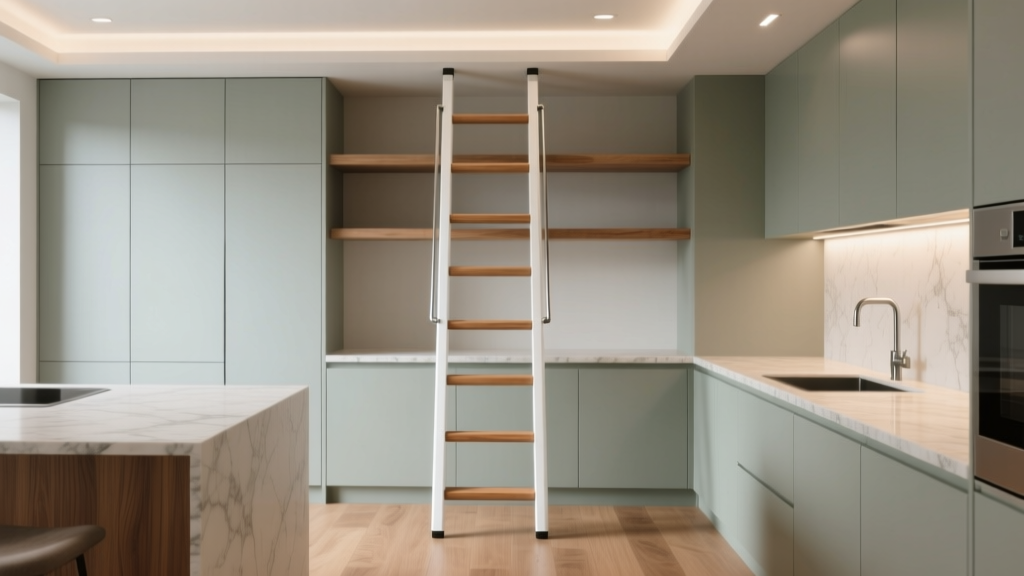
The classic choice for ceiling-height cabinets and pantries, rail-mounted rolling ladders are a staple in custom kitchen design—especially in renovations that maximize vertical storage.
- Best for: Long cabinet runs, tall pantry walls, wall-to-wall storage, kitchens with 9–12 ft ceilings.
- How it works: A ladder hooks to an upper rail and rolls side-to-side; many designs also pivot outward for climbing.
- Design bonus: Adds a tailored, architectural look—popular in transitional, modern farmhouse, and classic kitchens.
Cost range: $400–$1,500+ for ladder + rail hardware (custom finishes can exceed $2,000). Installation costs typically add $150–$500 depending on wall blocking and cabinet construction.
2) Folding Step Ladder (Slim, Storable)
For most homeowners, a high-quality folding step ladder is the most practical kitchen organization solution: stable, affordable, and easy to tuck into a pantry or between appliances.
- Best for: Standard cabinets (up to 8–9 ft ceilings), renters, smaller kitchens, occasional high-shelf access.
- Look for: Wide steps, a locking hinge, and rubber feet for tile or hardwood floors.
Cost range: $40–$180 for a solid household model; premium slim designs and specialty finishes run $150–$300.
3) Built-In Pull-Out Toe-Kick Step (Hidden, Always There)
A pull-out step integrated into the toe-kick area gives you a discreet boost—perfect for quick access without storing a ladder.
- Best for: Families, everyday access to upper cabinets, kitchens where floor space is tight.
- Limitations: Usually provides a modest lift (not ideal for very tall cabinets).
Cost range: $200–$700 per pull-out step (more if custom cabinetry modifications are needed). Great to plan during a kitchen renovation rather than retrofitting later.
4) Countertop Step/Platform (Low Rise, High Stability)
If your main issue is reaching the second shelf of upper cabinets (rather than the ceiling), a low platform ladder can feel more stable than a tall A-frame.
- Best for: Quick daily grabs, short users, kitchens with frequently used items stored slightly above reach.
- Watch for: Non-slip tread and a wide stance.
Cost range: $30–$120.
What to Measure Before Buying a Kitchen Ladder
A ladder that “looks right” can still be awkward—or unsafe—if it doesn’t match your ceiling height, cabinet depth, and clearance. Use these measurements to narrow your choices.
Key Measurements (Take These First)
- Highest reachable shelf height: Measure from finished floor to the shelf you want to access (often 84–108 inches in modern kitchens with stacked uppers).
- Ceiling height: Common renovation heights are 8 ft (96 inches), 9 ft (108 inches), and 10 ft (120 inches).
- Clearance in front of cabinets: You need space to set up and climb without blocking key work zones.
- Toe-kick height and depth: Typically 3.5–4 inches high and about 3 inches deep; important for pull-out steps and to confirm ladder feet placement.
Practical Sizing Tips
- For folding step ladders: A 3-step ladder typically reaches shelves around 8 ft for many users; a 4-step ladder is better for 9 ft ceilings or stacked cabinets.
- For rail ladders: Aim for a ladder length that lets you stand comfortably without needing the top rung. Many kitchen installs use ladders around 7–10 ft long depending on ceiling and rail placement.
- Plan for aisle width: In a renovation, a 42-inch work aisle is a strong target; if your ladder needs to open in that aisle, consider a rail ladder or a very slim folding model stored nearby.
Best Materials for Kitchen Ladders: Pros, Cons, and Style
Kitchens are humid, splatter-prone, and high-traffic. Material choice affects maintenance, longevity, and how well the ladder blends with cabinetry and hardware.
Wood (Oak, Beech, Maple)
- Pros: Warm, furniture-like look; pairs beautifully with natural wood tones, fluted islands, and classic millwork; can be stained to match cabinetry.
- Cons: Can scuff; sensitive to water if finish is poor; heavier than aluminum.
- Best for: Rolling library ladders, design-forward kitchens, timeless traditional or transitional renovations.
- Maintenance: Wipe with a damp cloth; avoid soaking. Re-wax or touch up clear coat as needed in high-use households.
Aluminum
- Pros: Lightweight; rust-resistant; easy to clean; great for folding ladders used frequently.
- Cons: More utilitarian look (though matte black or champagne finishes are increasingly stylish).
- Best for: Modern kitchens, small kitchens, everyday functional use.
- Maintenance: Clean with mild soap; avoid abrasive pads that scratch finishes.
Steel (Powder-Coated)
- Pros: Very sturdy; sleek look; stable under heavier loads; pairs well with industrial, modern, and mixed-metal hardware trends.
- Cons: Heavier; may chip if banged; can show wear at corners.
- Best for: Rolling ladder hardware, statement ladders in larger kitchens.
- Maintenance: Touch up chips to prevent rust; keep rolling tracks clean of dust and grease.
Product-Style Recommendations (Choose by Use Case)
Rather than chasing a single “best” model, match the ladder to how you live in the kitchen—especially if you’re planning a kitchen renovation and want storage that stays functional for decades.
Best for Ceiling-Height Cabinets: Rail-Mounted Rolling Ladder
- Choose: Wood ladder with a durable clear coat or stain + powder-coated rail hardware.
- Design tip: Match rail finish to cabinet hardware (matte black, brushed brass, or polished nickel are common in current kitchen trends).
- Budget: $700–$2,000 installed for most mid-range setups.
Best for Small Kitchens: Slim Folding 3-Step Ladder
- Choose: A ladder under 2.5–3 inches folded depth to slide beside a fridge or pantry wall.
- Design tip: Matte white blends into bright kitchens; matte black complements modern hardware and black window frames.
- Budget: $60–$200.
Best for Families: Wide-Step Folding Ladder with Safety Top
- Choose: Wide, stair-like steps (around 3–4 inches deep or more) and a stable top platform.
- Design tip: Store it in a pantry “ladder garage” (a narrow cabinet bay) during a renovation.
- Budget: $100–$250.
Best Built-In Option: Pull-Out Toe-Kick Step at a Key Zone
- Choose: Install near the pantry or the cabinet run where you store rarely used appliances.
- Design tip: Pair with interior cabinet pull-down shelves to reduce climbing altogether.
- Budget: $250–$900 depending on cabinetry and hardware.
Kitchen Design Tips to Make High Storage Easier (With or Without a Ladder)
Current kitchen design trends love verticality, but smart organization makes it livable. Combine your ladder plan with these upgrades for a kitchen that feels elevated and effortless.
- Use “high shelves” for low-frequency items: seasonal serveware, specialty bakeware, party platters, large stockpots.
- Bring everyday items down: mugs, lunch containers, daily spices should live between counter and eye level whenever possible.
- Add interior accessories: pull-down shelf inserts, pull-out trays, and vertical dividers reduce the need to climb.
- Improve lighting: under-cabinet lighting and interior cabinet LEDs help you see what you’re reaching for—especially on top shelves.
- Plan a parking spot: in a renovation, consider a 6–9 inch wide utility slot in a pantry or tall cabinet run for a folding ladder.
Budget Considerations: What You Get at Each Price Tier
- $30–$80: basic step stools and compact platforms; fine for occasional use, but check stability and weight rating.
- $80–$200: best value for most homes—sturdy folding step ladders with non-slip treads and slim storage.
- $200–$700: premium folding ladders, specialty finishes, and many toe-kick pull-out solutions.
- $700–$2,500+: rail-mounted rolling ladders with quality hardware and custom finishes; ideal for high-end renovations with tall cabinetry.
Money-saving tip: If you love the look of a rolling ladder but can’t justify the cost, choose a sleek folding ladder in a finish that matches your kitchen hardware and store it visibly in a styled corner (near a pantry end panel) as a functional decor piece.
Common Mistakes to Avoid
- Buying based on step count alone: Look at maximum standing height and top reach for your height and cabinet height.
- Ignoring floor type: Tile and hardwood demand high-quality non-slip feet; replace worn rubber tips immediately.
- Choosing style over stability: A pretty ladder with narrow steps or a wobbly hinge won’t get used—and can be dangerous.
- Placing a rail ladder without planning clearance: Make sure the ladder won’t collide with pendant lights, island seating, or appliance doors.
- Skipping a “home” for the ladder: If it’s annoying to retrieve, you’ll revert to unsafe shortcuts.
- Overloading upper cabinets: Heavy items stored high are harder to lift down safely—store cast iron and bulky appliances lower.
Maintenance and Safety: Keep Your Ladder Reliable
- Monthly quick check: tighten bolts/screws, inspect hinges, confirm feet are intact and grippy.
- Clean regularly: kitchen grease film can build up on handholds and steps—wipe with mild soap and dry thoroughly.
- For rolling ladders: vacuum or wipe the rail/track area every few weeks to prevent grit from causing rough rolling.
- Use smart habits: keep one hand free for balance, avoid twisting while holding heavy items, and step down to reposition rather than leaning.
FAQ: Kitchen Ladders for High Shelf Access
What height kitchen ladder do I need for 9-foot ceilings?
For many homeowners, a 4-step folding ladder is a practical match for 9-foot ceilings and upper cabinets that reach close to the ceiling. If you have stacked cabinets or very high shelving, a rolling rail ladder may be more comfortable for frequent access.
Are rolling library ladders safe for kitchens?
Yes—when properly installed into solid blocking or cabinet framing and paired with quality hardware. Look for secure hooks, smooth rollers, and a ladder angle designed for climbing. Professional installation is recommended in most renovation projects.
What’s the best ladder material for a modern kitchen?
Aluminum (especially in matte black or champagne) fits modern kitchens well and stays lightweight for daily use. For a warmer modern look, a wood ladder with minimal hardware pairs beautifully with natural wood cabinetry and soft white paint palettes.
Can I add a toe-kick pull-out step after my renovation?
Sometimes, but it’s easier and often cheaper to plan during the cabinet design phase. Retrofitting depends on toe-kick construction, available depth, and whether plumbing or electrical runs are in the way.
Where should I store a folding ladder in the kitchen?
Ideal spots include a pantry wall, a tall utility cabinet, or a narrow slot beside the refrigerator enclosure. In a renovation, a 6–9 inch wide “ladder bay” keeps it accessible without cluttering the layout.
How do I keep my ladder from slipping on tile?
Choose a ladder with high-grip rubber feet and keep them clean and unworn. If the feet harden or crack, replace them promptly—most quality ladders have replaceable foot caps.
Next Steps: Choose a Ladder That Supports Your Kitchen Goals
Start by measuring your highest shelf and the clearance in front of your cabinets, then decide how often you truly need upper storage access. If you’re planning a kitchen renovation with ceiling-height cabinetry, a rail-mounted rolling ladder can be a design-forward, highly functional investment. For most homes, a slim, sturdy folding step ladder in a finish that matches your hardware delivers the best day-to-day value.
Once you’ve chosen your ladder, improve your kitchen organization by reserving top shelves for low-frequency items, adding interior pull-outs where possible, and creating a dedicated storage spot so the ladder is always easy to grab.
For more renovation planning tips, kitchen design trends, and storage ideas that make everyday cooking easier, explore the latest inspiration on thedecormag.com.
More Articles
 Kitchen Arched Range Hood Design Ideas - The Decor Mag
 Meal Prep Kitchen Design: Functional Ideas (2026)
 Kitchen Natural Stone Backsplash Guide - The Decor Mag
 Modern Kitchen Design Trends for 2026 - The Decor Mag
 Kitchen Natural Light Design Tips (2026)
 Create Care and Maintenance: A Practical, Brand-Specific Guide for Modern Kitchens
 Best Kitchen Table Linen Storage - The Decor Mag
 How To Clean Fluted: A Practical, Step-by-Step Guide for Stainless Steel, Copper, and Cast Iron Cookware
 How to Incorporate Color in a White Kitchen - The Decor Mag
 Kitchen Layered Materials Design Guide - The Decor Mag