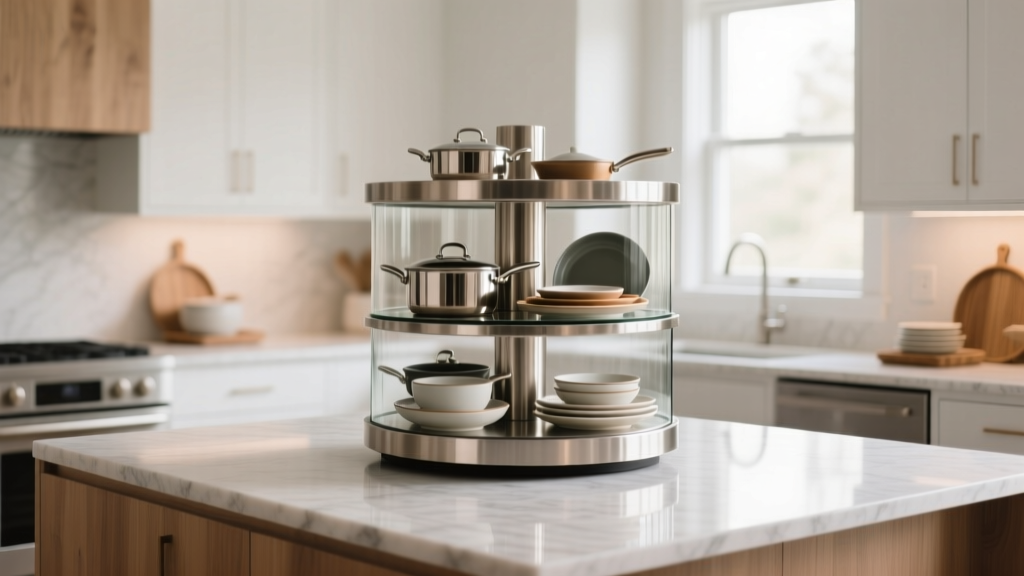
Best Kitchen Lazy Susan Options - The Decor Mag
A well-planned kitchen renovation isn’t only about beautiful cabinetry and the right countertop material—it's about how effortlessly you can use the space every day. Corner cabinets, deep base cabinets, and upper shelves can quickly become “dead zones” where items get lost, expire, or break because they’re hard to reach. That’s where a kitchen lazy Susan earns its keep: it turns awkward storage into accessible, organized real estate.
Today’s best lazy Susan options go far beyond the classic round spinner. You’ll find D-shaped trays that maximize corner capacity, kidney-shaped turntables designed for specific cabinet types, and modern pull-out systems that glide and pivot for full access. With current kitchen design trends leaning toward streamlined cabinetry, concealed storage, and clutter-free counters, a high-performing lazy Susan is one of the most practical upgrades you can make—whether you’re planning a full kitchen remodel or simply improving organization.
What a Kitchen Lazy Susan Does Best (and Where It Works)
A lazy Susan is a rotating shelf system (or turntable) that brings items forward without you reaching into the back of a cabinet. The biggest wins happen in spaces where access is limited or visibility is poor.
Best locations for lazy Susans
- Corner base cabinets (the classic use): transforms a hard-to-reach corner into usable storage.
- Upper corner cabinets: great for spices, baking supplies, or entertaining items.
- Pantry shelves: keeps oils, vinegars, sauces, and small jars organized and visible.
- Deep base cabinets: for cookware, small appliances, and bulk items.
- Countertop organization: compact turntables for coffee stations or everyday condiments (a trend-friendly alternative to cluttered trays).
What to store on a lazy Susan
- Oils and vinegars (use a tray with a raised rim)
- Spices and seasoning blends
- Nut butters, jams, condiments
- Baking supplies (vanilla, food coloring, extracts)
- Small snack packs
- Cleaning supplies under the sink (only if plumbing allows safe clearance)
Types of Kitchen Lazy Susan Options
1) Classic Round Turntable (Best for pantries and open shelves)
The round lazy Susan is the simplest and most flexible option—ideal for open shelving, pantry shelves, and even countertop zones. It’s also the easiest to retrofit because it doesn’t require cabinet modification.
- Best for: pantries, upper cabinets, countertops
- Typical sizes: 9", 10", 12", 14", 16", 18"
- Look for: non-slip surface, raised rim (1"–2"), smooth bearing
2) D-Shaped Lazy Susan (Best for standard corner base cabinets)
A D-shaped tray has a flat edge that sits near the cabinet door, maximizing storage while keeping items accessible. This is a popular choice in kitchen renovations because it makes better use of the cabinet opening than a full circle.
- Best for: corner base cabinets with a single door opening
- Typical sizes: 18", 20", 22", 24"
- Pro tip: Choose a model with adjustable height if you store tall bottles or small appliances.
3) Kidney-Shaped Lazy Susan (Best for angled corner cabinets)
Kidney-shaped lazy Susans are designed for corner cabinets with angled doors (common in older kitchen layouts). They rotate around a center pole, often in a two-tier configuration.
- Best for: diagonal/angled corner base cabinets
- Typical sizes: 24", 28", 32"
- Watch for: pole stability and shelf thickness—cheap models can wobble when loaded.
4) Pull-Out & Swing-Out Corner Systems (Best for full access and modern kitchens)
For homeowners who want maximum usability (and minimal bending), modern pull-out corner organizers are hard to beat. These systems glide out and often pivot, bringing contents completely into view. They’re trend-forward and align with today’s emphasis on ergonomic kitchen design.
- Best for: high-function kitchen remodels, aging-in-place upgrades
- Common styles: LeMans-style swing trays, Magic Corner pull-outs, blind-corner pull-outs
- Benefit: better visibility and less wasted space than many rotating center-pole designs
5) Two-Tier vs. Single-Tier Systems
Two-tier lazy Susans maximize vertical storage, but single-tier can be more practical for large cookware or tall bottles.
- Choose two-tier if: you store lots of small/medium items and have enough cabinet height.
- Choose single-tier if: you store tall oils, stand mixers, or large pots.
Material Recommendations: What Holds Up Best in Real Kitchens
Materials impact durability, cleanability, and how “finished” your storage feels—especially if you’re investing in a kitchen renovation with custom cabinets.
Wood (maple, birch, bamboo)
- Pros: warm, upscale look; matches many cabinet interiors; quieter than metal
- Cons: can stain if oils leak; needs periodic cleaning and drying
- Best for: dry goods, dishes, bakeware
- Maintenance: wipe spills quickly; use shelf liners for oils and sauces
Metal (chrome or stainless)
- Pros: durable; easy to wipe; often includes rails to prevent tipping
- Cons: can rattle; chrome can show water spots
- Best for: heavy items, pots, pantry bottles
- Maintenance: clean with mild soap; dry to prevent spotting
Plastic or acrylic
- Pros: budget-friendly; lightweight; great for quick pantry upgrades
- Cons: can warp under heat; bearings may wear faster
- Best for: spices, small jars, snacks
- Maintenance: avoid harsh abrasives; check for cracks over time
Tempered glass (less common, more decorative)
- Pros: sleek look, easy wipe-down
- Cons: heavier; can chip; less forgiving if dropped during cleaning
- Best for: countertop stations, bar/coffee setups
Measurements That Matter: How to Choose the Right Size
Choosing the right lazy Susan size is less about guesswork and more about accurate cabinet measurements. If you’re remodeling, confirm cabinet specs before ordering organizers—especially for corner base cabinets.
Quick measuring checklist
- Measure interior cabinet width and depth (not the door opening). Use a tape measure inside the cabinet box.
- Measure the door opening width to ensure items can pass through when rotated or pulled out.
- Measure cabinet height from floor to underside of countertop (for base cabinets) or shelf-to-shelf (for pantries).
- Account for hinges and door hardware that may reduce clearance.
- Leave clearance: aim for at least 1"–2" of space between the tray edge and cabinet walls for smooth rotation.
Common size guidelines
- Pantry/upper shelves: 10"–14" is often ideal for jars and spices.
- Base cabinets (standard depth): 16"–20" can work for cookware and larger items.
- Corner base cabinets: 20"–32" depending on cabinet type (D-shaped or kidney).
Best Lazy Susan Options by Kitchen Goal
For corner cabinets in a renovation: prioritize full access
If you’re already investing in new cabinetry, consider whether a traditional rotating shelf is the best long-term solution. Modern pull-out corner systems can provide better reach and less “lost” space.
- Best choice: pull-out & swing-out corner organizer with soft-close slides
- Why: everything comes forward; less bending; easier to keep organized
- Design tip: pair with full-overlay cabinet doors for a clean, trend-forward look
For quick organization upgrades: add turntables to pantry shelves
For the fastest impact without construction, use round turntables to group categories (breakfast, baking, sauces). This aligns with timeless functionality principles: visibility, accessibility, and zoning.
- Best choice: 10"–12" non-slip turntables with a 1"–2" rim
- Bonus: label the rim (or shelf edge) to keep items returning to their zone
For heavy cookware: choose sturdier bearings and thicker materials
Not all lazy Susans are made for weight. If you’re storing cast iron, Dutch ovens, or stacked pans, avoid lightweight plastic bases and look for high-quality bearings.
- Best choice: metal or thick wood tray with smooth ball-bearing rotation
- Practical tip: keep the heaviest items closest to the center to reduce wobble
For minimalist kitchens: concealed organization that still feels luxe
Current kitchen design trends favor clean counters and hidden storage. A well-fitted corner organizer keeps small appliances and pantry overflow out of sight while staying easy to reach.
- Best choice: built-in D-shaped lazy Susan or pull-out corner system
- Style tip: choose finishes that match your cabinet hardware (brushed nickel, matte black, or warm brass accents)
Cost Ranges and Budget Considerations
Lazy Susan pricing depends on size, material, and whether the system is a simple turntable or a hardware-heavy pull-out solution.
- Basic plastic/acrylic turntables (9"–14"): $10–$30 each
- Midrange wood or metal pantry turntables: $25–$80 each
- Two-tier corner lazy Susan kits (center-pole, 24"–32"): $80–$250
- Premium wood corner systems (thicker shelves, better bearings): $200–$500
- Pull-out/swing-out corner organizers (LeMans/Magic Corner styles): $350–$1,200+
- Installation (if hiring out): $75–$300 for simple installs; $200–$600+ for complex corner retrofits
Where to spend more
- Corner base cabinets (they get daily use and hold heavier items)
- Soft-close pull-out systems (better longevity and comfort)
- High-quality bearings (smooth movement under load)
Where to save
- Pantry and countertop turntables (easy to replace later)
- Secondary storage zones (rarely used items)
Installation and Layout Tips for Better Kitchen Function
- Keep categories together: assign each lazy Susan a purpose (oils, baking, snacks) to prevent “junk shelf” drift.
- Use liners strategically: for oils and sauces, add a removable liner to catch drips and protect wood.
- Mind the workflow: place everyday cooking essentials near the cooktop and prep zone, not across the kitchen.
- Don’t overload: even heavy-duty trays perform best when items aren’t stacked too high.
- Choose rims or rails: a 1"–2" rim reduces tipping, especially for tall bottles.
Common Mistakes to Avoid
- Buying based on cabinet door size, not interior size: interior dimensions determine fit and rotation clearance.
- Ignoring cabinet obstructions: hinges, face frames, and corner braces can block movement.
- Choosing the wrong shape: D-shaped for many standard corners, kidney-shaped for angled corners—don’t assume they’re interchangeable.
- Storing tall items on upper tiers: it increases tipping risk and can scrape cabinet ceilings; keep tall bottles on the lower tier.
- Skipping maintenance: crumbs and sticky spills can degrade rotation over time—clean regularly.
Maintenance Advice: Keep It Spinning Smoothly
- Monthly quick clean: remove items, wipe tray, and clean any residue in the rim or rails.
- Degrease carefully: use warm water and mild dish soap; avoid harsh chemicals on wood finishes.
- Check wobble and hardware: tighten mounting screws and confirm the center pole (if present) is secure.
- Protect surfaces: decant oils into non-drip bottles, or use a small contained bin on top of the tray for mess-prone items.
FAQ: Kitchen Lazy Susan Options
What’s the best lazy Susan for a corner cabinet?
For many standard corner base cabinets, a D-shaped two-tier lazy Susan balances capacity and accessibility. If you want the most ergonomic access (and have the budget), a pull-out/swing-out corner system provides better visibility and reach.
How do I know what size lazy Susan to buy?
Measure the interior cabinet width and depth, then choose a tray size that leaves 1"–2" of clearance around the edge for smooth rotation. For pantry shelves, 10"–12" fits most jars without wasting space.
Are lazy Susans outdated in modern kitchen design?
No—lazy Susans remain a timeless organization tool. What’s changed is the range of options: modern kitchens often use pull-out corner organizers or upgraded trays with better bearings, soft-close hardware, and finishes that match today’s cabinetry and hardware trends.
Can I install a lazy Susan in existing cabinets?
Yes. Pantry and countertop turntables are instant upgrades. Corner cabinet retrofits are also possible, but you’ll need accurate measurements and may need to work around existing hinges, face frames, or plumbing.
What material is easiest to keep clean?
Metal trays are typically easiest for wipe-down cleaning, especially for oils and sauces. Wood trays look high-end but benefit from liners and quick spill cleanup to prevent staining.
What’s better: a two-tier lazy Susan or a pull-out corner system?
A two-tier lazy Susan is usually more budget-friendly and holds a lot. A pull-out corner system is often easier to access and organize, especially for homeowners prioritizing ergonomic design and full visibility during a kitchen renovation.
Next Steps: Choose the Right Lazy Susan for Your Kitchen
Start by identifying your biggest storage pain point—corner cabinet clutter, pantry chaos, or hard-to-reach base cabinets—then measure your space and match the organizer type to your cabinet layout. If you’re renovating, consider upgrading corner storage to a pull-out system for a more modern, high-function kitchen. If you’re refreshing your current setup, add a few high-quality pantry turntables and zone your essentials for a noticeable day-to-day improvement.
For more kitchen renovation ideas, cabinet storage solutions, and organization upgrades that look as good as they work, explore the latest inspiration on thedecormag.com.
More Articles
 Best Pendant Lights for Kitchen Islands - The Decor Mag
 How to Create a Kitchen That Feels Timeless - The Decor Mag
 Minimalist Kitchen Design Essentials - The Decor Mag
 Kitchen Honed Finish Countertop Appeal - The Decor Mag
 Safety-First Bedroom Inspiration: Essential Design Principles, Verified Products, and Measured Layouts
 The Actually For Checklist: A Precision-Driven Kitchen Readiness System for Home Cooks and Professionals
 Sustainable vs. Kitchen: Rethinking Design, Appliances, and Daily Habits for Real Environmental Impact
 How to Choose Kitchen Sink Configuration - The Decor Mag
 Best Kitchen Canister Set Displays - The Decor Mag
 Kitchen Backsplash Pattern Scale: How to Choose (2026)