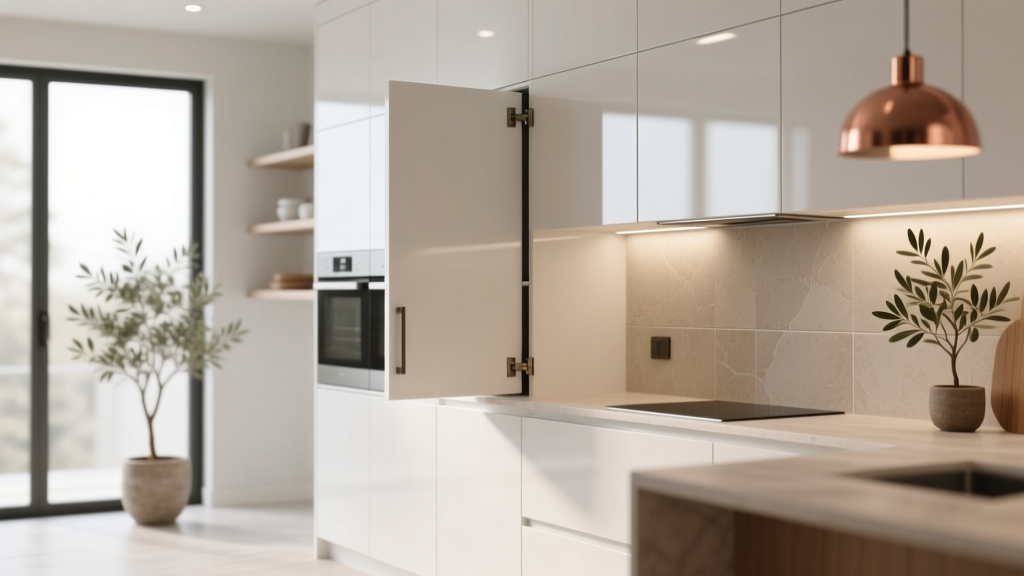
Kitchen Cabinet Soft Close: How to Choose (2026)
Soft close cabinet features have quietly become one of the most appreciated upgrades in modern kitchen design. They reduce noise, protect your cabinetry investment, and make daily routines feel smoother—especially in busy households where drawers and doors get constant use. If you’re planning a kitchen renovation or refreshing your existing space, choosing the right soft close hardware is one of those “small” decisions that pays off every day.
Beyond comfort, soft close hinges and slides also support long-term durability. They help prevent slamming, loosened screws, chipped door edges, and misalignment over time. With today’s open-concept layouts and multipurpose kitchens, reducing clatter matters more than ever—whether you’re on a video call at the island or putting dishes away while someone is sleeping.
This guide breaks down the types of soft close features, what to look for in quality hardware, how to match options to your cabinet style and layout, and how to budget wisely—so your kitchen feels as good as it looks.
What “Soft Close” Really Means (and Why It’s Not All the Same)
Soft close is a damping mechanism that slows the final few inches of a cabinet door or drawer’s closing motion, pulling it gently shut. The key difference between products is where the damper lives and how it’s tuned.
- Soft close hinges control cabinet doors.
- Soft close drawer slides control drawers (and often have the biggest “wow” factor).
- Add-on dampers can be installed after the fact for certain cabinets, but they’re usually less seamless.
Current kitchen design trends lean toward clean lines, minimal hardware, and better organization—making quiet, high-performing cabinet hardware a timeless functional upgrade that supports the look.
Soft Close Doors: Choosing the Right Hinges
1) Integrated Soft Close Hinges (Best All-Around Choice)
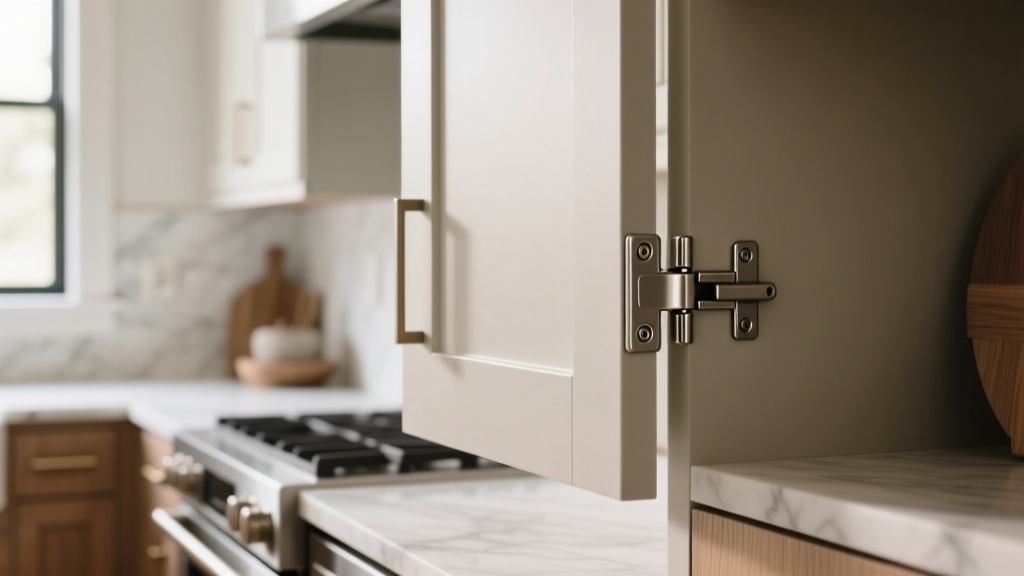
Most quality kitchen cabinets today can be specified with concealed European-style hinges with built-in soft close. These are durable, adjustable, and clean-looking—ideal for both contemporary and transitional kitchens.
Look for:
- 3-way adjustability (side, depth, height) for perfect door alignment
- Clip-on hinge design for easier door removal during painting or deep cleaning
- Switchable damping (on/off toggle), helpful for very light doors or narrow cabinets
Typical hinge specs: Many standard cabinet doors use a 35 mm cup hinge. Your cabinet maker or installer will confirm overlay and mounting plate needs.
2) Face-Frame vs. Frameless Compatibility
Soft close hinges must match your cabinet construction:
- Frameless (European-style) cabinets: very common in contemporary kitchen renovations; hinge mounting is straightforward.
- Face-frame cabinets: common in traditional and shaker kitchens; require face-frame compatible plates or specific hinge types.
If you’re replacing hinges on existing cabinets, remove one door and take photos of the current hinge and mounting location—this helps you match overlay and avoid drilling mistakes.
3) Full Overlay, Partial Overlay, and Inset Doors
Door style affects hinge selection and cost:
- Full overlay: popular in modern kitchens; fewer visual seams; typically easy to spec.
- Partial overlay: more traditional; may use different hinge geometry.
- Inset: premium look; doors sit flush within the frame; requires tighter tolerances and careful hinge choice (often higher cost).
Practical tip: Inset doors look tailored, but they’re less forgiving. Soft close helps prevent repeated tapping against the frame, but the door alignment must be dialed in precisely.
Soft Close Drawers: Slides, Weight Ratings, and Daily Performance
1) Undermount Soft Close Slides (Top Choice for Renovations)
Undermount slides are hidden beneath the drawer box, creating a cleaner look and smoother feel. They’re a favorite in current kitchen cabinet trends because they pair well with deep, wide drawers and streamlined hardware.
Best for: Base cabinet drawers, trash pull-outs, pot-and-pan drawers, and wide storage drawers.
What to check:
- Full extension (you can access the back of the drawer easily)
- Soft close action that engages consistently even with light loads
- Weight rating: common ratings are 75 lb for general use and 90–100+ lb for heavy-duty storage
Drawer box considerations: Many undermount systems require specific drawer dimensions (often a particular bottom clearance and back notch). If you’re ordering new cabinets, your cabinet supplier will build drawer boxes to suit the slide system. If you’re retrofitting, confirm compatibility before buying.
2) Side-Mount Soft Close Slides (Budget-Friendly and Versatile)
Side-mount slides are visible on the sides of the drawer and often easier for DIY upgrades. They can still perform beautifully if you choose a quality product with a reliable damper.
Best for: Utility drawers, pantry drawers, or budget-conscious kitchen upgrades.
Trade-offs: Slightly less refined look than undermount; can feel less “buttery” depending on brand and installation accuracy.
3) Push-to-Open + Soft Close (Modern Trend with a Learning Curve)
Handleless kitchens remain a strong trend, especially in contemporary and minimalist spaces. Push-to-open systems can be paired with soft close in some product lines, but performance varies widely and requires precise installation.
Recommendation: Consider push-to-open primarily for upper cabinets or select zones (like a coffee bar) and keep pulls/knobs elsewhere for practicality—especially in family kitchens.
Key Features to Compare Before You Buy
Damping Strength and Consistency
A good soft close should work whether the door is gently nudged or pushed more firmly. Poor-quality dampers can “bounce,” fail to catch, or close too slowly.
- For tall pantry doors, choose hinges designed for heavier doors or use additional hinges.
- For very light slab doors, look for adjustable or switchable damping to prevent sluggish closing.
Adjustability and Alignment
Homes settle, cabinet doors shift, and seasons change. Hinges with micro-adjustments make it easy to fine-tune gaps and reveals without calling a pro.
Target gaps (typical): Many kitchens aim for consistent reveals around doors and drawers—often around 1/8 inch depending on style and manufacturer.
Finish and Corrosion Resistance
In kitchens, steam and cleaning products are tough on hardware. Choose corrosion-resistant finishes and reputable brands for long-term performance. This matters especially near dishwashers, sinks, and trash pull-outs.
Noise Level and “Feel”
If possible, test a showroom kitchen or ask your cabinet supplier for a sample door/drawer. The best systems feel controlled and quiet without being stiff.
Materials and Cabinet Construction: What Works Best with Soft Close
Cabinet Boxes
- Plywood boxes: strong screw-holding; great for slide mounting; often preferred in mid-range to high-end kitchen renovations.
- Furniture-grade MDF or particleboard: common in budget lines; can still work well with soft close if properly engineered and installed, but screw holding may be less forgiving.
Doors and Drawer Fronts
- Solid wood: durable and timeless; may expand/contract slightly with humidity; soft close helps reduce stress on joints.
- Painted MDF: smooth and stable for painted shaker or slab doors; soft close prevents edge chipping from repeated slamming.
- Thermofoil/laminate: budget-friendly and easy to wipe; avoid harsh cleaners; choose quality hinges to reduce peel-risk at edges caused by impact.
Layout-Based Recommendations: Where Soft Close Matters Most
If your budget doesn’t allow soft close everywhere, prioritize zones with frequent use and heavier items.
- Trash/recycling pull-out: constant use; helps prevent cabinet wear and noise.
- Pot-and-pan drawers: heavy loads; choose higher weight-rated slides.
- Sink base: moisture exposure and frequent access; choose corrosion-resistant hardware.
- Pantry cabinets: tall doors benefit from quality hinges and correct hinge count.
- Upper cabinets near seating: reduces noise in open-concept kitchens.
Practical measurements to consider:
- Deep drawers (often 10–12 inches tall or more) are ideal for plates, pots, and small appliances—soft close improves control and prevents shifting.
- Wide drawers (30–36 inches) should use robust slides and solid drawer construction to avoid racking.
Products and Hardware Tiers: What to Expect
Specific brand availability varies by region and cabinet line, but most soft close options fall into clear tiers. When shopping, ask for the hardware line name and warranty details.
Entry-Level (Good for Light Use or Rentals)
- Soft close may feel less consistent
- Fewer adjustment features
- Best for: small kitchens, occasional-use spaces
Mid-Range (Best Value for Most Homeowners)
- Reliable dampers, smooth action
- Good adjustability and durability
- Best for: primary kitchens and family homes
Premium (For High-Use Kitchens and Design-Forward Renovations)
- Exceptional smoothness and quiet operation
- Higher weight ratings and refined motion
- Best for: large kitchens, heavy drawers, custom cabinetry
Cost Ranges and Budget Considerations
Soft close pricing depends on cabinet count, drawer count, cabinet brand, and whether you’re upgrading existing cabinets or ordering new.
- Soft close hinges: roughly $4–$15 per hinge for parts (more for specialty/inset). Many doors use 2–3 hinges; tall pantry doors may need 4–6.
- Soft close drawer slides: roughly $20–$60 per pair for mid-range; premium or heavy-duty can be $60–$120+ per pair.
- Professional installation: often $200–$800+ for a hardware upgrade project, depending on scope and local labor rates.
- New cabinets upgrade line item: soft close is sometimes included; otherwise, expect an upcharge that can range from $300 to $1,500+ across a full kitchen, depending on the cabinet package.
Budget strategy: If you’re renovating on a tight budget, choose soft close for all drawers first (biggest daily impact), then add soft close hinges to the most-used door banks.
Common Mistakes to Avoid
- Assuming “soft close” is automatically included in cabinet quotes. Ask: “Are soft close hinges and soft close slides included on every door and drawer?”
- Mismatching hinge overlay/inset requirements when replacing existing hinges. Bring a sample hinge or take detailed photos and measurements.
- Under-specifying drawer slides for heavy storage. Pot drawers and pantry pull-outs need higher weight ratings and sturdy drawer boxes.
- Ignoring door size and hinge count. Large doors need more support for alignment and longevity.
- DIY installing without precise leveling. Soft close hardware performs best when cabinets are square and doors/drawers are properly aligned.
- Overlooking moisture zones. Use corrosion-resistant hardware near sinks and dishwashers, and keep dampers clean.
Maintenance and Care: Keep Soft Close Working Like New
Soft close hardware is low-maintenance, but a few habits will extend its life—especially in high-use kitchens.
- Clean gently: Wipe hinges and slides with a dry or slightly damp microfiber cloth. Avoid saturating with water or harsh degreasers.
- Vacuum debris: Crumbs and dust can collect in drawer slide tracks. A handheld vacuum helps prevent gritty motion.
- Tighten screws annually: If a door starts to sag or a drawer feels off, check mounting screws before the issue grows.
- Don’t lubricate unless specified: Many modern slides are self-lubricating; oils can attract dust. Follow manufacturer guidance.
- Adjust, don’t force: If a door rubs or a drawer sticks, use the hinge/slides’ adjustment features rather than pushing harder.
FAQ: Kitchen Cabinet Soft Close Features
Are soft close cabinets worth it for a kitchen renovation?
For most homeowners, yes. Soft close improves everyday comfort, reduces wear on cabinet doors and drawer fronts, and supports a quieter open-concept kitchen. It’s a functional upgrade that typically adds more daily value than many decorative add-ons.
Can I add soft close to existing kitchen cabinets?
Often, yes. Many cabinets can be upgraded with replacement soft close hinges and soft close drawer slides. Feasibility depends on your current hinge style, cabinet construction (face-frame vs. frameless), and drawer box dimensions.
What’s better: soft close hinges or soft close drawer slides?
If you can only choose one, soft close drawer slides usually deliver the biggest improvement because drawers are used frequently and can slam harder—especially wide, deep drawers with dishes and cookware.
Do soft close drawers work with heavy pots and pans?
They can, as long as the slide weight rating and drawer box construction are appropriate. For pot drawers and wide drawers, look for higher weight ratings (commonly 90–100+ lb) and sturdy joinery.
Why do my soft close doors stop closing all the way?
Common causes include misalignment, loose screws, a damper toggle accidentally turned off, or a door that’s too heavy for the current hinge count. Adjusting hinges and tightening hardware usually solves it.
Does soft close hardware affect cabinet design style?
Soft close hardware is mostly hidden, so it supports nearly any kitchen design—from classic shaker to modern slab fronts. It pairs especially well with today’s streamlined, organized cabinetry trends.
Next Steps: Choose Soft Close Features with Confidence
Start by listing how you use your kitchen: where you prep, where you unload the dishwasher, and which cabinets take the most daily traffic. Then prioritize soft close upgrades for drawers and high-use doors, select the right hinge and slide types for your cabinet construction, and confirm weight ratings for heavy storage.
If you’re ordering new cabinetry, ask your kitchen designer or cabinet supplier for a written breakdown of:
- The exact hinge and slide series included
- Whether soft close applies to every door and drawer
- Warranty terms for hardware
- Upgrade costs for heavy-duty slides or inset doors
For more practical kitchen renovation advice, storage solutions, and cabinet design inspiration, explore the latest kitchen ideas on thedecormag.com.
More Articles
 Best Kitchen Appliance Cord Management - The Decor Mag
 Kitchen Hardware and Pull Trends - The Decor Mag
 Best Kitchen Baking Tool Organization (2026)
 Safety-First Bedroom Inspiration: Essential Design Principles, Verified Products, and Measured Layouts
 How to Choose Kitchen Cabinet Hinge Quality - The Decor Mag
 Best Kitchen Prep Bowl Collection Display - The Decor Mag
 Kitchen Butlers Pantry Design Guide - The Decor Mag
 Open Shelf Kitchen Styling Tips - The Decor Mag
 Best Kitchen Towel Storage Ideas - The Decor Mag
 Kitchen Arched Range Hood Design Ideas - The Decor Mag