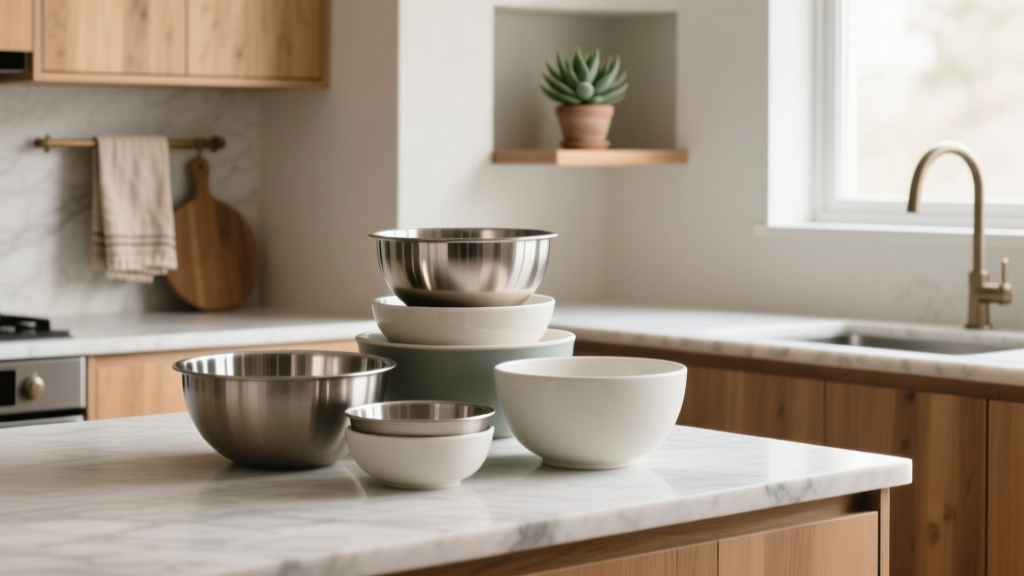
Best Kitchen Mixing Bowl Storage - The Decor Mag
Mixing bowls are the quiet workhorses of a functional kitchen. They’re used daily for prep, baking, tossing salads, marinating, and serving—yet they often end up stacked precariously in a deep cabinet, sliding around, clanging together, or blocking the very tools you need most. When kitchens feel cluttered, mixing bowls are frequently part of the problem because they’re bulky, round, and rarely come with storage-friendly shapes.
Smart mixing bowl storage is about more than tidiness. It affects workflow, cabinet efficiency, and even safety (no one wants a ceramic bowl falling from an overstuffed shelf). For homeowners planning a kitchen renovation—or simply optimizing an existing layout—getting bowl storage right can free up space, improve accessibility, and make the kitchen feel more intentional. The best solutions blend today’s kitchen design trends (clean lines, concealed storage, drawer-first planning) with timeless principles: keep everyday items near the prep zone, store by frequency, and make retrieval effortless.
Start with a Quick Mixing Bowl Audit
Before buying organizers or redesigning cabinets, take stock. The “best” storage depends on the bowl types you own and how you cook.
Measure What You Have (and Where It Will Live)
- Largest bowl diameter: Common ranges are 10–14 inches; oversized salad bowls can reach 15–17 inches.
- Stack height: A nested set of 5 bowls is often 8–12 inches tall; add lids and it can become 12–16 inches.
- Cabinet/drawer clearances: Measure interior width, depth, and height. Don’t forget face-frame lip or hinges that reduce usable space.
Choose a “Home Base” Near the Prep Zone
For kitchen organization that supports workflow, store mixing bowls close to where you chop and mix:
- Near the main counter workspace (often between sink and cooktop)
- Near prep tools (cutting boards, colanders, salad spinner)
- Close to measuring cups/spoons and baking supplies if you bake often
Best Places to Store Mixing Bowls (Layout Options That Actually Work)
1) Deep Drawers: The Most Renovation-Friendly, High-Function Choice
Deep drawers are a top current kitchen design trend because they improve visibility and accessibility compared to base cabinets. For mixing bowls, drawers prevent “cabinet archaeology” and make nested sets easy to lift out.
Ideal drawer dimensions:
- Drawer depth: 21–24 inches (standard for many base cabinets)
- Drawer height: 10–12 inches for most nested sets; 12–15 inches if you store large bowls with lids
- Drawer width: 24–30 inches gives room for bowls plus a bin for lids or accessories
Best drawer accessories for bowl storage:
- Non-slip drawer liners: Stops bowls from sliding; choose washable EVA or silicone.
- Adjustable drawer dividers: Create a “parking spot” for the bowl stack so it doesn’t migrate.
- Low-profile bins: Great for lids, small bowls, or strainers.
Budget range: $10–$40 for liners and dividers; $60–$200 for premium wood or metal drawer organization systems. If adding new drawer bases during a kitchen renovation, expect $250–$800+ per cabinet depending on brand and construction.
2) Base Cabinets with Pull-Out Shelves: A Strong Retrofit Solution
If you’re keeping existing cabinetry, installing pull-out shelves (roll-outs) turns a deep, hard-to-reach cabinet into an accessible storage zone. This works especially well for heavier stainless steel or glass bowls.
Recommended specs:
- Pull-out width: Size to your cabinet opening; common is 12–21 inches per roll-out.
- Load rating: Look for 75–100 lb full-extension slides for durability.
- Side rails: Prevent bowls from tipping during movement.
Budget range: DIY pull-out kits often cost $40–$150 per shelf; custom pull-outs can run $200–$500+ installed.
3) Open Shelving (Used Carefully): Beautiful but Not Always Practical
Open shelves are still popular in modern and transitional kitchens, especially for styling ceramics. Mixing bowls can look great on display, but only if they’re used frequently and are easy to keep clean.
Where open shelving works best:
- For a curated set of 2–3 matching bowls (not the entire collection)
- Away from the cooktop to reduce grease buildup
- On a shelf depth of 10–12 inches for stability (deeper shelves can look bulky)
Maintenance advice: Wipe shelves weekly; wash bowls before use if they collect dust. If you cook with oil often, open shelving near the range may require frequent degreasing.
Budget range: $50–$250 for basic shelving and brackets; $300–$1,000+ for custom floating shelves, depending on wood species and installation complexity.
4) Appliance Garage or Baking Zone Cabinet: Best for Bakers
If your kitchen renovation includes a dedicated baking station, store mixing bowls with stand mixer attachments, flour canisters, and baking tools. This “task-based storage” is a timeless functionality principle and a hallmark of well-designed kitchens.
Smart add-ons:
- Pull-out shelf for a stand mixer (rated 60–100 lb)
- Vertical tray divider for sheet pans, cutting boards, cooling racks
- Lidded container storage above or adjacent
Budget range: $150–$400 for mixer lift hardware; $30–$120 for tray dividers; cabinetry costs vary widely in full renovations.
Storage Systems That Keep Bowls Quiet, Protected, and Easy to Grab
Nesting + Lids: The Simplest Space Saver
If you’re buying new bowls or upgrading during a kitchen renovation, nesting sets save the most space. Look for sets with consistent angles for a tight stack.
What to look for in a nesting set:
- 3–6 bowl sizes (roughly 1 qt, 2 qt, 3 qt, 5 qt, 8 qt)
- Flat or low-profile lids (if you store leftovers)
- Non-slip bases (especially for stainless steel)
Cost range: $25–$60 for basic stainless nesting sets; $60–$150 for premium stainless or glass with lids; $80–$200+ for designer ceramic sets.
Protective Separators for Ceramic and Glass
For ceramic or glass bowls, add separators to prevent chips and scratches—especially if you store them in a drawer where movement is common.
- Felt or foam bowl protectors: $10–$25 for a set
- Microfiber cloths: A budget-friendly alternative that also reduces noise
Vertical Storage for Lids and Accessories
Lids are often what makes bowl storage messy. Keep them upright and grouped so you don’t have to unstack bowls to find a match.
Best lid storage options:
- Wire rack organizer (in drawer or cabinet): Great for assorted sizes
- Door-mounted lid rack: Uses dead space (measure door clearance first)
- File-style bin: Works for flat silicone lids
Typical cost: $15–$60 depending on material and adjustability.
Material Matters: Choosing Bowls That Store Better (and Last Longer)
Stainless Steel
- Pros: Lightweight, nearly unbreakable, nests efficiently, ideal for drawers
- Cons: Can scratch; may slide without a non-slip base; can dent
- Best storage tip: Use a non-slip liner and keep the stack in a dedicated drawer section
Glass
- Pros: Non-porous, doesn’t retain odors, often oven-safe, good for prep-to-fridge
- Cons: Heavy; can chip; needs more careful stacking
- Best storage tip: Store low (deep drawer or pull-out) and add felt separators
Ceramic/Stoneware
- Pros: Beautiful for serving, weight feels stable on counters
- Cons: Chips easily; heavy; often takes more space due to thicker walls
- Best storage tip: Display 1–2 favorites on open shelving; store the rest protected in a low cabinet
Melamine/Plastic
- Pros: Lightweight, affordable, kid-friendly
- Cons: Can stain or hold odors; may warp; not ideal for hot prep
- Best storage tip: Use as secondary bowls and keep them nested in a high cabinet if used less often
Design Approaches That Pair Style with Storage Efficiency
Drawer-First Base Cabinet Planning (Modern Trend with Timeless Benefits)
If you’re remodeling, prioritize drawers in base cabinets—especially near the main prep counter. A practical layout is:
- Top drawer: Measuring tools, prep gadgets
- Middle deep drawer: Mixing bowls + colanders
- Bottom deep drawer: Salad spinner, larger serving bowls, small appliances
Use “Zones” for Organization
Mixing bowls belong in the prep zone (near cutting boards and knives) or baking zone (near mixer and pantry ingredients). This approach reduces steps and keeps countertops clearer.
Budget Considerations: Small Upgrades vs. Renovation-Level Changes
- Under $50: Non-slip liner, felt separators, one adjustable bin for lids
- $50–$200: Better lid management, premium dividers, basic pull-out retrofit
- $200–$800+: Multiple pull-outs, high-end drawer organization, adding or converting a base cabinet to drawers
If you’re planning a full kitchen renovation, allocate a portion of your cabinet budget to interior storage. Well-chosen roll-outs and drawer systems can make standard cabinets feel custom without changing the footprint.
Common Mistakes to Avoid
- Storing bowls in the highest cabinet: Heavy or breakable bowls should live low for safety.
- Overbuying organizers without measuring: Many inserts waste space if they don’t match your drawer width and height.
- Mixing lids with random containers: Lids need a dedicated solution or they become instant clutter.
- Keeping too many duplicates: Five “medium” bowls rarely store well. Keep what you use and donate the rest.
- Ignoring noise and scratches: Glass and ceramic need separators; stainless benefits from liners.
- Blocking workflow: If bowls are stored far from prep space, they’ll end up living on the counter.
Maintenance and Longevity Tips
- Wipe drawer liners monthly: Crumbs and flour build up fast in prep zones.
- Dry bowls completely before nesting: Prevents trapped moisture and odors—especially with silicone lids.
- Check pull-out hardware annually: Tighten screws and clean slide tracks for smooth operation.
- Protect finishes: If storing in wood drawers, use liners to prevent scuffs and water rings.
FAQ: Kitchen Mixing Bowl Storage
What’s the best way to store mixing bowls in a small kitchen?
Use a single deep drawer or one base cabinet with a pull-out shelf, and switch to a nesting set. Add a slim vertical organizer for lids to prevent lid sprawl.
Should mixing bowls be stored in drawers or cabinets?
Drawers are typically better for accessibility and visibility. Cabinets can work well when upgraded with roll-out shelves, especially in rentals or partial remodels.
How much drawer height do I need for a nesting bowl set?
Plan for 10–12 inches of interior drawer height for most sets. If your bowls include tall lids or you store a colander with them, aim for 12–15 inches.
How do I prevent ceramic bowls from chipping in storage?
Use felt or foam bowl protectors between each bowl, store them in a low drawer or pull-out, and avoid overstacking. Keep heavier bowls at the bottom of the stack.
Are open shelves a good idea for mixing bowls?
They’re great for a curated display of 2–3 attractive bowls, especially in a kitchen with a warm, lived-in style. For everyday storage of the full set, drawers or pull-outs are usually more practical and easier to keep clean.
Next Steps: Upgrade Your Bowl Storage Without Overhauling the Whole Kitchen
Start by measuring your bowls and identifying the prep zone where they belong. If you want the biggest day-to-day improvement, prioritize a deep drawer (or add pull-out shelves if you’re keeping existing cabinets). Choose organizers that fit your exact dimensions, give lids a dedicated home, and protect breakable materials with simple separators. The payoff is immediate: faster prep, calmer counters, and a kitchen that feels designed around how you actually cook.
For more kitchen renovation ideas, cabinet planning tips, and organization upgrades that look as good as they function, explore the latest guides and inspiration on thedecormag.com.
More Articles
 How to Design a Kitchen for Entertaining - The Decor Mag
 Kitchen Two-Tone Cabinet Ideas - The Decor Mag
 Kitchen Slab Backsplash Seamless Look - The Decor Mag
 Kitchen Matte Black Fixture Trends - The Decor Mag
 Best Kitchen Tupperware Organization - The Decor Mag
 Kitchen Garden Connection Ideas | The Decor Mag
 Kitchen Arched Range Hood Design Ideas - The Decor Mag
 Kitchen Honed Finish Countertop Appeal - The Decor Mag
 Small Alternatives to Spaces: Smart, Space-Saving Kitchen Solutions That Actually Work
 Kitchen Fluted Detail Cabinet Trend - The Decor Mag