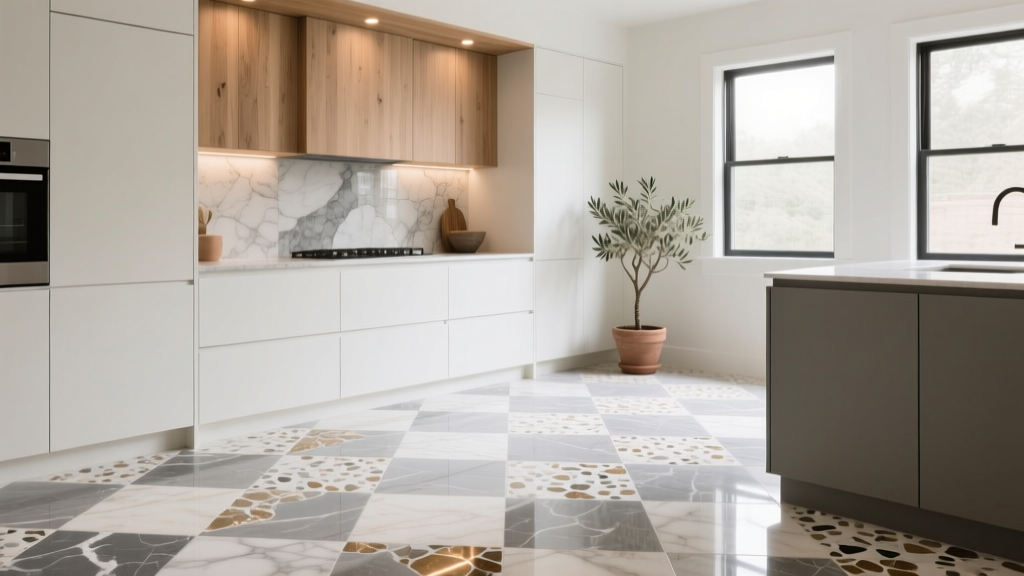
Kitchen Terrazzo Floor Tile Guide - The Decor Mag
Kitchen floors work harder than almost any other surface in the home. They handle dropped pans, rolling chairs, wet boots, splashes from the sink, and constant foot traffic—often all in the same day. That’s why choosing the right kitchen flooring isn’t just a style decision; it’s a long-term performance decision that affects cleaning routines, comfort, resale appeal, and even how “together” your whole kitchen renovation feels.
Terrazzo floor tile has returned as a favorite in today’s kitchen design trends because it checks both boxes: it’s visually striking and highly functional. The speckled, stone-like look adds depth and character (especially in open-concept kitchens), while modern terrazzo tile options offer excellent durability and a wide range of price points.
This guide breaks down what terrazzo is, what to buy, how to lay it out, and how to keep it looking sharp—plus common mistakes to avoid, cost ranges, and practical measurements to help you plan with confidence.
What Is Terrazzo Tile (and Why It Works in Kitchens)?
Terrazzo is a composite material made from chips of marble, quartz, granite, glass, or other aggregates embedded in a binder. Traditionally, terrazzo was poured in place and polished to a seamless finish. Today, most homeowners choose terrazzo-look porcelain tile or pre-cast terrazzo tiles for easier installation and predictable results.
Key benefits for kitchen renovations
- Durability: Quality terrazzo (real or porcelain) resists wear in high-traffic kitchen zones.
- Stain resistance (with the right surface): Porcelain terrazzo tile is especially forgiving with spills.
- Design flexibility: Works with modern, Scandinavian, mid-century, coastal, and classic kitchens.
- Visual “movement”: The fleck pattern hides crumbs and minor scuffs better than solid-color floors.
- Compatibility with radiant heat: Many tile installations pair well with underfloor heating.
Terrazzo vs. terrazzo-look tile
- Real terrazzo tile: Authentic, often thicker and heavier, may require sealing; premium pricing.
- Terrazzo-look porcelain tile: Highly durable, very low maintenance, consistent pattern options; usually best for busy family kitchens.
- Cement-based terrazzo tile: Gorgeous and authentic, but typically more porous; requires diligent sealing and careful cleaning.
Terrazzo Tile Materials: Which One Should You Choose?
Choosing the right material is the difference between a floor that ages gracefully and one that becomes a maintenance project.
1) Porcelain terrazzo tile (best all-around choice)
Porcelain is fired at high temperatures, making it dense and water-resistant—ideal for kitchens, mudroom transitions, and homes with pets.
- Pros: Low absorption, excellent scratch resistance, no sealing required in most cases, easy upkeep.
- Cons: Grout lines remain a cleaning factor; pattern repeats can look less organic if you don’t mix tiles from multiple boxes.
- Recommended for: Most homeowners who want the terrazzo look with minimal maintenance.
2) Cement-based terrazzo tile (high character, higher care)
Cement terrazzo can look beautifully matte and artisanal. It’s also more porous than porcelain.
- Pros: Rich, authentic appearance; soft, design-forward look that suits warm modern kitchens.
- Cons: Requires sealing (often multiple coats); more vulnerable to acids (lemon juice, vinegar) and oil stains if neglected.
- Recommended for: Design-led kitchens where homeowners are comfortable with ongoing maintenance.
3) Natural stone terrazzo (premium, often custom-feel)
Natural stone terrazzo options can be exquisite—especially large-format pieces—but typically come with higher material and installation costs.
- Pros: Luxury finish; depth and authenticity; can elevate resale appeal in high-end markets.
- Cons: Weight, cost, and sealing requirements; may need a flatter, more robust subfloor preparation.
Design Trends + Timeless Terrazzo Looks for Kitchen Floors
Terrazzo is having a moment, but it also has staying power. The most livable kitchen design choices balance current kitchen renovation trends with timeless function.
Trending terrazzo styles (that still feel classic)
- Micro-terrazzo: Tiny chips for a calmer, more minimal look—great in small kitchens.
- Warm neutrals: Cream, sand, taupe, and greige backgrounds pair well with oak cabinets and brass hardware.
- Muted color pops: Terracotta, sage, dusty blue flecks for personality without “theme” overload.
- Large-format porcelain terrazzo tiles: Fewer grout lines and a more continuous visual field.
Timeless pairings that work in real kitchens
- White shaker cabinets + grey/white terrazzo: Clean, bright, and adaptable.
- Walnut or white oak cabinets + warm terrazzo: Cozy modern; hides daily mess beautifully.
- Black cabinets + light terrazzo: High contrast that still feels grounded.
Sizes, Layouts, and Practical Measurements
Terrazzo patterns can disguise layout mistakes—until you see them every day. Use these guidelines to make the installation look intentional.
Best tile sizes for kitchen floors
- 12" x 24" (30 x 60 cm): Versatile; fewer grout lines than small squares; works in most kitchens.
- 24" x 24" (60 x 60 cm): Modern and expansive; needs a flatter subfloor to avoid lippage.
- 8" x 8" or 12" x 12": Classic, slightly busier; can look charming in cottage or vintage-inspired kitchens.
Grout joint recommendations
- Rectified porcelain: 1/16" to 1/8" grout line (check manufacturer guidance).
- Non-rectified tile: 1/8" to 3/16" grout line for consistent spacing.
- Color tip: Choose a grout color that matches the base tone (not the chips) for a calmer look and easier maintenance.
Smart layout approaches
- Dry lay and “shuffle” tiles: Mix tiles from at least 3 boxes so patterns don’t repeat in clusters.
- Center the layout on the main sightline: Often the doorway into the kitchen or the run facing the living area in open-concept homes.
- Avoid skinny cuts: Aim for at least a half-tile at visible edges. If you’ll end up with 1"–2" slivers along a wall, adjust the layout centerline.
- Plan transitions: At doorways, aim for a clean grout line or a full tile edge where flooring changes.
Slip resistance for kitchens
Look for tiles rated for wet areas. Many brands share a COF (coefficient of friction) or slip rating. As a practical approach:
- Choose matte or satin finishes over high gloss for busy kitchens.
- If you love polished terrazzo, use washable runners near the sink and range for added traction.
Product and Material Recommendations (What to Look For)
Rather than chasing a single “best” brand, focus on specs that matter for kitchen flooring performance.
Porcelain terrazzo tile checklist
- PEI rating: Look for PEI 3–4+ for residential kitchen traffic (brand labels vary, but higher is typically more durable).
- Rectified edges: Helpful for tighter grout lines and a cleaner modern look.
- Through-body or color-body porcelain: Can hide chips better than surface-only color (ask your tile shop).
- Consistent caliber and shade: Confirm dye lot and caliber match across boxes.
Grout and setting materials
- Grout: A stain-resistant grout or epoxy grout can reduce kitchen upkeep (especially near the sink, dishwasher, and exterior doors).
- Thinset mortar: Use a manufacturer-approved thinset for porcelain; large-format tile often requires a medium-bed mortar.
- Underlayment: A proper uncoupling membrane or cement backer board helps prevent cracks from minor subfloor movement.
Cost Ranges and Budget Planning
Kitchen floor tile budgets usually fail when homeowners only price the tile. Installation, subfloor prep, and trims can equal or exceed the material cost.
Typical price ranges (USD)
- Terrazzo-look porcelain tile: $4–$12 per sq. ft. (some designer lines $15+)
- Cement terrazzo tile: $10–$25 per sq. ft.
- Real terrazzo tile: $15–$40+ per sq. ft. (varies widely by aggregate and finish)
- Installation labor: $8–$20 per sq. ft. depending on region, pattern complexity, and prep
- Subfloor prep/leveling: $1–$6 per sq. ft. (more if structural fixes are needed)
Budgeting rules of thumb for kitchen renovations
- Add 10% waste for a standard layout; 15% if diagonal or lots of cuts.
- Plan for trims and transitions: Metal profiles, thresholds, and stair noses add up quickly.
- Don’t skimp on grout: Upgrading to stain-resistant grout is often a small cost increase with a big daily payoff.
Maintenance and Cleaning: Keep Terrazzo Looking New
Good maintenance should feel easy. Your cleaning approach depends on whether you choose porcelain terrazzo tile or cement/real terrazzo.
Porcelain terrazzo tile care
- Sweep or vacuum (hard-floor setting) 2–3 times per week to reduce grit that can dull finishes.
- Mop with warm water and a pH-neutral cleaner.
- Wipe spills promptly, especially coffee, red wine, and turmeric-based sauces.
- Avoid harsh abrasives that can scratch certain finishes.
Cement or real terrazzo care
- Seal as recommended (often at installation and then periodically). Ask your installer for a written schedule.
- Use a pH-neutral cleaner; skip vinegar, bleach, or acidic degreasers that can etch cement or stone.
- Use felt pads under stools and chairs to reduce micro-scratches.
Grout maintenance tips
- Choose a grout that coordinates with the base color to disguise inevitable kitchen splatters.
- Apply grout sealer if using cementitious grout (unless it’s a pre-sealed formula).
- Use a soft brush for occasional deep cleaning—avoid metal brushes.
Common Mistakes to Avoid
- Picking a bold terrazzo pattern in a visually busy kitchen: If you already have heavy veining on counters or dramatic backsplashes, choose micro-terrazzo or a quieter colorway.
- Ignoring slip resistance: Polished finishes can be slick near sinks. Consider matte tile or add washable runners.
- Underestimating subfloor flatness: Large-format tiles require a flatter floor. Uneven subfloors lead to lippage (trip hazard and visual annoyance).
- Using the wrong cleaner: Acidic cleaners can damage cement or natural terrazzo and can degrade grout over time.
- Not mixing boxes during installation: Pattern clustering can look accidental; shuffling creates a balanced, natural distribution.
- Choosing bright white grout for the kitchen: It’s a magnet for visible staining. A mid-tone grout is usually the sweet spot.
FAQ: Kitchen Terrazzo Floor Tile
Is terrazzo tile a good choice for a busy family kitchen?
Yes—especially terrazzo-look porcelain tile. It’s durable, resists stains, and handles high traffic well. Cement-based terrazzo can also work, but it needs more careful sealing and cleaning.
Does terrazzo tile make a kitchen look smaller?
Not necessarily. Micro-terrazzo patterns and lighter base colors can make a kitchen feel larger and brighter. Large-format tiles (like 24" x 24") also reduce grout lines, which helps spaces feel more open.
What grout color works best with terrazzo kitchen floors?
Match the grout to the terrazzo’s background/base tone (not the chips). This creates a more seamless look and makes everyday crumbs and splatters less noticeable.
Can I use terrazzo tile with underfloor heating?
In most cases, yes. Tile is an excellent conductor of heat. Confirm compatibility with your underfloor heating system and use the recommended underlayment and mortar.
How do I prevent terrazzo tile from looking too “trendy”?
Choose a neutral base (cream, soft grey, warm taupe), smaller-scale chips, and a classic layout. Pair it with timeless elements like simple cabinetry, warm metal hardware, and practical lighting.
Next Steps: Plan a Terrazzo Kitchen Floor That Lasts
Start by deciding whether you want the low-maintenance reliability of porcelain terrazzo tile or the artisanal character of cement/real terrazzo. Then choose a pattern scale that complements your cabinets and countertops, confirm slip resistance for wet zones, and plan your layout to avoid skinny cuts and awkward transitions.
Before you order, bring home two or three samples and view them in your kitchen morning, afternoon, and evening. Terrazzo’s chips and base tone can shift noticeably under different lighting, especially with warm LEDs versus daylight.
For more practical kitchen renovation guidance, storage and organization upgrades, and design ideas that balance trends with timeless function, explore the latest inspiration on thedecormag.com.
More Articles
 How to Incorporate Color in a White Kitchen - The Decor Mag
 Kitchen Countertop Edge Profiles: Best Choices (2026)
 How to Start Bedroominspiration: A Practical, Space-Smart Guide for Real Homes
 Kitchen Fluted Cabinet Door Trends - The Decor Mag
 Baking Station Ideas for Kitchens (2026)
 Statement Kitchen Lighting Design (2026)
 Kitchen Herringbone Backsplash Installation - The Decor Mag
 Kitchen Fluted Wood Range Hood Cover - The Decor Mag
 Kitchen That Grows With Your Family (2026)
 Kitchen Layered Materials Design Guide - The Decor Mag