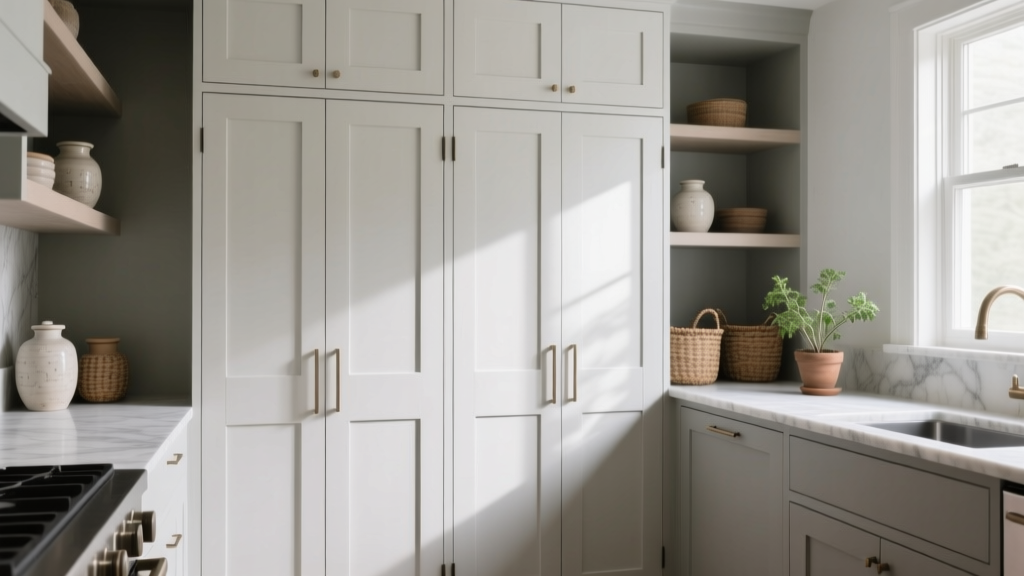
Best Kitchen Pantry Door Ideas - The Decor Mag
A kitchen pantry can be the difference between a countertop that always looks clutter-free and one that never feels under control. Yet during a kitchen renovation, the pantry door often gets treated as an afterthought—until it blocks a busy walkway, clashes with cabinetry, or makes access awkward when your hands are full.
The right pantry door does more than “close off” storage. It shapes traffic flow, influences how bright and open the kitchen feels, and reinforces your style—whether you’re leaning into modern kitchen design trends like slim profiles and mixed materials, or you prefer timeless details that won’t date quickly. This guide covers the best kitchen pantry door ideas with practical measurements, material comparisons, cost ranges, and common mistakes to avoid.
How to Choose the Right Pantry Door (Before You Fall in Love with a Style)
Start with layout and clearance
Door choice is heavily dictated by the space you have around the pantry opening. Use these quick rules of thumb when planning:
- Standard pantry door size: 24–36 inches wide, 80 inches tall. A 30" door is common in many kitchen renovations.
- Swing clearance: A hinged door needs a clear arc. If a walkway runs in front of the pantry, plan at least 36 inches of clear passage (42" is more comfortable in busy kitchens).
- Depth checks: If shelves are close to the door, make sure knobs/pulls don’t bump into stored items. A lever handle can protrude less than a large knob.
- Access needs: If you regularly carry groceries in, a wider opening (32–36") or double doors may reduce daily friction.
Match function to your organization style
- High-frequency pantry use: Consider sliding, pocket, or barn-style options to keep aisles clear.
- Small kitchen: A door that doesn’t swing into the room (pocket, sliding, bifold) often feels like you gained square footage.
- Kids and pets: Choose durable finishes and hardware; avoid fragile glass if impacts are likely.
Budget reality check (door + hardware + install)
In pantry door planning, homeowners often price only the slab. Hardware and installation can equal (or exceed) the door cost—especially for pocket doors and custom millwork.
Top Kitchen Pantry Door Ideas (With Pros, Cons, and Costs)
1) Classic hinged door (single swing)
A standard swing door is the most common—and for many kitchens, still the best blend of cost, simplicity, and durability.
- Best for: Medium to large kitchens with adequate clearance
- Style pairing: Works with everything from modern shaker cabinets to traditional raised panel doors
- Recommended materials:
- Solid core: Better sound dampening and durability
- Engineered wood / MDF: Smooth paint finish, stable in conditioned interiors
Cost range: $100–$500 for the door slab; $20–$150 for hinges/handle; $200–$600 typical installation. Painted solid-core options can run $250–$800 depending on brand and detailing.
Pro tip: If the pantry is near a fridge or range, consider reversing the swing so the door opens away from the main work zone.
2) Double pantry doors (French-style)
Double doors create a wide opening ideal for deep shelving, large pull-out drawers, or an appliance pantry.
- Best for: Wider openings (typically 48–72") or when you want full access without squeezing through a narrow door
- Design trend: Symmetry is popular in transitional kitchens; double doors also suit “pantry wall” layouts
Cost range: $300–$1,200 for a set; $300–$1,000+ install depending on framing and trim. Add $50–$200 for a ball catch or astragal hardware as needed.
Watch for: Door swing conflicts. Two swinging leaves can interfere with islands and traffic paths if clearance is tight.
3) Pocket pantry door (slides into the wall)
Pocket doors are a favorite in space-saving kitchen design because they disappear completely when open, leaving a clean opening.
- Best for: Tight walkways, small kitchens, and minimalist styles
- Material suggestion: Solid core slab to reduce rattling and feel more substantial
- Hardware recommendation: Use a high-quality pocket door frame/track kit with smooth rollers
Cost range: $300–$900 door + pocket frame kit; $800–$2,500+ installed (more if you’re moving electrical/plumbing inside the wall).
Measurement tip: The wall needs enough clear cavity for the door to slide in—usually the door width plus structural allowances. Confirm studs, wiring, and plumbing before committing.
4) Sliding barn door (surface-mounted)
Sliding barn doors remain popular, but today’s trend is a cleaner, more refined “modern barn” look: thinner slabs, quieter tracks, and less rustic hardware.
- Best for: When a pocket door isn’t possible but you still want a no-swing solution
- Style pairing: Farmhouse, industrial, modern rustic, even contemporary when using flat panels and a minimal track
Cost range: $250–$1,200 for door + track; $300–$1,000 installation. Custom wood doors can exceed $1,500.
Practical considerations:
- You need clear wall space beside the opening equal to (or slightly more than) the door width.
- It won’t seal as tightly as a hinged door—expect more sound/odor transfer.
- Add soft-close hardware if the pantry is used frequently.
5) Bifold pantry doors (folding)
Bifold doors can be a smart budget option for a wide opening with limited swing clearance, commonly used in older homes and smaller kitchens.
- Best for: Wide openings in compact kitchens, especially where a standard swing door would block traffic
- Current trend update: Swap dated louvered bifolds for flat-panel or shaker bifolds to modernize the look
Cost range: $150–$600; $200–$700 install.
Maintenance: Keep the track clean and tighten hardware periodically; bifolds can drift out of alignment over time.
6) Glass pantry door (clear, frosted, or reeded)
Glass doors are one of the most requested kitchen renovation upgrades because they add light and style. Reeded (fluted) glass is especially on-trend: it offers texture and privacy while still feeling airy.
- Best for: Homeowners who keep their pantry organized and want a designer look
- Glass options:
- Clear: Makes the pantry a feature; demands tidy shelves
- Frosted: Blurs visual clutter; still bright
- Reeded/fluted: Trend-forward, hides mess better than clear
Cost range: $250–$1,000+ per door; installation similar to hinged doors. Custom steel-and-glass options can exceed $2,000.
Organization tip: If you choose clear glass, plan uniform containers (matching canisters, labeled bins) to keep it intentional rather than chaotic.
7) Louvered pantry door (ventilated)
Louvered doors are functional for airflow—useful if your pantry houses produce, potatoes/onions, or small appliances that retain heat.
- Best for: Ventilation needs and coastal/cottage styles
- Trade-off: Louvers collect dust and can look dated in some kitchen design styles
Cost range: $150–$700; paint-grade options are affordable, but expect extra labor to paint.
Cleaning advice: Vacuum with a brush attachment monthly; wipe louvers with a damp microfiber cloth.
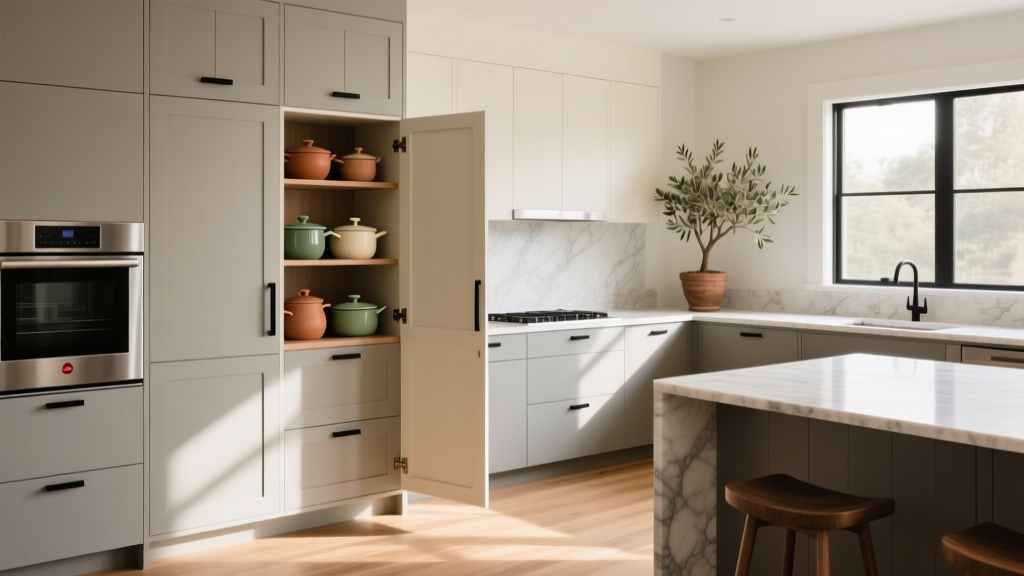
8) Hidden pantry door (cabinet-matched or flush “secret” door)
For a high-end kitchen, a concealed pantry door creates a streamlined wall of cabinetry. This approach is trending in contemporary and minimalist renovations: fewer visual breaks, calmer sightlines.
- Best for: Full remodels where millwork can be planned from the start
- Design approaches:
- Cabinet panel door: Pantry door faced with matching cabinet panels
- Flush wall door: Trimless look with concealed hinges and a push-latch
Cost range: $1,500–$6,000+ depending on cabinetry, custom paneling, and specialized hinges.
Hardware recommendation: Use heavy-duty concealed hinges rated for the door weight; consider a magnetic latch or push-to-open for a seamless look.
Material and Finish Recommendations (What Holds Up in Real Kitchens)
Solid wood vs. MDF vs. hollow core
- Solid wood: Durable and repairable; can expand/contract with humidity. Best for stained finishes. Higher cost.
- MDF (paint-grade): Smooth, stable, and excellent for painted pantry doors. Avoid excessive water exposure at the bottom edge.
- Hollow core: Budget-friendly and lightweight, but dents easily and feels less substantial. Acceptable for low-traffic pantries.
- Solid core (engineered): A sweet spot for many homeowners—quieter, sturdier, and mid-priced.
Finishes that stay looking clean
- Satin or eggshell paint: Easier to wipe than flat; hides minor imperfections better than high-gloss.
- Stain + clear coat: Great for natural wood grain; use a durable topcoat in busy kitchens.
- Fingerprint-friendly hardware finishes: Brushed nickel, satin brass, and matte black tend to show less smudging than polished chrome.
Design Details That Make Pantry Doors Look Custom
Use the right hardware scale
- For a 30–36" pantry door, consider a 10–14" pull for a modern look.
- Levers are comfortable when your hands are full; knobs feel traditional and can be more compact.
- Soft-close sliding hardware reduces noise and protects the door edge.
Add function with back-of-door storage (where appropriate)
If you’re using a hinged door, shallow organizers can improve kitchen organization dramatically.
- Recommended depth: 3–5 inches so shelves still clear pantry items.
- Best uses: Spices, wraps, snacks, cleaning supplies (if stored separately from food).
- Tip: Confirm hinge swing and shelf placement so the organizer doesn’t hit interior shelving.
Bring in light without losing practicality
- Glass inserts (frosted or reeded) brighten darker pantries.
- If privacy is needed, use frosted film or choose textured glass from the start.
- Pair with motion-sensor LED lighting inside the pantry for a renovation-level upgrade without major wiring changes.
Budget Considerations and Where to Spend More
- Spend more on: Pocket door frames, sliding track systems, concealed hinges, and solid-core doors (they affect daily performance).
- Save on: Simple slab styles with upgraded paint and hardware; you can get a designer look without custom millwork.
- Expect added labor costs if: You’re reframing an opening, moving switches/outlets, or adding trim to match existing cabinetry.
Budget snapshot:
- Under $500: Hollow-core or basic MDF hinged/bifold doors + basic hardware
- $500–$1,500: Solid-core hinged doors, glass inserts, upgraded handles, better installation/trim work
- $1,500–$4,000: Pocket door installations, premium sliding systems, higher-end glass/wood doors
- $4,000+: Hidden pantry doors integrated into custom cabinetry
Common Mistakes to Avoid
- Choosing a door that fights your traffic flow: A swing door that opens into the main walkway will feel annoying every day, even if it looks great.
- Underestimating wall requirements for pocket doors: Electrical lines, plumbing vents, or load-bearing walls can make pocket installs costly or impossible.
- Ignoring ventilation needs: If your pantry stores produce or appliances, consider airflow (louvered door or dedicated venting).
- Picking clear glass without an organization plan: Clear glass can make a pantry look messy fast. Use bins, labels, and consistent containers.
- Buying cheap sliding hardware: Noisy tracks and rough rollers age poorly. Invest in smooth, quiet hardware for high-use pantries.
- Forgetting trim alignment: Mismatched casing heights or styles can make a new pantry door look “added on” rather than integrated.
Maintenance Advice (Keep It Looking New)
- Painted doors: Clean with mild soap and water; avoid abrasive pads that dull the finish.
- Wood doors: Dust regularly; use a wood-safe cleaner and recoat if the protective finish wears thin.
- Sliding tracks: Vacuum the track area monthly; tighten mounting screws twice a year.
- Glass inserts: Use a streak-free cleaner; for reeded glass, clean along the grooves with a soft brush.
- Hinges and latches: If squeaking occurs, a small amount of lubricant can help—wipe off excess to prevent drips on paint.
FAQ: Kitchen Pantry Doors
What is the best pantry door for a small kitchen?
Pocket doors and sliding barn-style doors are top choices because they eliminate swing clearance. If budget is tight, a bifold door can also work well in compact layouts.
Is a glass pantry door practical for everyday use?
Yes—especially with frosted or reeded glass. Clear glass looks best when you commit to consistent pantry organization (bins, labels, and matching containers).
How wide should a pantry door be?
Most pantry doors are 24–36 inches wide. If you’re remodeling and have space, 32–36 inches improves accessibility, especially when carrying groceries or using pull-out shelves.
Are barn doors outdated for kitchens?
Rustic barn doors can feel theme-specific, but modern sliding doors with a slim profile and minimal hardware still align with current kitchen design trends. The key is choosing a door style that matches your cabinetry and overall renovation finish level.
Can I convert a hinged pantry door to a pocket door?
Sometimes, but it depends on what’s inside the wall (wiring, plumbing, studs) and whether the wall is load-bearing. A contractor can confirm feasibility; expect higher labor costs than a simple door swap.
What’s the most durable pantry door material?
A solid-core door is one of the most durable and satisfying options for high-traffic kitchens. For painted finishes, MDF can also perform well if properly sealed and kept away from moisture at the bottom edge.
Next Steps: Choose a Door That Improves Your Kitchen Every Day
Start by measuring your pantry opening, mapping the swing or slide path, and identifying your top priority: saving space, adding light, upgrading style, or creating a seamless built-in look. Then match the door type to your kitchen layout, choose a durable material (often solid core or paint-grade MDF), and invest in hardware that feels smooth and quiet.
Want more kitchen renovation inspiration, smart organization upgrades, and design-forward pantry ideas? Explore more kitchen guides and home decor tips on thedecormag.com.
More Articles
 Kitchen Statement Ceiling Design Ideas - The Decor Mag
 Kitchen Two-Tone Cabinet Ideas - The Decor Mag
 Kitchen to Outdoor Flow Design (2026)
 Kitchen Appliances Compared on a Budget: Smart, Reliable Choices Under $300
 Best Kitchen Baking Sheet Organization - The Decor Mag
 Kitchen Leathered Quartzite Countertops - The Decor Mag
 Best Kitchen Tupperware Organization - The Decor Mag
 Kitchen Layered Materials Design Guide - The Decor Mag
 Small Alternatives to Spaces: Smart, Space-Saving Kitchen Solutions That Actually Work
 Kitchen Cabinet Color for Resale (2026)