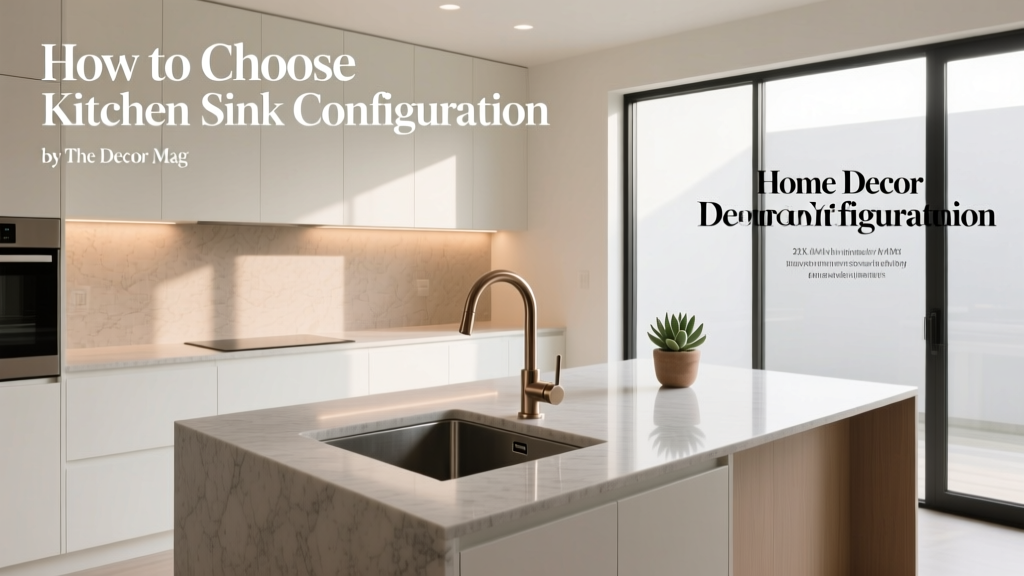
How to Choose Kitchen Sink Configuration - The Decor Mag
Your kitchen sink is more than a plumbing fixture—it’s the hub of daily life. It’s where you rinse produce, fill pasta pots, hand-wash delicate glassware, clean baking sheets, and, yes, stack the dishes when guests arrive. During a kitchen renovation, the sink configuration you choose will influence everything from countertop layout and cabinet storage to workflow and cleanup speed.
Because a sink is used so frequently, the “right” choice isn’t just about style. It’s about matching your cooking habits, the size of your kitchen, and how you want the room to function. Today’s best kitchen design blends current trends—like workstation sinks and integrated accessories—with timeless principles: comfortable reach, durable materials, and easy maintenance.
This guide breaks down the most common kitchen sink configurations, the measurements that matter, and how to select materials and features that will serve you well for years.
Start With How You Use Your Kitchen
Before comparing single-bowl vs. double-bowl or farmhouse vs. undermount, get clear on how the sink will be used. Two homeowners can have identical kitchens and need totally different configurations.
Ask yourself these practical questions
- Do you cook daily or mostly reheat/assemble meals?
- Do you hand-wash frequently, or rely on a dishwasher for most items?
- Do you wash large cookware (sheet pans, stockpots, roasting pans) often?
- Do you entertain and need a faster cleanup station?
- Does more than one person prep and clean at the same time?
- Do you want a sink that doubles as prep space with accessories?
Workflow tip: prioritize the “prep-clean-cook” triangle
Many kitchen renovation plans focus on the classic work triangle (sink–stove–refrigerator). For real-life functionality, also think about a micro-triangle around the sink:
- Prep zone: trash/compost pull-out, cutting boards, colander, and a clear counter landing area
- Clean zone: dishwasher proximity, dish storage, cleaning supplies
- Cook zone: easy access to pots, pans, and water filling
Understand the Core Sink Configurations
Single-bowl sinks
A single-bowl kitchen sink offers one uninterrupted basin. This is a favorite in many modern kitchen designs because it handles bulky cookware and makes cleanup simpler.
Best for:
- Home chefs washing large pans and trays
- Smaller kitchens where a larger bowl is more useful than two tight bowls
- Minimalist looks (especially with undermount installation)
Practical measurements:
- Common sizes: 24", 27", 30", 33", 36" wide
- Depth: 8"–10" is standard; 10"–12" holds more but can be harder on the back if you’re tall or the counter is high
- Cabinet base required: typically 3" larger than sink width (e.g., a 30" sink often needs a 33" sink base cabinet)
Design recommendation: If you choose a single bowl, consider adding a rolling rack, bottom grid, or colander insert to create separation when you need it.
Double-bowl sinks
Double-bowl sinks split the basin into two sections—often 50/50 or 60/40. They’re a classic choice for busy households and anyone who likes to wash and rinse separately.
Best for:
- Homes without a dishwasher or with frequent hand-washing
- Tasks that benefit from separation (soaking on one side, rinsing on the other)
- Multi-tasking households
Considerations:
- Each bowl is smaller; large pans may not fit comfortably
- Center divider can make cleaning slightly more involved
Smart compromise: A 60/40 split often feels more flexible than a strict 50/50, giving you one larger basin for cookware.
Low-divide double-bowl sinks
This hybrid style has a lower center divider, allowing larger items to span both bowls while still offering separation.
Best for: homeowners who like double-bowl function but don’t want to sacrifice large-pan capacity.
Workstation sinks (trend-forward, highly functional)
Workstation sinks are designed with ledges that hold accessories like cutting boards, colanders, drying racks, and prep bowls. They’re a major trend in kitchen renovation projects because they boost organization and reduce countertop clutter.
Best for:
- Homeowners who meal-prep regularly
- Kitchens with limited counter space
- Anyone who wants an efficient “sink-as-a-station” setup
Feature checklist to look for:
- Integrated ledges for sliding accessories
- Included cutting board (preferably sealed hardwood or composite)
- Drainage slope that prevents standing water
- Compatible bottom grid to protect the finish
Sink + prep sink (two-sink layouts)
In larger kitchens or serious cooking setups, a second sink can be a game-changer. A small prep sink in an island or beverage area improves traffic flow and keeps the main sink free.
Best for:
- Entertainers who want a dedicated drink or bar zone
- Families where multiple people use the kitchen at once
- Large kitchens where the main sink is far from the cooktop
Budget note: A second sink also means additional plumbing, which can add significant cost (see budget section below).
Choose the Right Installation Style
Undermount sinks
Mounted under the countertop for a seamless look that’s easy to wipe clean—one of the most popular options in modern kitchen design.
- Pros: clean lines, easy cleanup, works beautifully with stone countertops
- Cons: not ideal for some laminate counters; requires solid countertop support and precise installation
Top-mount (drop-in) sinks
These sit on top of the counter with a visible rim.
- Pros: typically lower install cost, works with more countertop materials, easier DIY replacement
- Cons: rim can catch grime; slightly less streamlined appearance
Farmhouse (apron-front) sinks
Farmhouse sinks bring warmth and character and remain a strong trend, especially in transitional and modern farmhouse kitchens.
- Pros: statement style, generous bowl size, comfortable reach (less leaning over the counter)
- Cons: requires specific cabinetry/support; can increase cost and complexity
Measurement caution: Farmhouse sinks often require custom cabinet modifications and careful planning for the apron reveal.
Integrated sinks (seamless countertop look)
Often made from the same material as the countertop (quartz composite, solid surface, stainless in commercial-style setups). This is a sleek, contemporary trend with strong practicality.
- Pros: minimal seams, easy wipe-down, high-end look
- Cons: fewer style choices; repair complexity depends on material
Materials: What Performs Best in Real Kitchens
Stainless steel (most versatile and budget-friendly)
- Best for: busy households, modern kitchens, rental-friendly upgrades
- Look for: 16–18 gauge (lower number = thicker, quieter); sound-deadening pads/undercoating
- Maintenance: wipe dry to minimize water spots; use a non-abrasive cleaner for shine
Design tip: Brushed or satin finishes hide scratches better than mirror-polished steel.
Fireclay (classic, durable, and beautiful)
- Best for: farmhouse sinks, timeless kitchens with a handcrafted feel
- Pros: glossy, non-porous surface; strong resistance to staining
- Cons: can chip if heavy cookware is dropped
- Maintenance: gentle cleansers; avoid harsh abrasives
Cast iron with enamel (traditional, substantial)
- Best for: classic and transitional designs
- Pros: extremely solid, rich colors, long lifespan
- Cons: heavy (cabinet support matters), enamel can chip
- Maintenance: avoid dropping heavy items; clean with non-scratch products
Granite/composite (quiet, matte, contemporary)
- Best for: modern kitchens and homeowners who want a quieter sink
- Pros: resists scratches, hides water spots, available in dark and neutral tones
- Cons: some finishes can show light mineral deposits; quality varies by brand
- Maintenance: regular gentle cleaning; avoid prolonged exposure to harsh chemicals
Measurements and Layout Planning That Prevent Regret
Sink size vs. cabinet size
Always confirm the minimum sink base cabinet width required by the manufacturer. As a rule, plan for:
- 30" sink → usually needs a 33" sink base
- 33" sink → usually needs a 36" sink base
- Farmhouse sinks → may require a custom or specially reinforced base
Faucet reach and clearance
- Choose a faucet with enough spout reach to land water near the drain, not against the back wall.
- If you have low upper cabinets or shelves, check faucet height and handle clearance.
- Consider a pull-down spray for versatility; it’s a staple in today’s best kitchen renovation plans.
Counter landing space
Plan for at least 18" of clear counter on one side of the sink and 24" on the other when possible. This supports prep, drying racks, and daily cleanup without feeling cramped.
Dishwasher placement
For ergonomic kitchen design, place the dishwasher within 36" of the sink (ideally adjacent). This reduces dripping across the floor and speeds up loading.
Budget and Cost Ranges to Expect
Costs vary by size, material, brand, and installation complexity. Use these ranges as a planning baseline for a kitchen renovation budget:
- Stainless steel sink: $150–$800 (premium workstation models can be $800–$2,000+)
- Granite/composite sink: $250–$900
- Fireclay farmhouse sink: $600–$1,800+
- Cast iron enamel sink: $400–$1,500+
- Faucet (quality pull-down): $150–$600 (pro-grade: $600–$1,200)
- Installation labor: $200–$800 for straightforward replacements; more if plumbing moves or countertop modifications are needed
- Adding a prep sink: often $800–$2,500+ total once plumbing, fixtures, and countertop cuts are included
Budget tip: If you’re splurging on a premium countertop, allocate funds for a sink and faucet that match the durability level—this is not the place to go ultra-cheap.
Specific Design Recommendations That Work in Most Homes
- Busy family kitchen: 33" single-bowl stainless (16–18 gauge) or low-divide double + pull-down faucet + bottom grid
- Smaller kitchen renovation: 24"–27" single bowl undermount to maximize usable basin space; choose a workstation model to gain prep function
- Entertainer’s kitchen: 33"–36" workstation sink at main run + bar/prep sink near beverage fridge
- Timeless transitional design: fireclay apron-front or enamel cast iron with a classic bridge or pull-down faucet (depending on style)
- Modern minimalist kitchen: integrated or undermount composite sink in a matte tone; pair with a clean-lined faucet in brushed nickel or matte black
Maintenance and Longevity Tips
- Use a bottom grid to prevent scratches and improve drainage (especially for stainless and fireclay).
- Avoid leaving cast iron pans or rusty metal in the sink; it can stain some finishes.
- Clean weekly with a non-abrasive cleaner and a soft sponge; skip steel wool unless your sink manufacturer approves it.
- Consider a water filtration or softening strategy if you have hard water—mineral deposits can dull finishes over time.
- Keep silicone caulk lines (for top-mount/integrated edges) clean and replace if you see gaps to prevent moisture damage.
Common Mistakes to Avoid
- Choosing bowl depth without thinking ergonomics: very deep sinks can strain your back and shoulders, especially for shorter users.
- Forgetting the sink base cabinet constraints: a sink that’s too wide can force expensive cabinet changes late in the renovation.
- Underestimating faucet quality: a leaky or flimsy faucet quickly ruins the daily experience, even with a beautiful sink.
- Skipping accessories that protect the finish: grids and strainers are inexpensive compared to sink replacement.
- Placing the sink without enough landing space: tight counter space leads to clutter and messy workflow.
- Picking a trendy look that doesn’t match your habits: a gorgeous double bowl can feel frustrating if you constantly wash oversized cookware.
FAQ: Kitchen Sink Configuration
Is a single-bowl or double-bowl sink better for a dishwasher-equipped kitchen?
If you have a dishwasher and use it regularly, a single-bowl (especially 30"–33") often feels more efficient for washing large items and quick cleanups. A double-bowl can still work well if you prefer soaking and rinsing separately.
What’s the best sink configuration for a small kitchen?
A single-bowl undermount in the 24"–27" range is usually the most space-efficient. Consider a workstation sink to add prep functionality without losing counter space.
Do farmhouse sinks splash more?
They can if the bowl is very deep and the faucet is set high with strong flow. Choosing a faucet with a well-aimed spray pattern and keeping water pressure reasonable helps. Many homeowners find the forward apron actually reduces leaning and makes daily use more comfortable.
What sink material is easiest to keep looking clean?
Granite/composite and brushed stainless steel tend to hide water spots and minor wear better than glossy finishes. Fireclay stays bright but can show marks from metal utensils if not rinsed regularly.
Can I switch from a double-bowl to a single-bowl sink during a renovation?
Usually yes, as long as the new sink fits your existing or planned sink base cabinet width and the countertop cutout can be adjusted. Undermount changes in stone may require professional templating and cutting.
Is a workstation sink worth the extra cost?
For homeowners who cook frequently or want better kitchen organization, workstation sinks often earn their keep by adding usable prep area and reducing countertop clutter. If you rarely prep at the sink, a simpler single-bowl plus a good drying rack may be a better value.
Actionable Next Steps for Choosing Your Sink
- Measure your current sink base cabinet width and note your countertop material.
- List your top three sink tasks (large-pan washing, meal prep, hand-washing, entertaining).
- Select your configuration (single, double, low-divide, workstation, or two-sink layout) based on those tasks.
- Choose a durable material that matches your maintenance preferences and overall kitchen design style.
- Confirm faucet specs (height and reach) and plan landing space on both sides of the sink.
- Price out sink + faucet + accessories + installation as one package so your renovation budget stays realistic.
For more practical kitchen renovation guidance, smart organization ideas, and on-trend design inspiration, explore the latest kitchen features on thedecormag.com.
More Articles
 Best Kitchen Drawer Organization Systems - The Decor Mag
 Kitchen Style & Function: Design Tips (2026)
 Kitchen Limewash Wall Treatment Guide - The Decor Mag
 Kitchen to Outdoor Flow Design (2026)
 Safety-First Bedroom Inspiration: Essential Design Principles, Verified Products, and Measured Layouts
 How to Choose Kitchen Floor Tile Pattern - The Decor Mag
 Kitchen Drawer Organization That Lasts (2026)
 Industrial Kitchen Design Inspiration - The Decor Mag
 Kitchen Pantry Organization: Pro Tips (2026)
 Best Kitchen Knife Block Storage Solutions - The Decor Mag