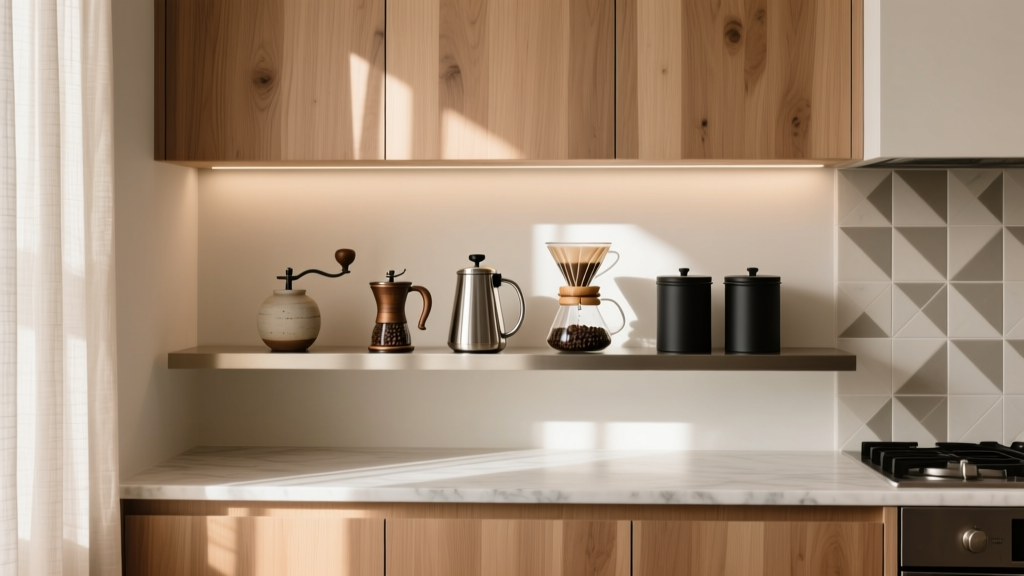
Best Kitchen Coffee Equipment Storage (2026)
Specialty coffee has moved from a weekend hobby to a daily ritual, and many homeowners now want their kitchens to support that routine with the same intention as a professional bar setup. The challenge is that espresso machines, grinders, scales, and pour-over gear are bulky, heavy, and sensitive to heat, moisture, and clutter. When these tools live on a crowded counter or get shoved into random cabinets, the kitchen feels messy and the coffee workflow becomes frustrating.
Smart kitchen specialty coffee equipment storage solves both problems: it protects your investment, streamlines your morning routine, and elevates the look of the room. Whether you’re planning a full kitchen renovation or looking for a strategic upgrade, a well-designed coffee zone can add daily convenience and a touch of “luxury utility” that fits current kitchen design trends—without sacrificing timeless functionality.
This guide covers the best storage strategies for specialty coffee equipment, from countertop stations and appliance garages to dedicated beverage pantries. You’ll find practical measurements, material recommendations, layout tips, cost ranges, and common mistakes to avoid—so your kitchen stays organized, beautiful, and genuinely easy to use.
Plan Your Coffee Zone Like a Mini Workstation
The best coffee storage starts with a workflow. Treat your coffee setup like a compact kitchen “work triangle”: water, beans, brewing, and cleanup.
Measure Your Equipment (Before You Design Storage)
Manufacturers vary, but these sizing guidelines help you plan cabinetry, clearances, and electrical needs:
- Espresso machine footprint: typically 10–15 in wide x 14–18 in deep. Leave 2–4 in on each side for ventilation and cord management.
- Espresso machine height clearance: many are 14–17 in tall; allow 20–24 in above for cup warming, refilling reservoirs, and comfortable access.
- Grinder footprint: typically 5–8 in wide x 10–14 in deep; allow space for hopper removal and cleaning.
- Pour-over setup: scale + server + dripper often needs 18–24 in of uninterrupted counter width.
- Knock box: plan a 6–8 in square area near the espresso machine, ideally within arm’s reach.
- Under-cabinet clearance: a standard 18 in may feel tight for refilling; 20–22 in clearance makes daily use easier.
Choose the Right Location
For kitchen renovation planning, place the coffee zone where it’s convenient but not in the main cooking traffic lane. Great spots include:
- Near the refrigerator (easy milk access) but away from the range/oven heat.
- At the end of a run of cabinets (less crossover traffic).
- Inside or adjacent to a pantry/secondary prep area for a cleaner main kitchen aesthetic.
Best Storage Approaches (From Simple to Built-In)
1) Countertop Coffee Station with Vertical Storage
If you’re not changing cabinetry, the goal is to contain the “coffee sprawl” and keep the counter intentional. This approach works well in apartments and smaller kitchens.
Design approach: keep the espresso machine and grinder on the counter, then add vertical storage above and drawer organization below.
- Floating shelves: use 8–10 in deep shelves for mugs, canisters, filters, and small pour-over gear. Keep frequently used items on the lowest shelf.
- Rail systems: modern kitchen organization trends favor modular rails for hooks and small bins (great for measuring spoons and brushes).
- Drawer inserts: dedicate one drawer for tools: distribution tool, tamper, spare portafilter basket, thermometer, extra filters.
Materials:
- Wood shelves (white oak/walnut): warm and timeless; seal with a durable matte polyurethane to resist steam and splashes.
- Powder-coated steel brackets: strong and low-maintenance; pairs well with contemporary kitchens.
Budget range: $150–$800 depending on shelving, lighting, and drawer inserts.
2) Appliance Garage (Lift-Up or Pocket Doors)
Appliance garages are a top kitchen design trend for homeowners who want clean countertops without giving up daily convenience. For coffee equipment, an appliance garage hides the visual clutter while keeping everything plugged in and ready.
Best for: espresso machines and grinders you use daily but don’t want on display.
Recommended dimensions:
- Interior width: 24–36 in (36 in is ideal for machine + grinder side-by-side).
- Interior depth: 16–20 in (18–20 in handles deeper machines and keeps cords tidy).
- Interior height: 20–24 in for reservoir access and comfortable use.
Door options:
- Lift-up doors: sleek and modern; ensure quality hardware rated for frequent use.
- Pocket doors: doors slide back into the cabinet sides so you can work without doors in the way—excellent for a true “barista nook.”
Must-have features:
- Dedicated electrical: add outlets inside the garage. For espresso machines, plan for a 20-amp circuit if recommended by the manufacturer.
- Ventilation strategy: either leave the door open during use or incorporate discreet venting; heat and moisture buildup can shorten appliance life.
- Task lighting: low-profile LED strips under the upper cabinet make the zone feel premium and functional.
Budget range: $800–$3,500 (depends on cabinetry modifications, door hardware, and electrical work).
3) Beverage Pantry or Coffee Bar Cabinet Wall
If you’re renovating, a beverage pantry is the most flexible solution: it supports coffee, tea, sparkling water, and entertaining. Many homeowners are prioritizing these “secondary prep zones” to reduce clutter in the main kitchen.
Layout idea: a 24–60 in wide pantry section with counter space, shelves, and a combination of drawers and pull-outs.
Key storage components:
- Base drawers: deep drawers (10–12 in) for bags of beans, pitchers, towels, and backup supplies.
- Shallow top drawer: 3–5 in for espresso tools and small accessories with dividers.
- Pull-out tray: a heavy-duty pull-out shelf for the grinder or scale can improve ergonomics and keep the counter clear.
- Adjustable shelves: for mugs, canisters, and carafes; 10–12 in vertical spacing works for most items.
Water considerations: If you’re serious about coffee, consider a filtered water setup:
- Filtered water dispenser: simplest (no plumbing changes).
- Under-sink filtration: good for overall kitchen use; choose a system with replacement filters you’ll actually maintain.
- Plumbed espresso line: higher cost but highly convenient; ensure your water chemistry is appropriate to prevent scale buildup.
Budget range: $2,500–$12,000+ depending on cabinetry, countertop, plumbing, and appliance selections.
4) Dedicated Drawer and Pull-Out Storage for Tools
Even if your machine stays on the counter, the difference between “messy hobby” and “organized coffee bar” often comes down to drawer design.
Best drawer organization plan:
- Top drawer (3–5 in tall): tampers, distribution tools, WDT tool, brush, spare baskets, scales.
- Second drawer (6–10 in tall): filters, cleaning tablets, microfiber towels, spare cups.
- Deep drawer (10–12 in tall): beans in airtight containers, syrups, backup accessories, travel mugs.
Product/design recommendations:
- Walnut or bamboo inserts: durable, looks elevated, and aligns with warm wood trends in modern kitchens.
- Non-slip drawer liners: keeps tools from shifting; choose a washable, food-safe option.
- Pull-out trash/recycling: helpful for used filters, packaging, and quick cleanup.
Budget range: $100–$800 for inserts and pull-outs; $500–$2,000+ if adding new cabinetry drawers.
Materials That Perform Well Around Heat, Moisture, and Spills
Countertops: What Works Best for Coffee Stations
- Quartz: low maintenance, stain resistant, consistent look. Excellent for coffee splashes and milk drips. Cost: $60–$120/sq ft installed.
- Porcelain slab: highly heat and stain resistant, very durable; a premium option for modern kitchen renovations. Cost: $80–$160/sq ft installed.
- Butcher block: warm and inviting, but needs sealing and careful water management; best if you love patina and maintenance. Cost: $40–$100/sq ft installed.
- Natural stone (marble): beautiful, but can stain/etch from acids and requires sealing; use only if you’re comfortable with wear. Cost: $70–$200/sq ft installed.
Cabinet Interiors and Shelving
- Melamine: easy to wipe clean; budget-friendly; can look basic but works well in closed storage.
- Plywood boxes: stronger and more moisture tolerant than particleboard; a solid upgrade for long-term durability.
- Stainless shelf liners: ideal under espresso machines in enclosed spaces; handles drips and is easy to sanitize.
Hardware and Hinges
- Soft-close hinges and slides: protect delicate gear and reduce noise in morning routines.
- Heavy-duty pull-out slides: choose slides rated 75–100 lbs if you’re placing machines on pull-out trays.
Layouts That Make Coffee Easier (Not Just Prettier)
Recommended “Coffee Zone” Counter Widths
- Minimum functional width: 30 in (machine + small landing space).
- Comfortable width: 36–48 in (machine + grinder + prep area).
- Entertaining-friendly width: 60 in (multiple tools + serving area + storage).
Ergonomics: Heights and Reach
- Counter height: standard 36 in works for most; if you’re customizing, consider your tamper technique and comfort.
- Upper shelf height: keep everyday mugs and beans within 15–18 in above the counter to avoid awkward reaching.
- Trash and towel access: place within 2–3 steps; the easiest station to clean is the one that stays clean.
Maintenance Advice: Keep the Zone Looking Sharp
- Steam management: if using an appliance garage, open doors during use and wipe condensation afterward.
- Daily wipe-down: microfiber towel + mild dish soap for counters; avoid harsh cleaners on sealed wood.
- Weekly declutter: return stray tools to the drawer inserts; restock beans and filters.
- Descaling and water care: follow manufacturer guidance; scale buildup can damage machines and stain nearby surfaces.
- Protect cabinetry: use a small silicone mat under the grinder to catch grounds and reduce vibration.
Budget Considerations: Where to Spend vs. Save
A coffee station can be a small organizational upgrade or a full kitchen renovation feature. The smart approach is to invest where it affects daily performance.
- Spend on: electrical upgrades (safe, code-compliant), durable pull-out hardware, ventilation-friendly design, and a stain-resistant countertop surface.
- Save on: decorative canisters, open shelving styling, and accessories you can add gradually.
Typical cost ranges:
- Organized countertop station: $150–$800
- Appliance garage addition: $800–$3,500
- Built-in beverage pantry: $2,500–$12,000+
- Plumbing for filtration/plumbed line: $300–$2,500+
- Electrical upgrades/outlets: $200–$1,200+
Common Mistakes to Avoid
- Undersizing the space: a 24 in cabinet sounds generous until you add a machine, grinder, and a landing zone for cups and tools.
- Ignoring heat and moisture: enclosing an espresso machine without ventilation can warp cabinetry finishes and shorten appliance life.
- Not planning outlets: relying on a power strip across the counter is a clutter magnet and can be unsafe near water.
- Storing beans incorrectly: clear containers on a sunny shelf look great but can degrade coffee faster. Use airtight, opaque containers and store away from heat.
- Overdoing open shelving: open shelves amplify visual clutter quickly. Balance with closed cabinets or drawers for tools and consumables.
- Forgetting cleanup flow: no nearby sink or trash solution means the zone will collect cups, drips, and grounds.
FAQ: Kitchen Specialty Coffee Equipment Storage
How much counter space do I need for a coffee station?
A practical minimum is 30 inches of counter width. For a comfortable espresso setup with a grinder and prep space, aim for 36–48 inches. If you entertain often, 60 inches gives you room to serve and stage cups.
Is an appliance garage safe for an espresso machine?
Yes, if it’s designed correctly. Plan for ventilation (doors open during use or discreet venting), adequate clearance above the machine, and proper electrical. Avoid running the machine in a tightly sealed box.
What’s the best countertop material for a coffee bar?
Quartz is a top choice for kitchen organization and renovation projects because it’s low maintenance and stain resistant. Porcelain is even more heat-resistant and durable if your budget allows. Butcher block looks beautiful but requires regular sealing and careful water management.
Should I store my grinder and espresso machine in a cabinet?
Daily-use equipment performs best on a stable surface with airflow. If you want it hidden, an appliance garage is better than a standard cabinet because it can be designed for clearance, outlets, lighting, and ventilation.
How do I keep coffee gear from making my kitchen look cluttered?
Limit the counter to daily essentials (machine + grinder + one tray). Store tools in a dedicated drawer with inserts, keep consumables in closed cabinets, and use matching canisters for a calmer visual line—an approach that fits both modern and timeless kitchen design.
Next Steps: Build a Coffee Station That Works as Hard as You Do
Start by measuring your equipment and choosing the right zone in your kitchen layout. Decide whether your lifestyle calls for a simple countertop coffee station, a hidden appliance garage, or a full beverage pantry as part of a kitchen renovation. Then layer in the essentials: outlets, lighting, easy-to-clean materials, and drawer organization that supports your daily routine.
If you’re ready to refine your kitchen design with more storage-forward ideas, explore more renovation and organization inspiration on thedecormag.com.
More Articles
 Best Kitchen Appliance Maintenance Schedule - The Decor Mag
 Minimalist Alternatives to Essential Kitchen Tools: Smart Substitutions That Reduce Clutter Without Compromising Performance
 How to Design a Kitchen Work Triangle - The Decor Mag
 Best Kitchen Charging Drawer Solutions - The Decor Mag
 Kitchen Integrated Appliance Paneling - The Decor Mag
 Kitchen Warm Neutral Cabinet Colors - The Decor Mag
 Best Kitchen Cookware Organization: Cabinet Solutions (2026)
 Kitchen That Grows With Your Family (2026)
 Kitchen Countertop Edge Profiles: Best Choices (2026)
 Best Kitchen Baking Ingredient Organization - The Decor Mag