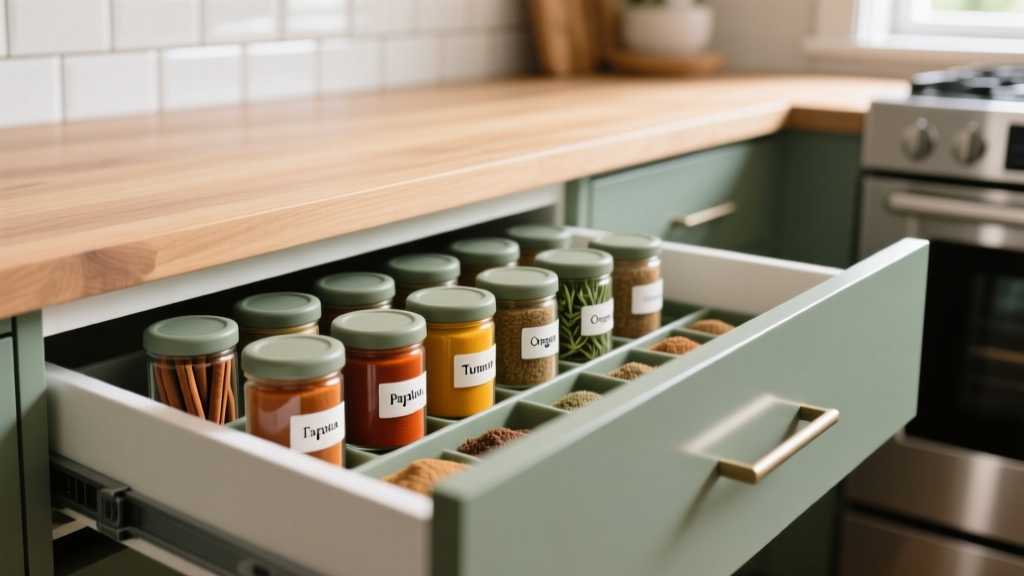
Best Kitchen Spice Drawer Inserts - The Decor Mag
A well-designed kitchen renovation isn’t only about the showpiece range or the perfect quartz countertop—it’s the daily details that make the space feel effortless. Spice storage is one of those details. When spices are scattered across a pantry shelf or packed into a crowded cabinet, cooking slows down, duplicates multiply, and the kitchen feels less organized than it should.
Spice drawer inserts solve a common pain point with a simple upgrade: they turn an ordinary drawer into a streamlined, easy-to-scan “spice library.” Whether you’re planning a full kitchen remodel or just refreshing your kitchen organization, the right insert helps you find what you need quickly, keeps containers stable, and uses every inch of drawer space wisely.
This guide covers the best kitchen spice drawer inserts, how to choose the right layout, the most durable materials, real-world measurements, cost ranges, and the mistakes that lead to clutter creeping back in.
Why a Spice Drawer Insert Beats a Cabinet (and When It Doesn’t)
Spice drawers are popular in current kitchen design trends because they’re intuitive and visually calm: labels face up, jars don’t fall over, and you can see your entire collection at a glance. That said, the “best” option depends on your cooking habits and available storage.
Spice drawer inserts work best when:
- You cook frequently and want everything accessible from one spot.
- You prefer uniform spice jars (or are willing to standardize over time).
- You have a drawer near the cooktop or prep zone.
- You want a clean countertop and less cabinet clutter.
Consider alternatives when:
- Your only available drawer is narrow and shallow (under 2" interior height).
- You store many tall containers (bulk spices, oils, sauces) that won’t fit.
- You have very limited drawer space and need it for utensils or cookware.
Measure First: Key Drawer Dimensions for a Perfect Fit
Before you shop for a spice drawer organizer, measure the inside of your drawer. Product listings often cite exterior dimensions, but your insert must fit the interior space and allow the drawer to close smoothly.
Measurements to take (in inches):
- Interior width: side wall to side wall
- Interior depth: front wall to back wall
- Interior height: bottom panel to top edge (minus any drawer lip)
Practical sizing tips:
- Minimum interior height for angled inserts: typically 3"–4". Many standard spice jars are 4"–4.5" tall; angled tiers help them fit under a shallower drawer opening.
- Minimum interior height for flat (non-angled) inserts: usually 2.5"–3" for low-profile tins; 4.5"+ for upright jars.
- Best drawer placement: within 1–2 steps of the cooktop, ideally not directly over the oven (heat fluctuations can degrade spice quality).
Best Spice Drawer Insert Layouts (Choose Based on Your Collection)
Spice drawer layouts typically fall into a few proven formats. The right one depends on how many spices you own, the size of your drawer, and whether you want everything label-up.
1) Angled tiered insert (the most popular renovation choice)
Angled tiers present labels upward and keep jars from rolling. This is the go-to approach in modern kitchen organization because it’s fast to scan and easy to maintain.
- Best for: 20–60 spice jars
- Ideal drawer size: 18"–30" wide, 16"–22" deep
- Typical tiers: 3–5 tiers
- Why homeowners love it: immediate visibility and a built-in “system” that stays tidy
2) Flat grid insert (minimalist, modular, great for uniform jars)
A grid organizer uses square or rectangular compartments to keep jars from shifting. This style aligns well with current minimalist and Scandinavian-inspired kitchen design trends.
- Best for: uniform jars or tins, smaller collections
- Ideal drawer size: works even in shallow drawers if using low-profile containers
- Pro: very stable, clean look
- Con: labels may not face up unless jars are stored horizontally
3) Expandable stepped insert (flexible for remodels and “in-between” drawer sizes)
Expandable inserts adjust to different widths, making them useful for older homes, rental-friendly upgrades, or interim organization during a kitchen renovation.
- Best for: homeowners who want adjustability and an easy install
- Pro: fits a range of drawer widths
- Con: can feel less “built-in” than custom inserts
4) Full custom drawer with integrated spice rails (high-end, highly tailored)
For full kitchen renovations, custom spice drawers can be built with fixed angled rails or a dedicated insert area plus room for oils or cooking essentials.
- Best for: serious home cooks, luxury remodels, and long-term homes
- Pro: perfectly fitted; maximizes every inch
- Con: higher cost; less flexible if your spice container sizes change
Materials Compared: What Lasts, What Looks Best, What’s Easiest to Clean
Material choice affects durability, appearance, and maintenance—especially in a hardworking kitchen. Match your insert to your overall kitchen design style and how much wear you expect.
Bamboo (warm, modern, popular)
- Look: natural and clean; pairs well with white kitchens, light wood cabinets, and matte black hardware
- Durability: good; avoid soaking and wipe spills quickly
- Maintenance: wipe with a damp cloth; dry immediately; occasional food-safe mineral oil helps preserve finish
- Best for: homeowners who want a “designed” look without custom cabinetry pricing
Solid wood (premium, timeless)
- Look: classic; especially suited to traditional, transitional, and custom kitchen renovations
- Durability: excellent when sealed properly
- Maintenance: wipe and dry; avoid harsh cleaners
- Best for: custom or semi-custom cabinet packages
Plastic (budget-friendly, washable)
- Look: practical; less “high-end” visually
- Durability: varies—look for thicker plastic that won’t flex
- Maintenance: easiest; many can be washed in a sink (check manufacturer guidance)
- Best for: quick organization upgrades and rentals
Metal / stainless accents (sleek, professional)
- Look: modern, chef-inspired
- Durability: excellent; resists staining
- Maintenance: wipe; avoid abrasive pads on brushed finishes
- Best for: contemporary kitchens and homeowners who prefer an industrial edge
Top Spice Drawer Insert Recommendations (By Use Case)
Instead of a one-size-fits-all pick, these recommendations focus on real kitchen scenarios homeowners face during renovation and reorganization.
Best overall for most kitchens: angled bamboo tiered insert
- Why it works: blends with most cabinetry finishes, reads as “custom,” easy to scan
- What to look for: non-slip feet or liner, 3–5 tiers, a depth that matches your drawer so jars don’t rattle
- Typical cost: $25–$70
- Great for: 18"–30" wide drawers in standard kitchen base cabinets
Best for large collections: modular, mix-and-match tier system
- Why it works: lets you cover wide drawers (30"–36") with multiple sections
- What to look for: interlocking modules, consistent tier angle, edges that won’t snag labels
- Typical cost: $50–$150 depending on how many modules you need
- Design tip: leave a 2"–3" zone for spice blends you use daily (salt, pepper, garlic, chili flakes) so they stay front and center
Best budget upgrade: expandable plastic stepped organizer
- Why it works: fits a range of drawer widths and is easy to clean
- What to look for: sturdy construction, a matte finish (reduces visible scratches), grippy base
- Typical cost: $15–$40
- Best for: renters, starter homes, or temporary solutions during a kitchen remodel
Best for a high-end renovation: custom wood insert matched to cabinetry
- Why it works: seamless, integrated look; maximizes space precisely
- What to specify: sealed wood, tier angle that fits your jar height, finger-clearance so jars lift out easily
- Typical cost: $150–$500+ (more if bundled in custom cabinetry packages)
- Pro layout add-on: dedicate 1/4 of the drawer to oils or small bottles with a low rail to prevent tipping
Smart Design Details: Labels, Liners, and Jar Standards
Spice drawer inserts work best when paired with a few small upgrades that make the system easier to maintain.
Choose a jar strategy (so your drawer stays consistent)
- Keep original containers: cheapest; can look mixed; sizes vary
- Standardize with matching jars: best visual calm; ideal for renovation-ready kitchens
- Hybrid approach: standardize your top 15–20 spices first, then upgrade the rest over time
Practical jar measurements
- Common round spice jar: ~4"–4.5" tall, ~1.75"–2" diameter
- Square spice jar: ~4"–4.25" tall, ~1.5"–2" wide
- Best drawer interior height target: 3.5"–4.5" for angled storage; 4.5"+ if storing upright
Labeling tips for faster cooking
- Use top labels (on lids) for label-up drawers; side labels are optional.
- Choose high-contrast text (black on white, or white on black) for quick scanning.
- Add purchase date or refill date in small text if you’re upgrading pantry organization at the same time.
Add a non-slip liner (small detail, big difference)
- Prevents jars from shifting when opening/closing drawers.
- Protects drawer finish—especially in painted or custom cabinetry.
- Cost: $8–$20 per roll.
Cost Ranges and Budget Planning
Spice drawer inserts can be a modest upgrade or a fully integrated cabinet feature. Plan your budget based on how “finished” you want the result to feel.
- Budget ($15–$40): plastic expandable organizers, simple trays, DIY liners
- Mid-range ($25–$100): bamboo tiered inserts, sturdier modular systems, better finishes
- Premium ($100–$250): large modular sets, higher-grade wood or metal accents, semi-custom solutions
- Custom renovation ($150–$500+): cabinet-maker built inserts matched to drawer dimensions and kitchen style
Hidden costs to account for
- New jars: $20–$80 depending on quantity and quality
- Labels: $10–$30
- Drawer liner: $8–$20
- Refills/bulk spices: varies (often cheaper long-term than buying new jars)
Common Mistakes to Avoid (and How to Get a Truly Functional Result)
- Buying before measuring: even “standard” drawers vary. Measure interior width/depth/height first.
- Ignoring drawer height: a beautiful insert won’t matter if your jars prevent the drawer from closing.
- Overstuffing the drawer: leave 10–15% breathing room so jars lift out easily and labels remain visible.
- Placing spices near heat sources: avoid drawers directly above dishwashers/ovens when possible; heat and humidity shorten shelf life.
- Skipping a labeling system: unlabeled lids turn a spice drawer into a guessing game.
- Mixing too many container types: tall grinders, short tins, and wide jars together create visual clutter and reduce capacity.
Maintenance: Keep Your Spice Drawer Looking Renovation-Ready
- Weekly: quick wipe of lids to remove cooking residue (especially near the cooktop).
- Monthly: pull the insert (if removable) and vacuum crumbs; wipe drawer base and liner.
- Every 6 months: check expiration and aroma; discard spices that smell dull or look clumpy.
- For bamboo/wood: avoid soaking; dry immediately; re-oil lightly if the finish looks dry.
FAQ: Kitchen Spice Drawer Inserts
How many spices can fit in a standard drawer?
Many 18"–24" wide drawers with a 3–4 tier angled insert hold roughly 20–40 standard jars. A 30"–36" wide drawer with modular tiers can often hold 40–60+, depending on jar diameter and tier spacing.
What’s the best material for a spice drawer insert in a busy family kitchen?
Bamboo is a strong all-around choice for durability and looks, while plastic is the easiest to wash and the most budget-friendly. For a high-end kitchen renovation, a sealed hardwood insert offers the most timeless, built-in feel.
Should spices be stored flat or upright in a drawer?
If you want fast visibility, store spices horizontally on angled tiers with labels on the lids. Upright storage works best only in deeper drawers with enough interior height and a grid system to prevent tipping.
Where should a spice drawer be placed in a kitchen layout?
Place it near your cooking and prep zone—typically within a step of the cooktop or primary prep counter. Avoid locations that get excessive heat or moisture (directly above ovens or dishwashers) when possible.
Do I need matching spice jars for a drawer insert to work?
No, but matching jars improve capacity and make the drawer feel more intentional—especially in a renovated kitchen. A practical approach is to standardize the spices you use most and transition the rest over time.
Are custom spice drawer inserts worth it?
Custom inserts are worth considering if you’re doing a full kitchen remodel, plan to stay long-term, and want a seamless look that maximizes every inch. For most homeowners, a quality bamboo tiered insert delivers a similar daily benefit at a lower cost.
Next Steps: Build a Spice Drawer That Stays Organized
Start by measuring your drawer interior, then choose a layout that matches your cooking habits—angled tiers for quick scanning, modular systems for large collections, or custom inserts for a fully integrated renovation look. Add a non-slip liner, label your lids, and standardize jars gradually to keep the system easy to maintain.
For more kitchen renovation ideas, smart storage solutions, and timeless home decor inspiration, explore the latest guides and design features on thedecormag.com.
More Articles
 Best Kitchen Small Appliance Storage - The Decor Mag
 Kitchen Shaker Cabinet Timeless Appeal - The Decor Mag
 How to Design a Kitchen for Aging in Place - The Decor Mag
 Best Kitchen Plate Rack Display Options - The Decor Mag
 Kitchen Drawer Organization That Lasts (2026)
 Best Kitchen Utensil Holder Picks - The Decor Mag
 Kitchen Quartz vs Granite Countertops - The Decor Mag
 Kitchen Curved Island Design Trends - The Decor Mag
 Heirloom Kitchen Design: Timeless Ideas for 2026
 How to Choose the Right Kitchen Hood Vent - The Decor Mag