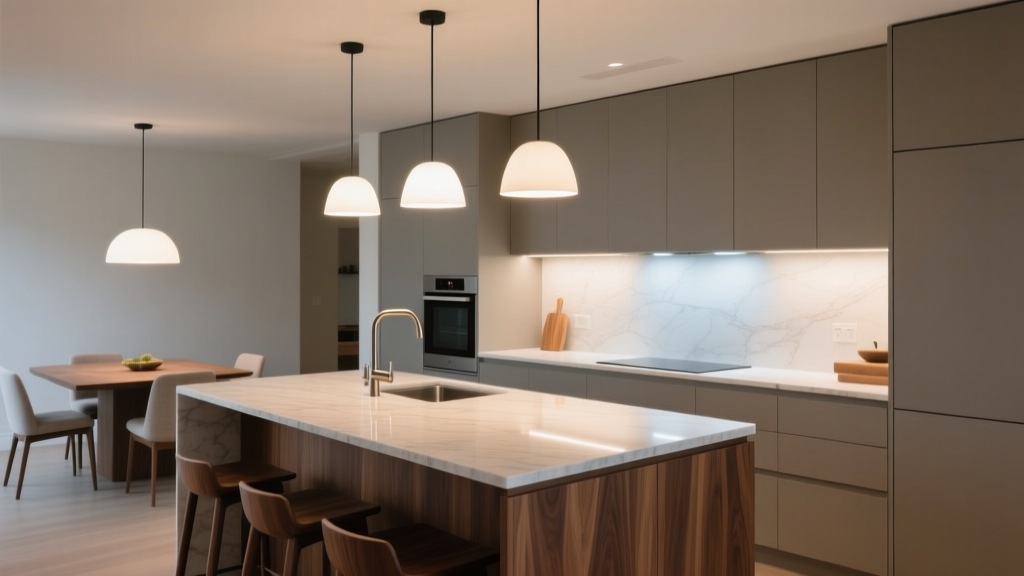
How to Choose Kitchen Lighting Temperature - The Decor Mag
Kitchen lighting can make or break a renovation. You can invest in beautiful quartz countertops, custom cabinetry, and a showstopping backsplash—then end up with a room that feels sterile, gloomy, or oddly “off” simply because the lighting temperature doesn’t suit the space. Color temperature affects how materials read, how food looks, and how comfortable your kitchen feels during everything from rushed weekday breakfasts to evening gatherings.
Choosing the right kitchen lighting temperature is also a practical decision. The wrong bulb can create harsh glare on glossy cabinets, make white paint look muddy, or cast a yellow tint that distorts true colors when you’re cooking. The best approach is layered lighting—ambient, task, and accent—paired with temperatures that support both timeless functionality and today’s kitchen design trends like mixed metals, warm neutrals, and natural wood tones.
This guide breaks down what “warm” and “cool” light really mean, how to select temperatures for each lighting layer, and how to avoid common mistakes that lead to mismatched, unflattering lighting. You’ll also find budget ranges, product-style recommendations, and tips for getting consistent results across a full kitchen renovation.
Understanding Lighting Temperature (Kelvin) in Kitchens
Lighting temperature is measured in Kelvin (K). Lower Kelvin numbers look warmer (more yellow/amber). Higher Kelvin numbers look cooler (more white/blue). Brightness, measured in lumens, is a separate factor—so a bulb can be bright and warm, or dim and cool.
Quick Kelvin Cheat Sheet
- 2200K–2700K: Warm/soft white. Cozy, flattering, relaxing.
- 3000K: Warm white. Clean but still inviting—often the “sweet spot” for kitchens.
- 3500K: Neutral white. Crisp and functional, less cozy.
- 4000K: Cool/bright white. Very clean, modern, clinical if overused.
- 5000K+: Daylight. High contrast; can look blue and harsh indoors.
Why Temperature Matters More Than You Think
- Material accuracy: Marble veining, paint undertones, and wood stains can shift under the wrong temperature.
- Food presentation: Warm light makes food look appetizing; overly cool light can make ingredients look dull.
- Comfort: Kitchens are increasingly open to living areas, so lighting should feel cohesive, not like a workspace-only zone.
Start With Your Kitchen’s Style, Finishes, and Natural Light
Before selecting bulbs or fixtures, evaluate the finishes you already have (or plan to install) and how daylight enters the room.
Match Temperature to Your Finishes
- Warm woods, brass, beige/greige paint: Often look best at 2700K–3000K.
- White cabinetry, gray tile, stainless steel: Usually performs well at 3000K–3500K.
- High-contrast modern kitchens (black/white, concrete looks): Can handle 3500K–4000K if glare is controlled.
Consider Daylight Direction (A Simple Test)
Natural light shifts the way bulbs appear. Use this quick guideline:
- North-facing kitchens often feel cooler—lean warmer (2700K–3000K).
- South-facing kitchens get warmer light—3000K usually stays balanced.
- East-facing kitchens are bright in the morning—3000K keeps it fresh.
- West-facing kitchens glow in the evening—avoid overly warm bulbs if the space already feels amber at sunset.
The Best Lighting Temperatures by Lighting Layer
Great kitchen lighting design uses layers. Each layer can share the same temperature for a seamless look, or you can slightly adjust temperature by zone (carefully) to support function.
1) Ambient (General) Lighting: 2700K–3500K
Ambient lighting is your overall illumination—recessed lights, flush mounts, semi-flush fixtures, or a grid of ceiling lights.
- Most kitchens: 3000K offers a welcoming tone with clean visibility.
- Open-concept kitchens: Match the adjacent living/dining area (often 2700K–3000K) for continuity.
- Very modern, minimal kitchens: 3500K can look crisp—keep other elements warm to avoid a clinical feel.
Layout tip: If using recessed lights, a common spacing guideline is 4–6 feet apart depending on ceiling height and lumen output. For an 8-foot ceiling, aim closer to 4–5 feet for even light and fewer shadows.
2) Task Lighting (Work Zones): 3000K–4000K
Task lighting supports food prep, cooking, and cleaning. Under-cabinet lights, directional recessed lights, and pendants over work surfaces fall into this category.
- Under-cabinet lighting: 3000K–3500K is the most versatile for accurate chopping and prep without making countertops look cold.
- Sink area: 3000K–3500K helps with cleaning tasks and reduces shadowing.
- Range/cooktop: 3000K–3500K works well; avoid intense 5000K “daylight” that can look harsh against steam and stainless steel.
Measurement tip: Under-cabinet LED strips are typically installed toward the front third of the cabinet underside (not the back) to reduce shadows from your hands and to evenly wash the counter. For best results, use an aluminum channel with a diffuser to minimize “dotting.”
3) Accent and Decorative Lighting: 2700K–3000K
Accent lighting adds depth and highlights design features like glass-front cabinets, open shelving, toe-kick lighting, or a statement hood.
- Cabinet interior lights: 2700K–3000K looks rich and inviting on dishware and decor.
- Toe-kick lighting: 2700K creates a soft, high-end glow for nighttime navigation.
- Pendants over an island: 2700K–3000K keeps the kitchen social and flattering.
Recommended Temperature Combos (Simple, Real-World Plans)
If you want a straightforward approach that works with most kitchen renovation styles, choose one of these proven combinations.
Option A: The “Unified Warm White” Plan
- All fixtures: 3000K
- Best for: Most kitchens, open layouts, warm modern, transitional, and contemporary styles
- Why it works: Consistency makes the space feel intentional and premium
Option B: Cozy Evenings + Crisp Work Zones
- Ambient: 2700K–3000K
- Task (under-cabinet): 3500K
- Accent: 2700K
- Best for: Homeowners who cook often and want a softer feel at night
- Watch-out: Keep the difference subtle to avoid a “patchwork” look
Option C: Clean, Modern, Gallery-Like
- Ambient: 3500K
- Task: 3500K–4000K
- Accent: 3000K
- Best for: Sleek slab cabinets, minimal palettes, modern kitchens with matte finishes
- Watch-out: Use dimmers and avoid glossy surfaces that amplify glare
Key Specs to Look For (Beyond Kelvin)
Two bulbs labeled “3000K” can still look different depending on quality. For a kitchen renovation, prioritize consistency and color accuracy.
- CRI (Color Rendering Index): Choose 90+ CRI for kitchens. This helps paint, food, and finishes appear true-to-life.
- R9 value: If available, a higher R9 improves reds (useful for food and wood tones).
- Dimming compatibility: Use dimmable LEDs and match them with the correct LED-rated dimmer to prevent flicker.
- Beam angle: For recessed lights, 60–90° spreads light for ambient coverage; narrower beams are better for accent.
- Glare control: Look for diffusers, deep-regress can lights, or lensed trims to reduce harshness.
Product and Design Approach Recommendations
Under-Cabinet Lighting: LED Strips vs. Pucks
- LED strip lights (recommended): More even illumination, fewer shadows, a higher-end look.
- Puck lights: Cheaper upfront but can create scallops and bright spots.
Best practice: Choose 24V LED tape in an aluminum channel with a diffuser, 90+ CRI, and a color temperature of 3000K or 3500K.
Recessed Lighting: Layout and Trim Choices
- Go smaller where possible: 3-inch or 4-inch recessed lights feel more current than large 6-inch cans.
- Use fewer, better fixtures: A thoughtful layout with high-quality LEDs can outperform a ceiling full of cheap lights.
- Consider “warm-dim” LEDs: These shift warmer as they dim (often from ~3000K down toward ~2200K), great for entertaining.
Pendant Lighting Over an Island (Sizing + Temperature)
- Hanging height: Common guideline is 30–36 inches from the countertop to the bottom of the pendant.
- Spacing: Keep 24–30 inches between pendants (and at least 6 inches from the island edge).
- Temperature: 2700K–3000K keeps faces flattering and softens hard surfaces.
Cost Ranges and Budget Considerations
Kitchen lighting budgets vary widely depending on whether you’re swapping bulbs or rewiring a full renovation. Use these ranges as planning numbers.
- Bulb-only upgrade: $30–$150 total for a typical kitchen (quality LED bulbs at $5–$15 each).
- Under-cabinet LED tape system: $200–$800 installed for average kitchens (more if custom channels, multiple zones, or premium controls).
- Recessed LED fixtures (retrofit or new): $25–$120 per light for fixtures, plus installation. Total commonly $400–$2,500+.
- Pendant lights: $80–$600+ each depending on brand and materials (glass, metal, natural fiber, ceramic).
- Dimmers and smart controls: $25–$90 per dimmer; smart systems can run $150–$1,000+ depending on complexity.
Value tip: If you’re prioritizing spend, invest first in under-cabinet task lighting and dimmable ambient lighting. These two upgrades deliver the biggest daily comfort and functionality gains.
Common Mistakes to Avoid
- Mixing too many color temperatures: A kitchen with 2700K pendants, 4000K recessed lights, and 5000K under-cabinet strips can look chaotic.
- Choosing “daylight” bulbs for everything: 5000K can feel stark in residential kitchens, especially at night.
- Ignoring CRI: Low-CRI LEDs can make food look dull and finishes look flat, even at the “right” Kelvin.
- No dimmers: Without dimming, the kitchen can feel overly bright after dark, especially in open-concept layouts.
- Glare from glossy surfaces: Cool temperatures plus reflective tile/counters can amplify glare—use diffusers, better trims, and slightly warmer light.
- Forgetting consistent bulbs: Different brands’ “3000K” may not match. Buy the same product line for visible fixtures.
Maintenance and Long-Term Performance Tips
- Keep diffusers clean: Grease and dust reduce brightness and shift color. Wipe monthly with a mild degreaser and soft cloth.
- Choose sealed fixtures near cooking zones: Look for enclosed or easy-to-clean designs around the range.
- Label your bulbs: Save a note of bulb base type (E26, GU10) and Kelvin so replacements match.
- Plan for driver access: For LED tape, ensure the driver is accessible (inside a cabinet or serviceable area) for easier replacement.
FAQ: Choosing Kitchen Lighting Temperature
What is the best Kelvin for kitchen lighting?
For most homes, 3000K is the best all-around choice. It balances warmth and clarity, works with many cabinet and countertop finishes, and feels comfortable in open-concept spaces.
Is 2700K too warm for a kitchen?
Not necessarily. 2700K can be beautiful in traditional, farmhouse, or warm transitional kitchens—especially for pendants and decorative lighting. If you do a lot of prep work, consider pairing it with 3000K–3500K under-cabinet task lighting.
Should under-cabinet lights be the same temperature as ceiling lights?
Matching is the simplest path and looks the most cohesive (often all at 3000K). If you want slightly crisper visibility for cooking, you can go a bit cooler under cabinets (like 3500K) while keeping ambient lighting warm—just avoid big jumps.
Does color temperature affect how countertops and backsplash look?
Yes. Warm light enhances wood, brass, and creamy stones, while cooler light can emphasize grays and make whites look sharper. Always test a bulb temperature against your actual samples (tile, paint, countertop) before buying in bulk.
What lighting temperature is best for selling a home?
3000K is widely appealing for real estate because it reads clean and bright while still feeling welcoming. Pair it with dimmers to show the kitchen at its best during daytime showings and evening walkthroughs.
Can I use smart bulbs to change temperature throughout the day?
Yes—tunable white smart lighting can shift from cooler daytime settings to warmer evening light. For kitchens, prioritize high CRI and reliable dimming performance, and consider using smart switches for recessed lighting rather than many individual smart bulbs.
Actionable Next Steps for Your Kitchen Lighting Plan
- Identify your primary goal: cozy ambiance, high-function cooking light, or a balanced mix.
- Choose a baseline temperature: for most kitchens, start with 3000K.
- Layer your lighting: ambient (ceiling), task (under-cabinet and sink), and accent (pendants, toe-kicks).
- Confirm quality specs: aim for 90+ CRI, dimmable LEDs, and glare control.
- Test before committing: buy 1–2 bulbs/fixtures and view them morning and night against your finishes.
Lighting is one of the most effective kitchen design upgrades you can make—often with less disruption than a full renovation. For more practical renovation guidance, kitchen organization ideas, and on-trend lighting inspiration, explore more articles at thedecormag.com.
More Articles
 How to Choose Kitchen Cabinet Glass Type - The Decor Mag
 Kitchen Stainless Steel Appliance Guide - The Decor Mag
 Kitchen Curved Island Design Trends - The Decor Mag
 Kitchen Plaster Walls Organic Feel - The Decor Mag
 Kitchen Statement Ceiling Design Ideas - The Decor Mag
 Kitchen Fluted Detail Cabinet Trend - The Decor Mag
 Statement Kitchen Lighting Design (2026)
 Kitchen Arched Range Hood Design Ideas - The Decor Mag
 Kitchen Plaster Range Hood Organic Look - The Decor Mag
 Kitchen Countertop Seam Placement: Pro Tips (2026)