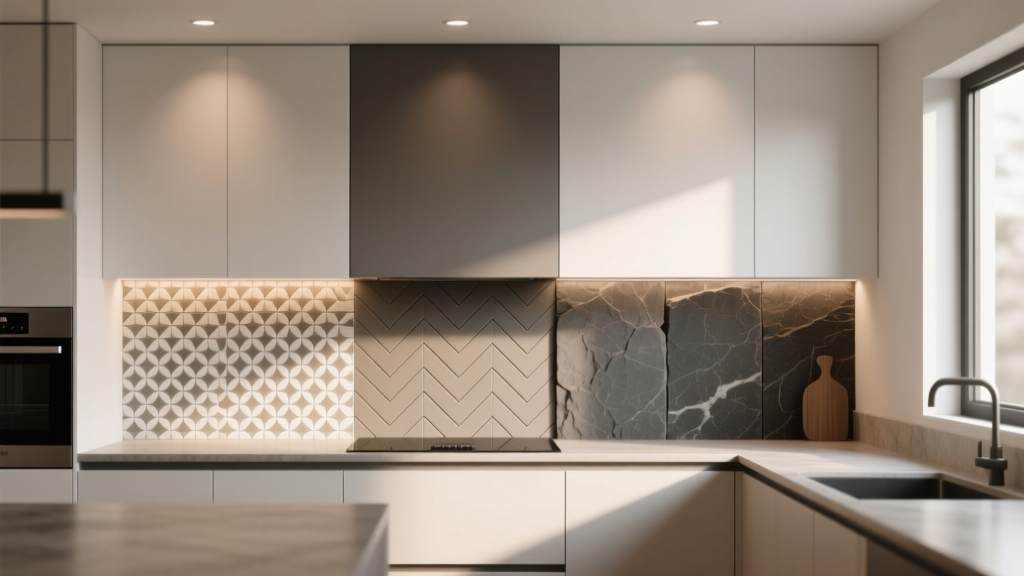
Kitchen Backsplash Pattern Scale: How to Choose (2026)
A kitchen backsplash does more than protect your walls from splatters—it sets the visual rhythm of the entire room. Pattern scale (how large or small the tile pattern feels once installed) can make a compact kitchen look calmer and more spacious, or it can add the energy and character that a neutral kitchen needs. Get the scale right, and your backsplash feels intentional and timeless. Get it wrong, and even high-end materials can look busy, dated, or out of proportion.
Homeowners often focus on tile color or finish and leave scale decisions for later. That’s where projects go off track. A backsplash is typically installed at eye level, across a long horizontal plane, and under task lighting—meaning scale is magnified. Choosing the right pattern scale early helps you coordinate cabinet style, countertop veining, hardware, and even open-shelf styling, so your renovation feels cohesive (and easier to maintain).
This guide breaks down how to choose backsplash pattern scale using practical measurements, material comparisons, layout advice, budget ranges, and common pitfalls to avoid—whether you’re planning a full kitchen renovation or updating a dated space for a fraction of the cost.
What “Pattern Scale” Means for a Kitchen Backsplash
Pattern scale isn’t just the tile size. It’s the overall visual impact created by:
- Tile dimensions (e.g., 2"x8" zellige vs. 12"x24" porcelain)
- Layout (stacked, running bond, herringbone, chevron, basketweave)
- Grout joint width and grout color (high-contrast grout increases perceived pattern)
- Variation inside the material (handmade edges, natural stone movement, terrazzo chips)
- Where it’s installed (standard 18" height vs. full-height slab or full wall)
Quick rule of thumb
- Small tiles + high-contrast grout + complex layout = small scale tile, but a bold overall pattern
- Large tiles or slab + minimal grout = quiet, large-scale look that reads more “modern” and spacious
Start with Your Kitchen’s Proportions and Sightlines
Measure the “backdrop” area
Before you fall in love with a pattern, measure how much backsplash you actually have. Two kitchens can have the same square footage but wildly different backsplash impact based on upper cabinets, windows, and range hood style.
- Standard countertop-to-cabinet backsplash height: 18" (can range 15"–20")
- Behind the range: often 30"–48" wide, and sometimes taller (especially with a statement hood)
- Full-height backsplash: countertop to ceiling (most impactful for scale)
Match scale to the “quiet vs. busy” needs of the room
Assess what already has visual movement:
- Busy elements: dramatic stone countertops, heavy cabinet detailing, open shelving with lots of items, patterned floors, bold hardware
- Quiet elements: flat-panel cabinets, solid-color quartz, minimal hardware, simple lighting
If your kitchen already has multiple busy elements, a backsplash with a larger, calmer pattern scale often looks more refined. If your kitchen is primarily quiet, you can use the backsplash to introduce smaller pattern scale or more intricate layouts.
Choose a Pattern Scale That Fits Your Design Style
Timeless and versatile: medium scale
For homeowners who want a backsplash that won’t feel dated in a few years, medium scale is a safe, stylish target.
- Good options: 3"x6" subway, 2"x10" or 3"x12" elongated subway, 4"x4" squares
- Best layouts: running bond (classic), vertical stack (modern), horizontal stack (clean)
- Why it works: it complements most cabinet doors, pairs well with both quartz and natural stone, and doesn’t dominate a room
Modern and airy: large scale
Large-scale backsplashes reduce grout lines and visual breaks, which is why they’re a go-to in contemporary kitchen design trends.
- Good options: 12"x24" porcelain, large-format ceramic, full-height quartz backsplash, slab stone backsplash
- Best for: small kitchens that need to feel bigger, minimalist kitchens, homes with modern architecture
- Design tip: align large-format tile joints with cabinet edges when possible for a tailored, “architectural” look
Warm, handcrafted character: small scale (used thoughtfully)
Smaller scale tile can add texture and charm, especially in transitional or classic kitchens. The key is controlling contrast so it doesn’t read as clutter.
- Good options: 2"x8" zellige, 2" mosaic squares, penny rounds
- Best for: cozy kitchens, vintage-inspired remodels, English cottage or Mediterranean aesthetics
- Design tip: choose grout close to the tile color to soften the pattern
Pattern Scale by Kitchen Size (Practical Guidelines)
Small kitchens and galley layouts
Small kitchens benefit from simpler patterns and fewer lines. That doesn’t mean you can’t use small tile—it just needs a calmer execution.
- Best scales: large-format tile, full-height slab, or medium subway with low-contrast grout
- Avoid: high-contrast grout with tiny mosaics across long runs (it can create visual “static”)
- Recommended grout joint widths: 1/16"–1/8" for a more seamless look (as appropriate for the tile)
Medium kitchens (most common renovations)
This is where you can comfortably use medium scale, and you have room to experiment with a feature area—like behind the range—without overwhelming the room.
- Best scales: medium tile in a clean layout, or a small-scale feature behind the range with a simpler field tile elsewhere
- Recommended approach: keep the main backsplash simple, and add personality through texture (gloss, handmade variation, subtle ribbing)
Large kitchens and open-concept spaces
In an open-concept home, the kitchen reads from multiple angles and farther distances. Larger scale usually looks more intentional and higher-end.
- Best scales: large-format tile, slab backsplash, or medium tile in a bold but structured layout (like herringbone)
- Tip for balance: if you choose a small-scale mosaic, limit it to a defined feature wall or wet bar area
How Layout Changes Pattern Scale (Even with the Same Tile)
Tile layout can make the same material feel classic, modern, busy, or graphic. Consider these common kitchen backsplash patterns:
Running bond (brick/subway)
- Look: timeless, forgiving, familiar
- Scale effect: medium; grout lines blend into a steady rhythm
- Best for: most kitchens, especially resale-friendly renovations
Stacked (vertical or horizontal)
- Look: clean, contemporary
- Scale effect: reads larger and more graphic; alignment becomes a focal point
- Pro tip: use tile spacers and a laser level—stacked layouts show imperfections more than running bond
Herringbone or chevron
- Look: elevated and decorative
- Scale effect: visually active (often feels “smaller scale” overall)
- Best use: as a feature behind the range or sink wall, paired with simpler materials elsewhere
Hexagon, penny round, and mosaic sheets
- Look: playful, detailed, sometimes vintage
- Scale effect: high pattern density; grout becomes a major design element
- Best for: smaller accent zones, or monochromatic installations with subtle grout
Material Choices and How They Affect Scale, Cost, and Maintenance
Ceramic tile
- Pattern scale: available in all scales; great for classic subway and handmade-look styles
- Cost: $3–$12 per sq. ft. (tile only); installed often $15–$40 per sq. ft. depending on layout complexity
- Maintenance: easy; choose a quality grout sealer for lighter grout colors
Porcelain tile (including large-format)
- Pattern scale: excellent for large-scale looks; fewer grout lines
- Cost: $4–$20 per sq. ft. (tile only); installed often $20–$55 per sq. ft.
- Maintenance: very durable and stain-resistant; great behind ranges
Natural stone (marble, limestone, travertine)
- Pattern scale: veining can create a large-scale “movement” even with small tiles
- Cost: $10–$35+ per sq. ft. (tile only); installed often $30–$80+ per sq. ft.
- Maintenance: requires sealing; avoid harsh cleaners; consider honed finishes for a softer, more forgiving look
Quartz or stone slab backsplash (full-height)
- Pattern scale: large and seamless—ideal for modern kitchens and statement stone
- Cost: commonly $40–$120+ per sq. ft. installed (varies by material and fabrication)
- Maintenance: quartz is low maintenance; natural stone needs sealing; minimal grout makes cleaning easier
Glass tile
- Pattern scale: often small to medium; reflective surface can feel visually busy under strong lighting
- Cost: $8–$30 per sq. ft. (tile only); installed often $25–$70 per sq. ft.
- Maintenance: easy to wipe; shows smudges more; use non-abrasive cleaners
Design Approaches That Look High-End (Without Overcomplicating)
1) Match scale to countertop movement
- If your countertop has bold veining, choose a backsplash with larger scale and quieter pattern (large tile or solid-color ceramic).
- If your countertop is solid or lightly speckled, you can add more pattern to the backsplash (herringbone, handmade texture, mosaics).
2) Use one “hero” and one “supporting” element
A reliable renovation strategy:
- Hero: backsplash pattern OR countertop stone (not both)
- Supporting: calm companion material that won’t compete
3) Consider extending the backsplash height strategically
- Standard (to cabinets): budget-friendly and classic
- To the hood: creates a focal point without full-wall cost
- Full-height: modern, seamless, great for open-concept kitchens
Budget Planning: Where Pattern Scale Impacts Cost
Two factors drive cost fast: labor complexity and material waste.
- Small mosaics: often higher labor costs due to alignment, cutting, and grout work.
- Herringbone/chevron: more cutting and layout time; expect a premium.
- Large-format tile: fewer pieces but can require a flatter wall and more careful installation.
- Slab backsplash: higher material and fabrication costs, but fewer grout lines and a streamlined look.
Typical backsplash project ranges (installed):
- Budget-friendly refresh: $800–$2,000 (ceramic subway, standard height)
- Mid-range upgrade: $2,000–$5,000 (premium ceramic/porcelain, feature area, upgraded grout, more outlets)
- High-end statement: $5,000–$12,000+ (full-height slab, designer tile, intricate layout, electrical modifications)
Common Mistakes to Avoid
- Choosing a tiny mosaic with high-contrast grout in a busy kitchen: it can overwhelm cabinets and countertops and make the space feel cluttered.
- Ignoring grout color until installation week: grout can completely change pattern scale. Test grout samples next to tile and countertop under your kitchen lighting.
- Using too many patterns at once: patterned floor + veined countertop + intricate backsplash often feels chaotic. Pick one primary pattern.
- Not considering cleaning habits: more grout lines mean more maintenance. If you cook daily, a larger scale backsplash is typically easier to wipe down.
- Misaligned focal points: an off-center pattern behind the range or sink is noticeable. Dry-lay tile and plan centerlines before setting.
- Over-trendy scale choices without context: extreme micro-mosaics or very bold geometric prints can date quickly. If you love them, use them in a smaller feature zone.
Practical Tips for Getting the Scale Right (Before You Buy)
- Print a paper mock-up: tape an outline of your backsplash area on the wall and place a few tile samples inside it. Step back 6–10 feet to judge scale.
- Sample under real lighting: turn on under-cabinet lights and overheads—glossy tiles and grout contrast change dramatically.
- Decide your grout strategy early:
- Low-contrast grout = softer, larger-feeling scale
- High-contrast grout = more graphic, smaller-feeling scale
- Plan around outlets and switches: small tiles hide cuts more easily; large-format can look choppy around many outlets unless you reduce outlet count or use plugmold/under-cabinet solutions.
- Pick finish with maintenance in mind: glossy shows splatter but wipes clean; matte hides smudges but may hold onto grease if heavily textured.
FAQ: Kitchen Backsplash Pattern Scale
What backsplash tile size looks best in a small kitchen?
Large-format tile, slab backsplash, or medium subway tile with low-contrast grout usually looks best. These options minimize visual breaks and can make the kitchen feel more open.
Does larger tile always mean a more modern kitchen?
Often, yes—especially with a stacked layout and minimal grout lines. That said, you can keep large tile timeless by choosing neutral colors, subtle texture, and classic finishes that coordinate with cabinetry and countertops.
How do I choose grout color to control pattern scale?
If you want the backsplash to feel calmer and larger-scale, match grout closely to the tile color. If you want a bolder, graphic look, choose contrasting grout (white tile with charcoal grout, for example)—just know it will emphasize every line.
Are small mosaic backsplashes hard to keep clean?
They can be. More grout lines mean more places for grease and discoloration to build up, especially behind the range. If you love mosaics, consider using them as a feature area or choose a mid-tone grout that hides stains better.
Should the backsplash match the countertop or contrast it?
Either can work, but balance is key. If your countertop has heavy veining or a bold pattern, a quieter backsplash scale tends to look more refined. If your countertop is simple, the backsplash is a great place to introduce pattern and texture.
Is a full-height backsplash worth the cost?
For many renovations, yes—especially in open-concept kitchens or when you want a sleek, high-end look. It reduces painted wall areas and can simplify cleaning, but costs more in materials and labor. A popular compromise is extending the backsplash to the hood and keeping other areas standard height.
Next Steps: Choose Your Scale with Confidence
To pick the right kitchen backsplash pattern scale, start with your kitchen’s proportions, then balance what’s already happening in the room—countertop movement, cabinet style, and how much visual “quiet” you need. Narrow your options to one or two tile sizes, test them with grout samples under your lighting, and choose a layout that supports your day-to-day cooking and cleaning habits.
- Measure your backsplash height and main focal zones (range and sink walls).
- Decide whether your backsplash is the hero or the supporting element.
- Order samples, test grout, and view them from 6–10 feet away.
- Confirm maintenance expectations before committing to tiny tiles or high-contrast grout.
For more kitchen renovation ideas, backsplash trends, and space-smart organization inspiration, explore the latest guides at thedecormag.com.
More Articles
 Kitchen Island Prep Stations: Summer Party Command Center
 Kitchen Fluted Range Hood Cover Ideas - The Decor Mag
 Open Concept Kitchen Renovation: Pre-Demolition Guide
 How to Design a Kitchen with an Eat-In Area - The Decor Mag
 Best Kitchen Dutch Oven Storage Ideas - The Decor Mag
 Create Care and Maintenance: A Practical, Brand-Specific Guide for Modern Kitchens
 Kitchen Fluted Wood Island Paneling - The Decor Mag
 Best Kitchen Wrap Storage Solutions - The Decor Mag
 Best Kitchen Dish Drying Rack Solutions - The Decor Mag
 Kitchen Cabinet Color Trends - The Decor Mag