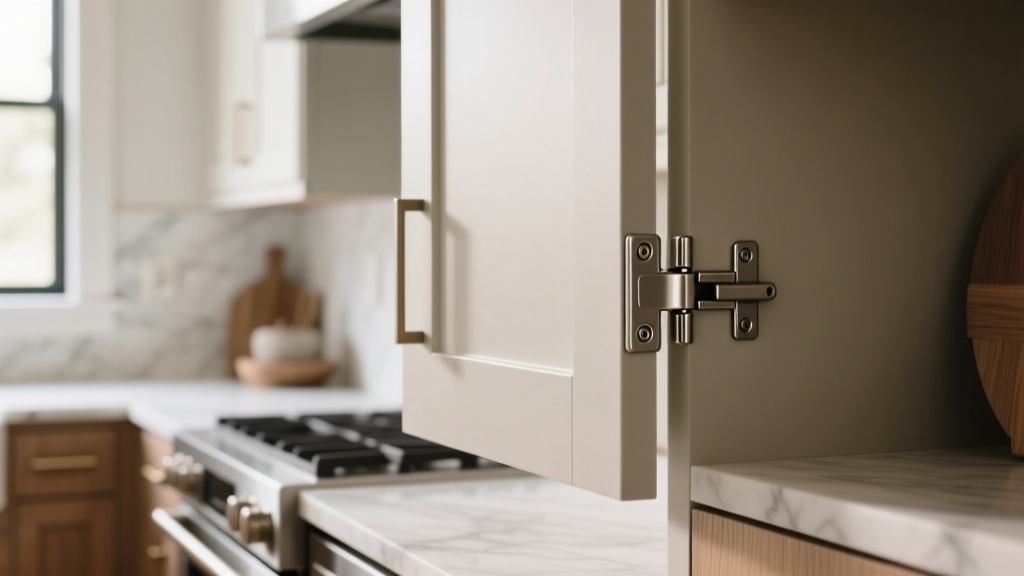
How to Choose Kitchen Cabinet Hinge Quality - The Decor Mag
Kitchen renovations tend to spotlight the big-ticket items—cabinet door styles, countertops, appliances, lighting. Yet one of the most “touch-every-day” components is easy to overlook: cabinet hinges. A high-quality hinge makes cabinets feel solid and quiet, keeps door gaps aligned, and stands up to years of heavy use. A poor hinge can turn even the most beautiful kitchen design into a daily annoyance with sagging doors, rubbing fronts, chipped edges, and constant readjustments.
Hinge quality also affects how your kitchen functions. Modern kitchen design trends emphasize clean lines and clutter-free visuals—think slab fronts, integrated pulls, and hidden hardware. Those looks rely on hinges that hold alignment precisely and operate smoothly. Whether you’re planning a full kitchen renovation or simply upgrading your kitchen organization, choosing the right hinges is one of the smartest “small” investments you can make.
Use this guide to evaluate hinge materials, features, ratings, costs, and installation details so your cabinets open beautifully today—and still feel great years from now.
What “Hinge Quality” Actually Means (Beyond Price)
Quality hinges aren’t just heavier or shinier. They’re engineered to keep doors aligned under repeated motion, resist corrosion in a humid kitchen environment, and close consistently without slamming.
The 6 markers of a high-quality kitchen cabinet hinge
- Durable base metal: steel (often nickel-plated) or stainless steel for best longevity.
- Reliable pivot and spring design: smooth motion without wobble or squeaks.
- Consistent tolerances: door reveals (gaps) stay even—especially crucial for modern flat-panel layouts.
- Finish that resists corrosion: kitchen humidity and cleaners can attack cheaper plating.
- Adjustability: fine-tuning in 2–3 directions helps maintain alignment as homes settle.
- Tested cycle rating: many premium hinges are rated for tens of thousands of open/close cycles.
Choose Your Hinge Type Based on Cabinet Style and Design Goals
The best hinge for your kitchen depends on cabinet construction, door overlay, and the look you want—traditional and visible, or minimalist and concealed.
1) Concealed (European) hinges: the modern standard
Concealed hinges (often called Euro hinges) sit inside the cabinet and are hidden when the door is closed. They dominate today’s kitchen renovation projects because they support clean lines and are typically adjustable.
- Best for: full-overlay doors, frameless cabinets, contemporary kitchens, slab doors, shaker doors.
- Why homeowners love them: easy alignment, optional soft-close, sleek appearance.
- Look for: 3-way adjustment, clip-on mounting plate for easy door removal, integrated dampers.
2) Semi-concealed hinges: a bridge between classic and modern
Semi-concealed hinges are partially visible from the outside. They’re common in face-frame cabinetry and can complement transitional kitchens.
- Best for: face-frame cabinets, replacement projects where you want minimal drilling changes.
- Tradeoff: usually less adjustability than premium concealed hinges.
3) Decorative exposed hinges: timeless and character-forward
Exposed hinges become part of the cabinet’s visual story—ideal for classic kitchens, inset doors, and heritage styles.
- Best for: inset doors, farmhouse kitchens, traditional designs, furniture-style cabinetry.
- Quality tip: prioritize solid brass or stainless, and verify the hinge can handle the door weight.
Hinge Overlay, Inset, and Door Geometry: Measurements That Matter
Hinge quality is only half the equation—correct hinge geometry is what keeps doors from binding and ensures crisp reveals. Before buying hinges, identify your cabinet type and door style:
Face-frame vs. frameless (European) cabinets
- Frameless cabinets: hinge mounts to cabinet side panel. Common in modern kitchen layouts and many ready-to-assemble cabinet lines.
- Face-frame cabinets: hinge mounts to a front frame. Common in traditional and many custom cabinet builds.
Overlay vs. inset doors
- Full overlay: door covers most of the cabinet frame/edge for a streamlined look (very popular in current kitchen design trends).
- Partial overlay: more frame is visible; often used to reduce costs or match existing cabinetry.
- Inset: door sits flush inside the frame opening; gorgeous and timeless, but demands precise hinges and installation.
Practical measurements to confirm before shopping
- Door thickness: most common is 3/4 inch (19 mm). Some modern slab doors run thicker; verify hinge compatibility.
- Door size and weight: tall pantry doors and wide base doors may need heavier-duty hinges or more hinges per door.
- Overlay dimension: how much the door overlaps the frame/side panel. This determines hinge “crank” and mounting plate options.
- Reveal (gap) targets: many designers aim for consistent 1/8 inch (3 mm) gaps. High-quality adjustable hinges help maintain this.
Materials and Finishes: What Lasts in a Real Kitchen
Kitchen hinges live in a tough environment: humidity from dishwashers and cooking, frequent cleaning, and constant use. Material choice is where quality becomes visible over time.
Steel vs. stainless steel vs. brass
- Nickel-plated steel: common for concealed hinges; strong and cost-effective. Look for reputable plating to prevent rust.
- Stainless steel: best for coastal homes, high-humidity kitchens, or heavy use. Excellent corrosion resistance, typically pricier.
- Solid brass: often used for decorative hinges and classic designs; resists corrosion well and ages beautifully. Softer than steel, so buy quality.
- Zinc alloys / thin stamped metals: more common in budget hinges; can wear faster and lose alignment.
Finish durability (and how it affects kitchen design)
Finish isn’t just style—it’s protection. Popular kitchen hardware trends include matte black, brushed brass, and mixed metals. For hinges, prioritize durability over novelty, especially for exposed hinge designs.
- Nickel plating: a workhorse finish for concealed hinges.
- Stainless finish: ideal for humid environments and modern kitchens with stainless appliances.
- Lacquered brass: slows patina; best if you want a consistent “new brass” look.
- Unlacquered brass: develops patina—beautiful in timeless, lived-in kitchens.
Soft-Close, Self-Close, and Opening Angles: Features Worth Paying For
Hinge features can dramatically improve everyday kitchen functionality and reduce wear on cabinet boxes.
Soft-close hinges
Soft-close is now a hallmark of well-appointed kitchens. It prevents slamming, protects cabinet finishes, and makes a kitchen feel quieter and more premium.
- Integrated soft-close: built into the hinge; cleanest look and usually the most reliable.
- Add-on dampers: can be a budget-friendly upgrade, though performance varies by door weight.
- Tip: choose hinges with switchable dampers so you can turn soft-close off on very small or very light doors.
Self-close hinges
Self-close uses spring tension to pull the door shut. It’s useful, but it can feel “snappy” compared to soft-close. Many modern concealed hinges combine self-close action with soft-close damping.
Opening angles: match the hinge to the way you use your kitchen
- Standard: around 105°–110° (common and sufficient for many wall cabinets).
- Wide angle: 120°–170° for better access—helpful for corner cabinets, pull-out trays, and tight kitchen layouts.
- Practical planning tip: if you’re adding interior organizers (pull-out trash, roll-out shelves), confirm the organizer’s clearance requirements and select a wide-opening hinge if needed.
How Many Hinges Do You Need? A Practical Rule of Thumb
Using too few hinges leads to sagging and misalignment—problems homeowners often blame on cabinet quality when the real issue is hinge capacity.
- Typical cabinet door (up to ~30 inches tall): 2 hinges
- Taller doors (30–60 inches): 3–4 hinges depending on weight
- Very tall pantry doors or heavy doors: 4+ hinges and/or heavy-duty hinge models
Quick check: If a door feels heavy, is wider than average, or has integrated racks or mirrors, assume you’ll need an extra hinge or a higher-capacity hinge series.
Product and Brand-Level Guidance (What to Look For When Shopping)
Rather than chasing a single “best” hinge, match the hinge line to your cabinet type and goals. In the kitchen design world, a few feature sets consistently signal a good buy.
Specs and features that typically indicate higher quality
- 3-way adjustment: side-to-side, depth, and height
- Clip-on design: doors remove easily for painting, deep cleaning, or appliance delivery
- Tool-free soft-close toggles: fine-tune feel and performance
- Corrosion-resistant materials: stainless steel options if you’re near the coast or have heavy kitchen humidity
- Clear compatibility charts: overlay/inset options and door thickness ranges listed by the manufacturer
Where to spend more (and where you can save)
- Spend more on: wide pantry doors, heavy drawer fronts, high-traffic base cabinets, and any inset cabinetry (precision matters).
- Save on: low-use cabinets (seasonal storage) if the hinges still meet basic adjustability and corrosion-resistance needs.
Cost Ranges and Budget Considerations
Hinges are one of the most cost-effective upgrades in a kitchen renovation because the comfort and durability payoff is immediate.
- Budget concealed hinges: roughly $2–$5 per hinge (often limited adjustability, lighter materials)
- Mid-range soft-close concealed hinges: about $5–$12 per hinge (good value for most homeowners)
- Premium hinges (higher cycle ratings, stainless options, specialty angles): about $12–$25+ per hinge
- Decorative solid brass hinges: often $10–$30+ per hinge depending on size and finish
Budget planning tip: A typical kitchen may have 20–60 hinges depending on door count and door height. If you’re upgrading to soft-close across 40 hinges, expect a ballpark of $200–$800 for mid-range quality, plus labor if you’re hiring installation.
Installation and Alignment: Quality Hinges Need Quality Setup
Even the best hinge won’t perform if it’s misinstalled. If you’re DIY-ing, measure twice and use consistent templates. If you’re hiring a pro, confirm they’ll fine-tune reveals after everything settles.
Practical installation tips homeowners can use
- Use a reveal gauge: aim for consistent 1/8 inch (3 mm) gaps across door edges for a clean, modern look.
- Confirm cup depth for concealed hinges: many Euro hinges use a 35 mm cup bore; door thickness must support it without weakening the front.
- Choose matching screws: quality screws reduce stripping and keep hinges stable over time.
- Recheck after 2–4 weeks: new cabinets and doors can settle slightly; a quick adjustment keeps everything crisp.
Maintenance and Care: Keep Hinges Smooth and Quiet
Good hinges are low-maintenance, but a little care extends life—especially in busy family kitchens.
- Clean gently: use a microfiber cloth and mild soap. Avoid harsh degreasers on plated finishes unless the manufacturer approves them.
- Don’t over-lubricate: most concealed hinges don’t need oil. If you hear squeaks, use a tiny amount of a non-staining lubricant and wipe excess.
- Tighten annually: check mounting screws once a year, especially on heavy pantry doors.
- Adjust, don’t force: if a door rubs, use hinge adjustments rather than pushing the door into place—this prevents damage to cabinet edges.
Common Mistakes to Avoid When Choosing Kitchen Cabinet Hinges
- Buying hinges before confirming overlay/inset: the wrong geometry causes binding and uneven gaps.
- Assuming “soft-close” is always better: very small, lightweight doors may close inconsistently unless the damper can be switched off or tuned.
- Underestimating humidity: in coastal areas or homes with heavy cooking, choose stainless or highly corrosion-resistant plated steel.
- Mixing hinge types without a plan: inconsistent opening angles and closing feels can make a kitchen seem less cohesive.
- Using too few hinges: sagging doors often show up months later—then require hinge replacement or door repair.
- Ignoring interior accessories: pull-out organizers and corner solutions may require wide-opening hinges to work properly.
FAQ: Kitchen Cabinet Hinge Quality
How do I know if my current hinges are low quality?
Common signs include doors that won’t stay aligned, squeaking or grinding during movement, visible rust or discoloration, loose pivots, and frequent screw tightening. If doors “bounce” shut or slam even after adjustment, the hinge spring/damper may be worn.
Are soft-close hinges worth it for a kitchen renovation?
For most homeowners, yes. Soft-close reduces noise and wear and gives cabinets a more premium feel—especially in open-concept kitchen layouts where sound travels. Choose hinges with adjustable or switchable damping for best results.
What hinge material is best for kitchens near the ocean?
Stainless steel is typically the best choice for corrosion resistance in coastal environments. If stainless isn’t available in the hinge style you need, look for high-quality plated hinges specifically rated for corrosion resistance.
Can I upgrade to concealed hinges on older cabinets?
Often, yes—especially if the doors are a standard thickness (around 3/4 inch) and the cabinet construction allows for proper mounting. You may need drilling (35 mm cup bore) and careful overlay planning. For face-frame cabinets, select concealed hinges designed for face frames.
How many hinges should a tall pantry door have?
Many tall pantry doors need 3–5 hinges depending on height and weight. For doors around 60 inches tall or heavier-than-average doors, lean toward 4+ hinges or heavy-duty hinge models to prevent sagging.
Do expensive hinges always mean better quality?
Not always, but higher-priced hinges often include better materials, more adjustability, higher cycle ratings, and more reliable soft-close mechanisms. Compare specs (material, adjustment range, corrosion resistance, opening angle) rather than relying on price alone.
Next Steps: Choose Hinges That Match Your Kitchen’s Style and Daily Rhythm
Start by identifying your cabinet type (face-frame or frameless) and door style (full overlay, partial overlay, or inset). Then choose a hinge material suited to your environment—especially if humidity is a factor. Prioritize adjustable, corrosion-resistant hinges with the opening angle your kitchen organization features require. If your renovation goal is a sleek, modern kitchen with clean reveals, high-quality concealed soft-close hinges are one of the simplest ways to get that “custom” feel.
- Measure door thickness and confirm overlay/inset.
- Decide on soft-close vs. self-close based on door size and household needs.
- Select materials and finishes that fit your kitchen design and humidity level.
- Budget for the right hinge count per door—especially tall or heavy fronts.
- Plan for a final adjustment pass after installation.
For more kitchen renovation ideas, cabinet hardware guides, and organization upgrades that elevate everyday living, explore the latest inspiration on thedecormag.com.
More Articles
 Sustainable vs. Kitchen: Rethinking Design, Appliances, and Daily Habits for Real Environmental Impact
 Best Kitchen Rug Options for Comfort - The Decor Mag
 Kitchen Design for Cooking: Functional Ideas (2026)
 Small Alternatives to Spaces: Smart, Space-Saving Kitchen Solutions That Actually Work
 Best Kitchen Herb Garden Window Ideas - The Decor Mag
 Kitchen Statement Range as Focal Point - The Decor Mag
 Best Kitchen Appliance Garage Ideas - The Decor Mag
 How to Style a Kitchen Open Shelf Display - The Decor Mag
 How to Design a Kitchen with an Eat-In Area - The Decor Mag
 Kitchen Backsplash Pattern Scale: How to Choose (2026)