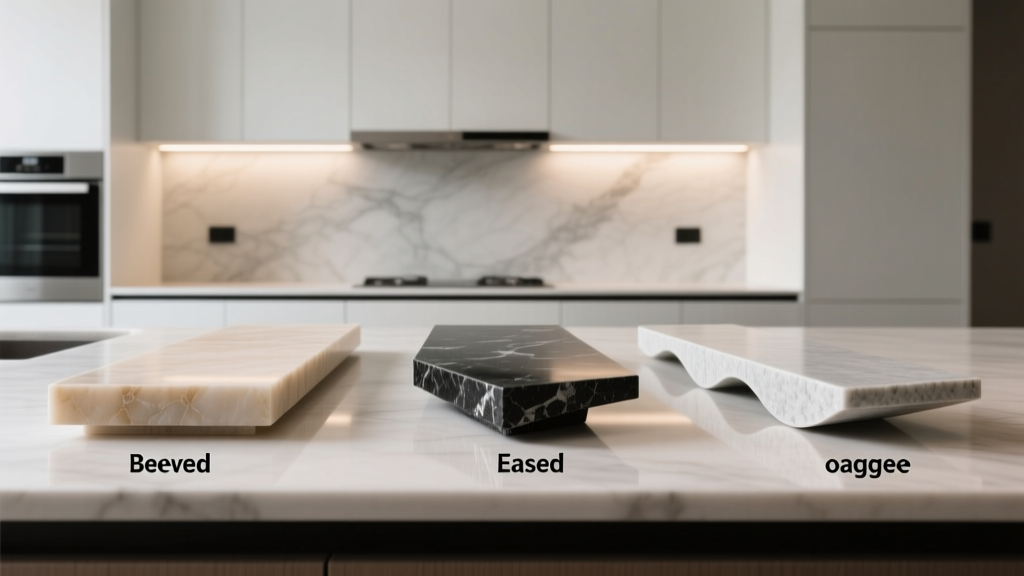
Kitchen Countertop Edge Profiles: Best Choices (2026)
When homeowners plan a kitchen renovation, they usually focus on the big-ticket decisions: countertop material, cabinet color, backsplash tile, and appliances. Yet one small detail has an outsized impact on how the whole kitchen feels and functions—the countertop edge profile. That thin line along the perimeter affects the style, the comfort of daily use, the durability of the slab, and even the final cost of your project.
The right edge profile can make a modern kitchen look sharper, a traditional kitchen feel richer, and a busy family kitchen safer and easier to clean. The wrong one can read “builder-basic,” chip easily, snag clothing, or collect crumbs in ways you never anticipated. This guide breaks down the most common countertop edges, how they pair with popular materials like quartz, granite, marble, and laminate, and what to choose based on layout, budget, and lifestyle.
Whether you’re upgrading a dated kitchen or designing a brand-new space, choosing a countertop edge is a chance to add polish and practicality—without changing your entire plan.
What Is a Countertop Edge Profile (and Why It Matters)?
A countertop edge profile is the shape cut into the exposed edge of your countertop. It can be straight and minimal, softly rounded, or more decorative with curves and steps. Fabricators create these edges with specialized tools, and the level of shaping affects labor time, price, and performance.
- Design impact: Edge profiles set the tone—crisp edges feel contemporary; curved edges feel classic.
- Comfort: You’ll lean on this edge every day. Some profiles feel better on forearms and hips (especially at islands).
- Maintenance: Edges with tight curves or ledges can trap crumbs; simple edges wipe clean faster.
- Durability: Some edges reduce chipping, especially at corners.
- Budget: More complex profiles cost more in fabrication and may require thicker-looking builds.
Start with the Big Three: Lifestyle, Material, and Style
1) Lifestyle and Safety
If your kitchen is a high-traffic family hub, prioritize comfort and impact resistance. If it’s a sleek entertaining space, you can lean more decorative—within reason.
Best picks by household type:
- Homes with young kids: Rounded edges (eased, bullnose, demi-bullnose) to soften bumps.
- Serious home cooks: Simple edges that wipe quickly (eased, pencil, small bevel).
- Entertaining-focused kitchens: Waterfall islands with mitered edges; subtle bevels for a tailored look.
- Accessibility considerations: A slightly rounded profile is more comfortable for users who lean or brace on counters.
2) Countertop Material: What Each One “Likes”
Not every edge works equally well with every material. Your slab’s composition and thickness matter.
- Quartz: Handles most profiles well, but very sharp corners can still chip. Eased or small bevel is a safe, modern standard.
- Granite: Great for many profiles, including more decorative ones. Some granites with large crystals can look busier with ornate edges.
- Marble: Softer and more prone to etching; choose edges that reduce chipping (eased, demi-bullnose) and avoid extremely sharp corners.
- Quartzite: Hard and durable; excellent with eased, bevel, and ogee, but fabrication can be pricier.
- Laminate: Often comes with built-in edge styles (square, bevel, bullnose). Decorative stone-style edges aren’t typical.
- Solid surface (Corian-style): Can do seamless, integrated edges and sinks; great for smooth, minimal profiles.
- Butcher block: Looks best with eased or small roundover; large decorative edges can feel out of place.
3) Kitchen Design Style
Edge profiles work like trim details: understated profiles suit modern kitchens, while curves and steps complement traditional or transitional spaces.
- Modern/minimal: Square (with a slight ease), small bevel, waterfall mitered edge.
- Transitional: Pencil round, demi-bullnose, small ogee.
- Traditional: Ogee, double ogee, more pronounced bullnose (especially on thicker-looking counters).
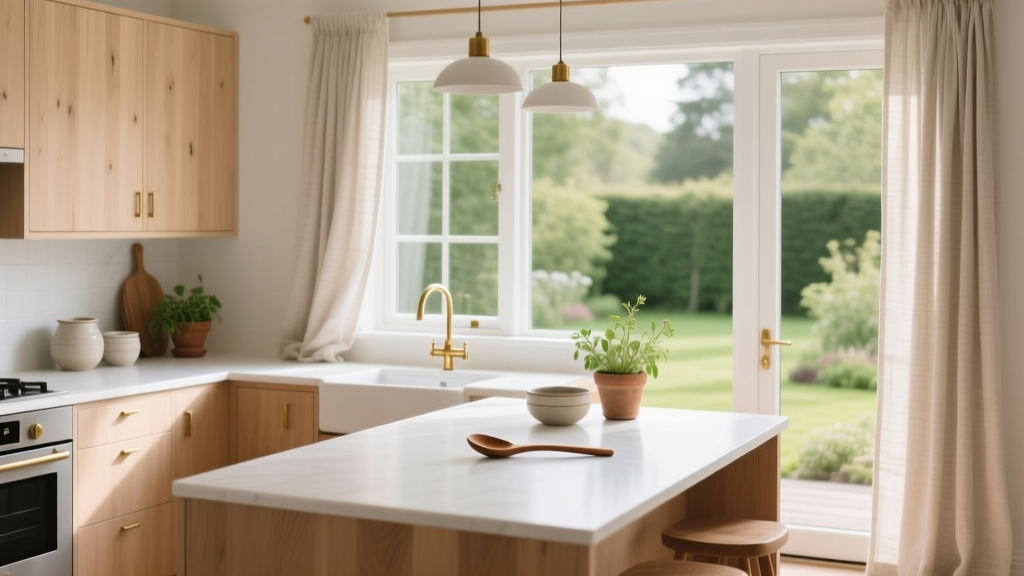
- Scandinavian/Japandi: Eased edges, slim profiles, natural materials like wood or honed stone.
Popular Countertop Edge Profiles (Pros, Cons, and Best Uses)
Eased Edge (Softened Square)
Look: Clean, crisp, modern.
- Best for: Quartz, granite, quartzite; contemporary and transitional kitchens.
- Pros: Easy to wipe, budget-friendly, less chipping than a true sharp edge.
- Cons: Still relatively “square,” so it can feel sharp on hips at island corners.
Tip: Ask for a slightly larger ease at high-traffic corners (a subtle comfort upgrade without changing the look).
Pencil Round (Small Radius)
Look: Slightly softened and friendly.
- Best for: Family kitchens, high-use islands, most stone and quartz.
- Pros: More comfortable than eased, still streamlined.
- Cons: Minimal “statement” if you want a showpiece detail.
Beveled (Chamfered) Edge
Look: Tailored, architectural; a flat angled cut.
- Best for: Modern kitchens, slab cabinet fronts, industrial-inspired looks.
- Pros: Crisp design detail, helps hide small chips at the very top edge.
- Cons: The angle can collect crumbs if it’s wide; can feel sharp if too pronounced.
Practical measurement: A small bevel (about 1/8–1/4 inch) reads refined without becoming a crumb ledge.
Half Bullnose / Demi-Bullnose
Look: Rounded top, flatter bottom.
- Best for: Transitional kitchens, households wanting a softer edge without going fully traditional.
- Pros: More chip-resistant than sharp profiles; comfortable to lean on.
- Cons: Can show drips on the vertical face if spills aren’t wiped quickly.
Full Bullnose
Look: Fully rounded, classic.
- Best for: Traditional kitchens, laminate, and some stone installations where safety is top priority.
- Pros: Very kid-friendly; softens the visual weight of thick counters.
- Cons: Less trendy in 2026-forward kitchens; spills can roll over the edge more easily.
Ogee (Classic S-Curve)
Look: Decorative and elegant, often associated with traditional design.
- Best for: Granite, marble, quartzite; ornate cabinetry and detailed millwork.
- Pros: Adds a premium, furniture-like finish; pairs beautifully with raised-panel cabinets.
- Cons: More expensive; more grooves to clean; can feel visually heavy in small kitchens.
Mitered Edge (Thick-Look Build)
Look: Thick slab appearance (often 2–3 inches), popular for waterfall islands.
- Best for: Quartz and porcelain slabs, modern luxury kitchens.
- Pros: Major design impact; makes standard thickness look substantial.
- Cons: Higher cost; seam visibility depends on fabricator skill and veining pattern alignment.
Trend note: Waterfall islands with mitered edges remain a strong choice in current kitchen design trends, especially in open-plan homes where the island reads as furniture.
Edge Profile Recommendations by Kitchen Layout
Islands and Peninsulas
These are the most touched surfaces in many homes. Comfort and safety matter, especially at corners.
- Best everyday choice: Pencil round or eased edge.
- For a statement: Mitered edge (2–3 inch look) with waterfall sides.
- Corner tip: Consider a slightly larger radius on island corners or a small clip/corner radius to reduce bruised hips in tight walkways.
Clearance check: Aim for 36–42 inches of walkway clearance around islands. If your clearance is closer to 36 inches, avoid sharp, boxy corners.
Perimeter Counters
- Best for easy cleaning: Eased or small bevel.
- For traditional kitchens: Ogee on the most visible run (often the sink wall) and a simpler edge elsewhere to control costs.
Sink Area
Water, soap, and daily messes put extra stress on edges.
- Recommended: Eased, pencil round, or demi-bullnose for quick wipe-downs.
- Avoid: Deeply detailed profiles that trap grime right where splashes happen most.
Cost Ranges and Budget Considerations
Edge pricing varies by region, fabricator, and material hardness, but these ranges are common for stone and quartz fabrication:
- Standard edges (often included): eased, small roundover/pencil — $0–$10 per linear foot
- Mid-tier edges: bevel, demi-bullnose — $10–$25 per linear foot
- Decorative edges: ogee, dupont, more complex profiles — $25–$50+ per linear foot
- Mitered/thick-build edges: $40–$100+ per linear foot depending on thickness and seam work
Smart budget approach:
- Use a premium edge on the most visible focal area (often the island or main sink run).
- Choose a standard eased edge for less visible perimeter runs.
- Ask your fabricator to show edge samples on your exact material—some stones look best with simpler profiles.
Matching Edge Profile to Countertop Thickness (and the Look You Want)
Most stone and quartz countertops are 2 cm (about 3/4 inch) or 3 cm (about 1 1/4 inch). Your edge choice can make the counter look slimmer or more substantial.
- 2 cm slabs: Often paired with a built-up edge to appear thicker. An ogee or stacked look can make 2 cm feel more traditional.
- 3 cm slabs: Look substantial already; simple eased or small bevel edges keep the look clean and current.
- Ultra-modern trend: Thin-looking counters (or porcelain) with a minimal eased edge for a sleek, architectural vibe.
Maintenance and Durability Tips (Edge-Specific)
- Prevent chips: Avoid repeatedly knocking heavy pots against sharp corners; choose eased or rounded profiles in busy kitchens.
- Keep edges clean: Bevels and ogees need a little extra attention—wipe along the curve/angle to remove grease film.
- Use cutting boards: Edge profiles don’t replace good habits; cutting on stone dulls knives and can damage sealers on natural stone.
- Sealing matters: Granite, marble, and quartzite may require sealing. Pay special attention to edges near sinks and dishwashers where moisture exposure is highest.
- Honed vs. polished: Honed finishes feel softer and hide etches better on some stones, while polished surfaces reflect light and emphasize crisp edges.
Common Mistakes to Avoid
- Choosing an edge based on photos only: Lighting and camera angles can hide how “sharp” an edge feels. Ask to touch physical samples.
- Ignoring corner behavior: A squared edge on an island corner in a tight walkway is a bruise waiting to happen.
- Over-decorating a modern kitchen: An ornate ogee can clash with flat-panel cabinets and minimal hardware.
- Assuming all fabricators execute complex edges equally: Decorative and mitered edges require skill. Ask for portfolio photos and seam examples.
- Not coordinating with backsplash thickness: Some edges and overhang details change how the backsplash line reads—especially with full-height slab backsplashes.
- Forgetting overhang support: If you’re planning seating, confirm the overhang and support needs before finalizing the edge and thickness.
Current Trends + Timeless Functionality
Right now, many kitchen renovations lean toward calm, low-maintenance surfaces with intentional detail. That shows up in edge choices, too.
- Trending: Minimal eased edges on quartz; mitered waterfall islands; thinner-looking profiles paired with warm wood cabinetry.
- Timeless: Pencil round and demi-bullnose—comfortable, forgiving, and visually flexible across design styles.
- Design-forward compromise: A small bevel gives a crisp, custom look without the cleaning demands of ornate profiles.
FAQ: Kitchen Countertop Edge Profiles
Which countertop edge profile is easiest to clean?
An eased edge or pencil round is typically the easiest—no deep grooves, minimal places for crumbs to collect, and fast wipe-downs.
What’s the best edge profile for a family kitchen with kids?
A pencil round, demi-bullnose, or bullnose reduces sharp corners and is more forgiving during daily traffic around islands and peninsulas.
Does the edge profile affect countertop durability?
Yes. Very sharp edges can chip more easily, especially at corners. Slightly rounded or eased edges are generally more chip-resistant and comfortable for daily use.
Are decorative edges worth the extra cost?
They can be, especially in traditional kitchens where detail is part of the architecture. For many homeowners, a better value is using a decorative edge on the island or main focal run and a standard edge elsewhere.
Can I mix edge profiles in the same kitchen?
Absolutely. It’s common to use a statement edge on the island and a simpler edge on perimeter counters. Keep the profiles visually compatible (for example, eased on perimeter and a subtle bevel on the island).
How do I choose an edge profile for a waterfall island?
Most waterfall islands look best with a clean eased edge or a mitered edge (to create a thicker, seamless look). Ask your fabricator how veining will wrap at the corners for the most cohesive result.
Next Steps: How to Finalize Your Choice
- Bring a cabinet door sample and your countertop selection to the fabricator to view edge profiles together.
- Decide where you want visual emphasis (island, sink wall, or perimeter) and allocate your budget accordingly.
- Confirm thickness and overhangs (especially for seating) before fabrication begins.
- Ask for a mock-up or physical edge sample on a similar material to feel the comfort level.
The best countertop edge profile is the one that supports your daily routines, suits your kitchen design style, and stays beautiful with the amount of maintenance you’re realistically willing to do. Choose with your hands as much as your eyes—then let that small detail elevate the whole renovation.
For more kitchen renovation ideas, countertop guides, and space-smart organization tips, explore the latest on thedecormag.com.
More Articles
 Best Kitchen Pantry Door Ideas - The Decor Mag
 How to Design a Kitchen with Natural Light - The Decor Mag
 How to Design a Kitchen Work Triangle - The Decor Mag
 Safety-First Bedroom Inspiration: Essential Design Principles, Verified Products, and Measured Layouts
 Kitchen Two-Tone Cabinet Ideas - The Decor Mag
 Kitchen Arched Doorway to Kitchen Design - The Decor Mag
 Best Kitchen Mixing Bowl Storage - The Decor Mag
 How to Choose Kitchen Floor Tile Size - The Decor Mag
 Small Alternatives to Spaces: Smart, Space-Saving Kitchen Solutions That Actually Work
 Scandinavian Kitchen Design Guide - The Decor Mag