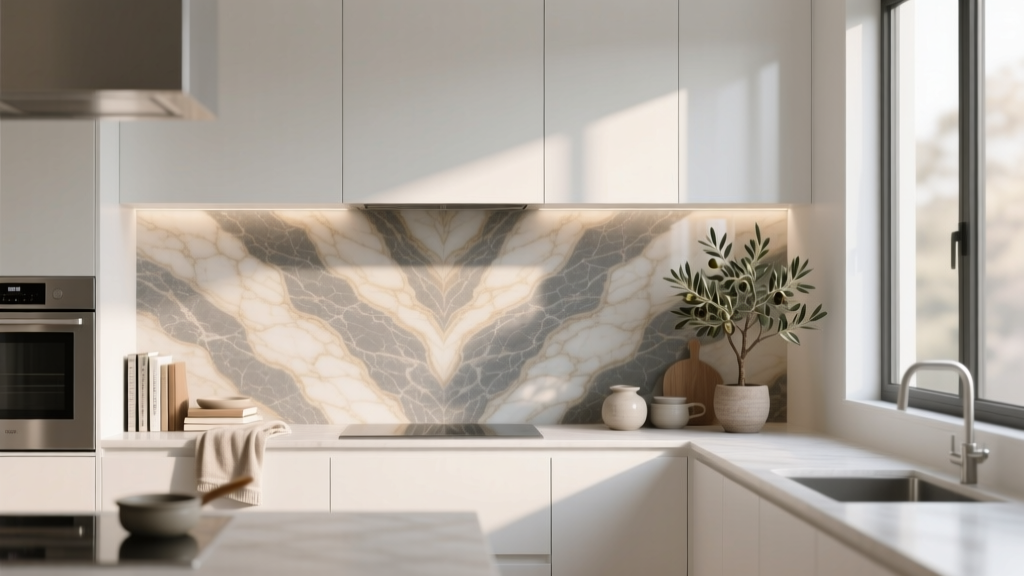
Kitchen Book-Matched Stone Backsplash - The Decor Mag
A kitchen backsplash does more than protect the wall behind your range or sink—it sets the tone for the entire space. Few upgrades deliver the visual impact of a book-matched stone backsplash: two slabs cut and opened like a book so the veining mirrors across a seam. The result feels custom, architectural, and intentionally designed, even in a modest-sized kitchen.
Homeowners planning a kitchen renovation are increasingly choosing statement backsplashes as a focal point instead of busy tile patterns. Book-matching offers that “wow” moment while staying grounded in timeless functionality: a large-format surface is easier to clean than grout-heavy tile, and the pattern is naturally one-of-a-kind.
Whether your style leans modern, transitional, or classic, this guide breaks down how book-matched stone works, the best materials, smart layouts, cost ranges, and what to watch out for—so you can plan a backsplash that looks intentional for years, not just on reveal day.
What Is a Book-Matched Stone Backsplash?
Book-matching is a fabrication technique where consecutive slices of stone (or engineered slabs) are polished and installed side by side so the veining mirrors at the joint. Think of it as a symmetrical “butterfly” effect that can be subtle (fine linear veining) or dramatic (bold swirls and movement).
Why homeowners love it
- High-end focal point: It reads like custom millwork or art, especially behind the range.
- Less visual clutter: Large slabs reduce grout lines, which helps smaller kitchens feel calmer.
- Timeless + on-trend: Statement slab backsplashes align with current kitchen design trends while remaining classic.
- Easy maintenance (material-dependent): A sealed slab is typically easier to wipe than textured tile.
Where Book-Matching Works Best in the Kitchen
You can book-match a full perimeter backsplash, but many renovations use it strategically to control cost and keep the layout balanced.
Most popular placements
- Range wall feature: The most dramatic application. Center the seam on the cooktop for symmetry.
- Full-height behind the hood: A book-matched panel from countertop to ceiling creates a clean, vertical focal point.
- Sink wall centerpiece: Especially effective with a centered window; align the seam with the faucet or window centerline.
- Bar/coffee station niche: A smaller “moment” that still feels custom.
Recommended heights (practical measurements)
- Standard backsplash height: 18 inches from countertop to upper cabinets (typical, but measure your actual cabinet install).
- Full-height splash: Countertop to bottom of uppers, or countertop to ceiling on feature walls.
- Behind a range: Ideally extend at least to the bottom of the hood, often 30–36 inches above the cooktop, or full-height for maximum impact.
- Side returns: If your backsplash ends at a tall cabinet or wall, plan a clean termination strip or stone return (typically 1/2 inch to 1 inch thickness with a finished edge).
Best Materials for a Book-Matched Backsplash (Pros, Cons, and Use Cases)
Not every stone behaves the same. The “right” slab depends on your cooking habits, cleaning preferences, and whether the backsplash sits behind a high-heat range.
Quartzite (natural stone)
- Best for: Busy kitchens, frequent cooking, homeowners who want natural movement with strong durability.
- Pros: Generally heat-resistant and scratch-resistant; often less etch-prone than marble.
- Cons: Can still stain if not sealed; pricing varies widely by rarity and color.
- Look: Dramatic veining similar to marble with more rugged performance.
Marble (natural stone)
- Best for: Timeless luxury, classic or European-inspired kitchens, homeowners who accept patina.
- Pros: Unmatched veining; iconic for book-matching; elevates resale appeal in many markets.
- Cons: Prone to etching from acids (lemon, vinegar) and can stain without diligent sealing and quick cleanup.
- Look: Soft, luminous depth; perfect for statement range walls.
Porcelain slabs (sintered surfaces)
- Best for: Low-maintenance households, heavy cooking, and high-heat areas behind ranges.
- Pros: Highly stain-resistant; excellent heat resistance; minimal sealing needs; consistent pattern availability.
- Cons: Edges can chip if impacted; book-matching options depend on manufacturer patterns and slab availability.
- Look: Can mimic marble, onyx, limestone, or concrete; great for modern kitchens.
Engineered quartz slabs
- Best for: Easy cleaning, consistent color, and predictable pricing.
- Pros: Non-porous; no sealing; good stain resistance.
- Cons: Not ideal for direct high heat (especially behind powerful ranges); use proper clearances and manufacturer guidance.
- Look: From subtle veining to bold patterns; not as naturally varied as stone.
Soapstone (natural stone)
- Best for: Cozy, timeless kitchens; homeowners who like a matte, lived-in finish.
- Pros: Heat-friendly; resistant to acids; can be refinished; lower contrast veining can still book-match beautifully.
- Cons: Softer (can scratch); darkens over time; often oiled to deepen color (optional).
Design Approaches That Make Book-Matching Look Intentional
A book-matched backsplash can look stunning—or distracting—depending on layout choices. The goal is to make the stone feel integrated with your cabinets, countertops, and lighting.
1) Choose the right “mirror line”
Center the book-match seam on a strong architectural axis:
- Center of the range or cooktop
- Centerline of the hood
- Center of a sink/faucet
- Center of a window or shelving bay
2) Decide on vein direction: vertical vs. horizontal
- Vertical veining: Makes ceilings feel taller; ideal for full-height slab backsplashes and dramatic range walls.
- Horizontal veining: Stretches a small kitchen visually; works well for long counter runs.
3) Pair with countertop stone thoughtfully
- Matching countertop + backsplash: A seamless, current trend that feels high-end and clean. Best when the stone has elegant movement (not overly busy).
- Contrasting countertop: Great when you want the backsplash to be the feature (e.g., dramatic marble backsplash with a quieter quartz countertop).
- Same family, different expression: For example, a soft white countertop with a more expressive slab backsplash in the same undertone.
4) Plan for outlets early (or minimize them)
Outlets interrupt the slab and the symmetry. For a cleaner look, consider:
- Under-cabinet outlet strips (hardwired) to keep the stone uninterrupted
- Pop-up outlets in the countertop (where code allows)
- Relocating outlets to the side walls or inside appliance garages
Recommended Products and Finish Options
Exact brand availability varies by region, but these product categories help you shop smarter at stone yards and with fabricators.
Stone + surface recommendations (by goal)
- Bold statement: High-movement marble or quartzite slabs (ask for “book-match pair” from the same block).
- Low maintenance: Porcelain slab in a marble-look pattern with a manufactured book-match option.
- Soft, warm kitchens: Honed limestone-look porcelain or honed soapstone for a matte, tactile finish.
Finish choices and what they do
- Polished: Most reflective; emphasizes veining; easiest to wipe clean but shows smudges more readily.
- Honed: Matte/satin; hides fingerprints; feels more organic; may show etching less on marble (though it can still etch).
- Leathered: Textured; great for rustic or organic-modern kitchens; can hold grease in texture if placed near intense cooking—cleaning routine matters.
Cost Ranges and Budget Considerations
Pricing for a book-matched stone backsplash depends on slab material, thickness, fabrication complexity, cutouts, and installation logistics.
Typical cost ranges (installed)
- Standard 18-inch slab backsplash: $40–$120 per sq. ft. (material + fabrication + install), depending on stone type and market.
- Full-height slab feature wall (range wall): $1,500–$6,000+ for many kitchens, depending on height/width, slab cost, and number of seams.
- Premium marble/quartzite book-match pair: Can add $1,000–$4,000+ versus a simpler, single-slab or tile solution.
- Porcelain slab backsplash: Often $50–$150 per sq. ft. installed; book-match patterns may carry a premium.
Budget levers that don’t sacrifice the look
- Feature only the range wall: Use a simpler tile (or matching paint) on secondary walls.
- Limit cutouts: Fewer outlets on the slab reduces labor and preserves symmetry.
- Use 2 cm thickness where appropriate: Many backsplashes don’t need 3 cm thickness (confirm with your fabricator for rigidity and edge details).
- Choose a calmer slab: Dramatic, rare patterns are typically pricier; subtle veining can still book-match beautifully.
Installation Planning: Measurements, Seams, and Templating
Book-matching only works if the slab is selected, cut, and installed with precision. A few practical steps prevent expensive surprises.
Checklist for a smooth process
- Pick slabs in person when possible: Photos rarely show true movement and fissures. Ask to see the “sister slab” intended for book-matching.
- Confirm the book-match layout before cutting: Request a digital layout (often called a “slab rendering”) showing seam placement, outlets, pot filler, and hood coverage.
- Template after cabinets and countertops are finalized: Small shifts in cabinet install can throw off seam alignment.
- Plan seam location: Center seam is classic; avoid placing the seam where a pot filler or outlet will interrupt the mirror effect.
- Use proper substrate: Ensure the wall is flat and stable (often cement board or a properly prepared drywall surface depending on local practice and stone weight).
Seam width goals
- Target seam: Often around 1/16 inch or tighter, depending on stone and wall conditions.
- Color-matched epoxy: Helps seams visually disappear; insist on a seam color test when working with high-contrast veining.
Maintenance and Cleaning (Stone-Specific Advice)
A book-matched slab backsplash is usually easy to care for, but the right routine depends on what it’s made of.
Daily/weekly cleaning
- Wipe with a soft cloth and warm water plus a pH-neutral cleaner.
- For cooking splatter, clean sooner rather than later—especially around the range.
- Avoid abrasive pads that can dull polished finishes over time.
Sealing guidance (general)
- Marble and many natural stones: Seal on installation, then re-seal based on use (often every 6–18 months). Your installer or stone supplier should recommend a schedule for your specific slab.
- Quartz (engineered): Typically does not require sealing.
- Porcelain slabs: Usually no sealing needed, though grout lines (if any) may require sealing.
Stain and etch prevention tips
- Use a powerful vent hood to reduce grease build-up on porous stones.
- Keep acidic cleaners away from marble (including many “natural” vinegar-based sprays).
- Address oil splatters promptly—oil can darken some stones if left to sit.
Common Mistakes to Avoid
- Choosing stone for looks alone: A marble backsplash behind a heavy-use range can be fine, but only if you’re comfortable with patina and willing to seal and clean appropriately.
- Skipping the slab layout approval: The vein placement and seam alignment should be approved before cutting.
- Forgetting outlet and switch planning: Randomly placed outlets can ruin the symmetry and increase fabrication cost.
- Misaligning the seam with the hood/range: Even a small offset is noticeable with mirrored veining.
- Not checking lighting: Under-cabinet lighting and hood lights can highlight seams or surface texture; test warm (2700–3000K) lighting for a flattering look.
- Overcomplicating surrounding finishes: Let the stone be the star. Busy cabinet door styles, loud hardware, and strong countertop patterns can compete.
FAQ: Kitchen Book-Matched Stone Backsplash
Is a book-matched backsplash only for luxury kitchens?
No. While it reads high-end, you can control cost by book-matching only the range wall and using a more budget-friendly backsplash elsewhere. Choosing porcelain slabs or calmer stones can also keep pricing manageable.
Can I book-match the backsplash with my countertop stone?
Yes, and it’s a popular kitchen design trend. If you want the backsplash to book-match, ask your fabricator to reserve consecutive slabs so the countertop cuts don’t disrupt the mirrored pair planned for the wall.
What’s better behind a range: marble, quartzite, or porcelain?
For low maintenance and high heat resistance, porcelain is often the easiest choice. Quartzite offers a natural look with strong durability. Marble is gorgeous but more prone to etching and staining—best if you’re comfortable with natural patina.
How many slabs do I need for a book-matched backsplash?
Most book-matched designs use two slabs (a matched pair), but the number depends on wall size and slab dimensions. Common slab sizes are roughly 63x126 inches (varies by material), so a full-height wall may require multiple pieces and additional seams.
Do I need to remove drywall to install a slab backsplash?
Not always. Many installations go over properly prepared walls, but the surface must be flat, clean, and stable. For heavy stone or uneven walls, your installer may recommend reinforcement or a different substrate.
Will the seam always be visible?
A seam may be faintly visible up close, but a skilled fabricator can minimize it with tight alignment and color-matched epoxy. The mirrored veining usually draws attention to the overall pattern rather than the joint.
Next Steps: How to Plan Yours
If you’re considering a book-matched stone backsplash for your kitchen remodel, start with a simple plan:
- Pick the location: range wall feature, sink wall, or full perimeter backsplash.
- Choose performance level: porcelain for low maintenance, quartzite for durability with natural beauty, marble for classic elegance.
- Measure and photograph your kitchen: include hood width, range size, backsplash height, outlet locations, and any windows.
- Visit a stone yard (or porcelain showroom): ask specifically for book-match pairs and request a layout rendering before fabrication.
- Coordinate lighting and outlets: plan under-cabinet lighting and outlet placement early to keep the slab clean and symmetrical.
A well-executed book-match transforms a backsplash from a simple protective surface into a focal point that elevates your entire kitchen design. For more renovation planning tips, backsplash ideas, and timeless kitchen organization upgrades, explore more inspiration on thedecormag.com.
More Articles
 How to Choose Kitchen Cabinet Glass Type - The Decor Mag
 Kitchen Cabinet Depth Standards (2026)
 Kitchen Fluted Range Hood Cover Ideas - The Decor Mag
 How to Choose the Right Kitchen Hood Vent - The Decor Mag
 How to Design a Kitchen for Aging in Place - The Decor Mag
 Kitchen Fluted Detail Cabinet Trend - The Decor Mag
 Best Kitchen Charging Drawer Solutions - The Decor Mag
 Kitchen Brass Hardware Renaissance - The Decor Mag
 How to Design a Kitchen for Multiple Cooks - The Decor Mag
 Farmhouse Kitchen Decor Inspiration - The Decor Mag