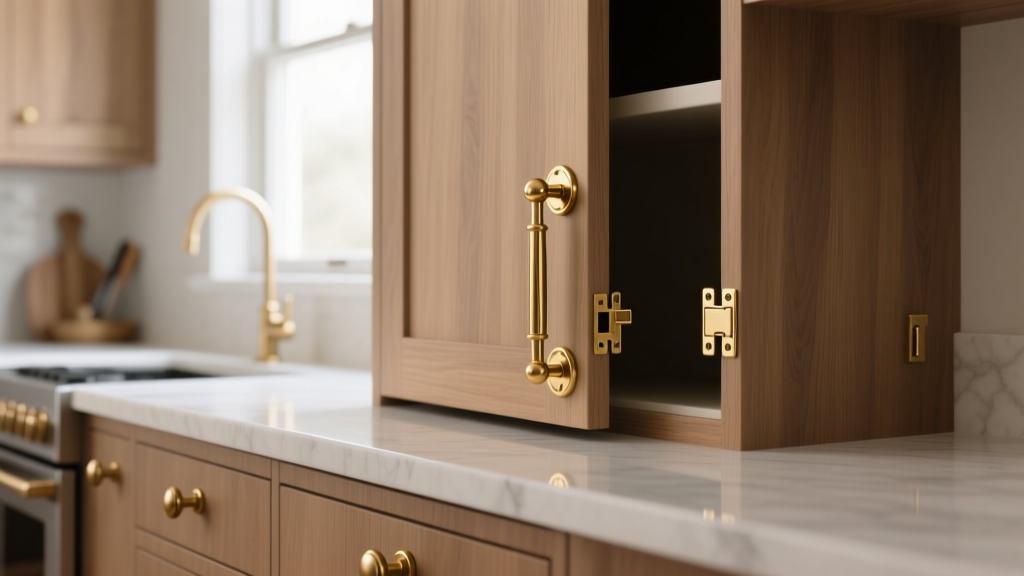
Kitchen Brass Hardware Renaissance - The Decor Mag
Kitchen design trends come and go, but every so often a detail returns with more versatility, better finishes, and smarter performance than ever before. That’s exactly what’s happening with brass hardware. Once associated with glossy, yellow-toned fixtures from decades past, today’s brass cabinet pulls, knobs, and faucets are showing up in renovated kitchens of every style—from warm modern and transitional to minimalist, European-inspired spaces.
This matters because hardware is one of the few kitchen upgrades that impacts daily touchpoints: how drawers feel, how easily you can open a pantry with full hands, and whether the room reads “builder basic” or intentionally designed. Brass hardware also has a unique design superpower: it adds warmth. In kitchens dominated by white paint, gray tile, stainless appliances, or cooler quartz veining, brass provides balance and a refined contrast that photographs beautifully and feels inviting in real life.
If you’re planning a full kitchen renovation or just a strategic refresh, this guide will help you choose the right brass finishes, sizes, and placements—plus how to avoid the common mistakes that make brass look dated or mismatched.
Why Brass Is Back: The Practical and Aesthetic Case
Brass adds warmth without adding clutter
Renovation priorities often focus on cabinets, countertops, and appliances. Hardware is smaller, but it changes the “temperature” of the kitchen—especially in popular palettes like:
- White shaker cabinets + white/gray quartz
- Greige cabinetry + light oak floors
- Deep green or navy base cabinets + light uppers
- Walnut or rift-sawn oak + creamy stone
Brass introduces a soft glow that makes these combinations feel less sterile and more layered.
Modern finishes solve old problems
Older brass hardware had two common issues: overly yellow shine and finishes that didn’t wear gracefully. Today’s “brass” category includes multiple tones and coatings designed for real kitchens:
- Brushed brass: subtle sheen, hides fingerprints better than polished finishes
- Satin brass: slightly brighter than brushed, still practical
- Antique brass: deeper, brown-gold tone with a vintage feel
- Unlacquered brass: living finish that patinas over time
- PVD brass (Physical Vapor Deposition): extremely durable coating, ideal for heavy-use homes
It plays well with today’s mixed-metal trend
Current kitchen design trends favor thoughtful mixing: brass with matte black, brass with stainless, brass with polished nickel. When mixed intentionally, it reads curated rather than chaotic—especially when you repeat each finish at least twice (hardware + lighting, or faucet + pot filler, etc.).
Choosing the Right Brass: Finish, Material, and Longevity
Finish options: which brass is best for your kitchen?
Your kitchen traffic level, lighting, and tolerance for patina should guide the finish choice:
- Busy family kitchens: brushed/satin brass or PVD brass for durability and fingerprint resistance
- Design-forward kitchens: unlacquered brass for evolving character (expect darkening and spot patina)
- Traditional or European-inspired spaces: antique brass for depth and a softer contrast
- Small kitchens with limited natural light: satin brass can lift the space without mirror-like glare
Material matters: solid brass vs. plated hardware
Not all “brass” hardware is created equal. Here’s what you’re typically buying:
- Solid brass: heavier, premium feel; can be unlacquered or coated; typically higher price but better longevity
- Brass-plated zinc/alloy: lighter; more budget-friendly; plating can wear at high-touch points over time
- Stainless steel with brass finish (often PVD): excellent durability, especially for pulls and faucets
Practical tip: If your renovation includes a high-use pantry, trash pull-out, or refrigerator drawers, prioritize solid brass or PVD-coated pieces for those zones.
How to avoid clashing brass tones
Brass varies widely between brands. To keep your kitchen renovation cohesive:
- Order all cabinet hardware from one collection when possible.
- Match undertones: if your brass is warm/yellow, avoid pairing with green-leaning “champagne bronze” from another brand.
- Test samples in your kitchen lighting (daylight + evening). Warm LEDs can make brass look more yellow; cool LEDs can make it look muted.
Hardware Layouts That Work: Sizes, Placement, and Measurements
Pull length guidelines (with real-world measurements)
Hardware size is where many kitchens fall short. Too-small pulls can look underscaled and feel less ergonomic. Use these guidelines for cabinet pulls:
- Standard drawers (18"–24" wide): 5" to 6-1/4" pulls (common center-to-center sizes: 128mm or 160mm)
- Wide drawers (30"–36" wide): 8" to 12" pulls (192mm to 305mm)
- Extra-wide drawers (42"+): 12" to 18" pulls, or two pulls for symmetry and ease
- Tall pantry doors (84"–96" tall): 10" to 18" pulls for comfortable grip and visual balance
Rule of thumb: Aim for a pull that’s roughly 1/3 the drawer width for a modern look; closer to 1/4 for a more traditional feel.
Knobs vs. pulls: where each performs best
Mixing knobs and pulls is a classic, cost-effective approach that also supports function:
- Use pulls for drawers (better leverage and easier with wet hands).
- Use knobs for doors if you want a softer, more traditional look.
- Use pulls for tall doors (pantry, broom closet, refrigerator panels) for grip and comfort.
Ergonomic tip: If anyone in the home has arthritis or limited mobility, prioritize pulls over knobs in key zones like trash, pantry, and everyday dish drawers.
Placement standards designers rely on
- Drawer pulls: centered horizontally and vertically on the drawer front.
- Base cabinet doors: place knobs/pulls 2-1/2" to 3" from the top corner on the latch side.
- Upper cabinet doors: place knobs/pulls 2-1/2" to 3" from the bottom corner on the latch side.
- Integrated appliance panels: align hardware with adjacent cabinets for a built-in look.
Pro move: Create a paper template or use a cabinet hardware jig to keep every hole consistent—especially important in a full kitchen renovation where dozens of pieces must align.
Brass Hardware Pairings: Cabinets, Countertops, and Fixtures
Cabinet color pairings that feel current
Brass hardware works across a wide range of cabinet finishes. These combinations are especially strong in today’s kitchen design landscape:
- White or ivory cabinets: brushed brass for a timeless, elevated look
- Greige or taupe cabinets: satin brass to add warmth without visual noise
- Natural oak or walnut: antique brass or brushed brass for a tailored, furniture-like feel
- Green (sage/olive/forest): satin brass or unlacquered brass for a rich, designer-forward palette
- Navy/charcoal: brushed brass for crisp contrast; consider longer pulls for a modern edge
Countertop and backsplash compatibility
Brass shines when it complements stone undertones:
- Cool white quartz with gray veining: brass warms the overall read
- Warm marble-look quartz: choose satin/brushed brass to avoid competing shine
- Busy granite or dramatic veining: pick simpler, clean-lined hardware profiles
- Handmade tile backsplash: antique brass or unlacquered brass creates a cohesive artisan feel
Faucets, lighting, and mixed metals
If you’re updating more than just cabinet pulls, plan your metal “recipe”:
- Timeless pairing: brass hardware + stainless appliances + simple glass pendants
- Modern pairing: brass hardware + matte black faucet + black-framed lighting (repeat brass in small accents)
- Classic pairing: brass hardware + polished nickel faucet + nickel lighting, with brass used as the warmer accent
Design guideline: Limit to two primary metal finishes (three max), and repeat each finish at least twice so nothing looks accidental.
Product and Design Recommendations (Practical, Not Fussy)
Hardware styles that age well
- Simple bar pulls: best for modern, transitional, and Scandinavian-inspired kitchens
- Soft-arched pulls: a bridge between traditional and contemporary
- Classic round knobs: timeless, cost-effective, easy to mix
- Edge pulls (finger pulls): sleek but consider comfort and cleaning; best for minimalist design
Where to spend vs. where to save
- Spend: primary drawers, trash pull-out, pantry doors, and any hardware touched multiple times daily
- Save: less-used uppers, decorative hutches, or secondary storage zones
Cost ranges and budget planning
Brass hardware pricing varies by material, finish technology, and brand. Typical ranges:
- Budget: $3–$8 per knob, $6–$15 per pull (often plated zinc/alloy)
- Mid-range: $8–$18 per knob, $15–$40 per pull (better plating, heavier feel, more finish consistency)
- Premium: $18–$40+ per knob, $40–$120+ per pull (solid brass, specialty finishes, PVD, designer collections)
Example budget: A typical kitchen with 25–40 hardware pieces often lands between $250–$600 for budget options, $600–$1,600 for mid-range, and $1,600–$4,000+ for premium selections.
Renovation tip: Order 10–15% extra pieces for future replacements, especially if you choose a finish that may change between production runs.
Maintenance and Care: Keeping Brass Looking Right
Daily and weekly care
- Wipe with a soft microfiber cloth and warm water.
- Use a mild dish soap if needed; dry immediately to prevent water spots.
- Avoid abrasive sponges, bleach, and ammonia-based cleaners—these can dull or damage finishes.
Unlacquered brass: what to expect
Unlacquered brass will darken and develop patina where you touch it most. If you love that evolving character, do less. If you want to brighten it occasionally:
- Use a brass-safe polish sparingly, then rinse and dry thoroughly.
- Test on a hidden area first to confirm the finish response.
Humidity and cooking grease
Kitchens are hard environments—steam, oils, and frequent cleaning. If your cooktop is used daily, consider:
- PVD brass pulls near the range for maximum durability
- A more matte/brushed finish to hide micro-scratches
Common Mistakes to Avoid
- Choosing hardware that’s too small: underscaled pulls can make new cabinets feel less expensive and less functional.
- Mixing mismatched brass tones: “brass” can mean yellow, champagne, antique, or brown-gold—sample first.
- Ignoring ergonomics: edge pulls and tiny knobs may look sleek but can be annoying on heavy drawers.
- Placing holes inconsistently: even slight misalignment is visible across a run of cabinets; use a jig.
- Overdoing the trend: brass is a highlight, not the whole show—balance it with calm materials and cohesive lighting.
- Forgetting about cleaning habits: glossy finishes show fingerprints; choose brushed/satin if you prefer low maintenance.
FAQ: Brass Kitchen Hardware
Will brass hardware go out of style?
Brass has cycled through decades of kitchen design, but today’s brushed and satin versions read more timeless than trendy. Choosing simple shapes (bar pulls, round knobs) helps it age well even as other trends shift.
What’s the difference between brushed brass and champagne bronze?
Brushed brass typically leans warmer and more gold. Champagne bronze is often slightly softer and sometimes has a beige or muted undertone. The names aren’t standardized—always compare real samples in your kitchen lighting.
Is unlacquered brass practical for a busy kitchen?
It can be, if you like patina and aren’t aiming for a uniform finish. Expect darkening around the most-used drawers and doors. For a consistent look with less maintenance, choose a coated or PVD finish.
Should I match my brass cabinet hardware to my faucet?
Matching is optional. A cohesive kitchen design can mix metals successfully. If you mix, repeat finishes: for example, a brass faucet with brass cabinet pulls, or a black faucet with brass pulls and a black pendant detail.
How do I choose the right pull length for shaker cabinets?
For shaker drawers, longer pulls tend to look more current. Use 5"–6-1/4" pulls for standard drawers, and 8"–12" for wide drawers. If your drawer is 30" wide, an 8" pull usually looks balanced and feels comfortable.
Can I replace hardware without repainting cabinets?
Yes, as long as the new hardware covers existing holes or matches the current drill spacing. If you’re switching from knobs to pulls (or changing pull length), plan for hole filling and touch-up paint—or choose backplates to cover old holes.
Actionable Next Steps for Your Brass Hardware Upgrade
- Decide on your brass finish (brushed/satin for low maintenance, unlacquered for patina, PVD for durability).
- Measure every drawer and door and map hardware sizes—especially wide drawers and tall pantry doors.
- Order 2–3 samples and test them under daytime and nighttime lighting.
- Choose a consistent placement standard and use a hardware jig for clean alignment.
- Balance the metal story by repeating brass elsewhere (lighting, faucet, or small accessories) without overloading the room.
Brass hardware is one of the most cost-effective ways to elevate a kitchen renovation or refresh—warm, functional, and surprisingly adaptable across styles. For more kitchen design trends, renovation planning guides, and organization ideas, explore the latest on thedecormag.com.
More Articles
 Kitchen Butcher Block Countertop Care - The Decor Mag
 Cheap vs Premium Real: What the Label Doesn’t Tell You About Butter, Cheese, and Olive Oil
 Friendly vs. Solutions: A Practical, Kitchen-Tested Comparison of Two Leading Countertop Materials
 Industrial Kitchen Design Inspiration - The Decor Mag
 Best Kitchen Tupperware Organization - The Decor Mag
 Best Kitchen Plate Rack Display Options - The Decor Mag
 Kitchen Shaker Cabinet Timeless Appeal - The Decor Mag
 Sustainable vs. Kitchen: Rethinking Design, Appliances, and Daily Habits for Real Environmental Impact
 Scandinavian Kitchen Design Guide - The Decor Mag
 Kitchen Cabinet Color for Resale (2026)