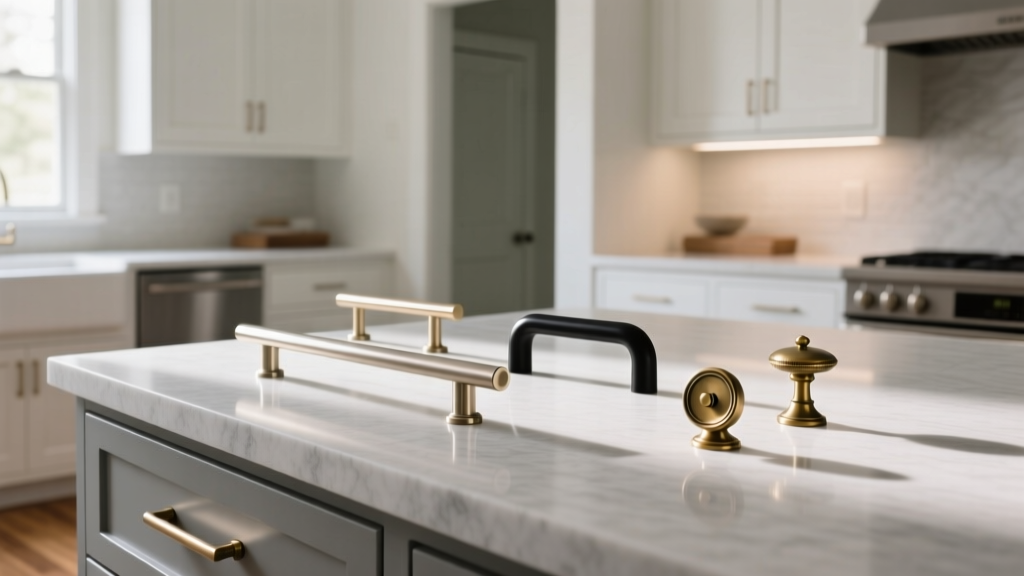
Kitchen Hardware and Pull Trends - The Decor Mag
Kitchen renovations often focus on the big-ticket elements—cabinets, countertops, appliances—yet it’s the hardware you touch dozens of times a day. Cabinet pulls and knobs shape how your kitchen feels in daily use, from how easily you open a heavy pantry door to whether your island reads modern, classic, or somewhere in between.
Hardware is also one of the most cost-effective ways to refresh a kitchen without a full remodel. Swap dated knobs for contemporary pulls, and cabinets can look newly installed. For homeowners planning a renovation, smart hardware choices protect your investment by improving ergonomics, durability, and resale appeal—while tying your cabinetry, lighting, faucet finishes, and overall kitchen design into a cohesive story.
This guide covers today’s most requested kitchen hardware trends, plus timeless rules that make any cabinet layout more functional. You’ll find size recommendations, material comparisons, cost ranges, and common mistakes to avoid—so your new hardware looks great and works even better.
What’s Trending in Kitchen Hardware (and Why It Works)
1) Mixed metals with a “primary + accent” plan
Mixing finishes is no longer considered a mismatch—it’s a strategy for depth. The most successful kitchens choose one dominant finish for consistency (usually on cabinet hardware) and a secondary finish for accent (often on lighting, faucet, or barstools).
- Popular pairings: brushed nickel + matte black, polished chrome + black, brass + nickel, brass + oil-rubbed bronze.
- Practical tip: keep undertones aligned—warm (brass/bronze) with warm woods; cool (chrome/nickel) with crisp whites and grays.
2) Warm metals: brushed brass, champagne bronze, and aged gold
Brass is trending because it adds warmth without feeling heavy. Homeowners are choosing brushed and satin versions that hide fingerprints better than polished brass.
- Best for: white cabinets, natural oak, greige paint colors, and transitional kitchens.
- Maintenance: clean with mild soap and water; avoid abrasive cleaners that can strip protective coatings.
3) Matte black that stays crisp
Matte black hardware remains a favorite in modern and farmhouse kitchens, especially on shaker cabinets. It creates strong contrast and photographs well—an underrated perk if resale is on your mind.
- Look for: powder-coated finishes for better durability.
- Maintenance: wipe with a damp microfiber cloth; avoid acidic cleaners that can dull the finish.
4) Slim profiles and “soft geometry”
Trends are leaning toward streamlined pulls with rounded edges—think slim bar pulls, softened rectangles, and gentle arches. This shift keeps modern kitchens from feeling too sharp while still looking current.
- Why it’s functional: rounded edges are more comfortable, especially on drawers used constantly (trash pull-outs, utensil drawers).
5) Statement hardware as jewelry
Instead of uniform hardware everywhere, homeowners are adding a focal point: oversized pulls on a pantry, distinctive knobs on a beverage center, or a different finish on the island. This “jewelry” approach works best when the rest of the kitchen is clean and cohesive.
Hardware Types: Knobs, Pulls, Cup Pulls, and Edge Pulls
Knobs
Knobs are budget-friendly and timeless. They work especially well on upper cabinets where doors are lighter and opened less aggressively.
- Best uses: uppers, small doors, built-in hutches, furniture-style islands.
- Design note: knobs read more traditional; choose a minimal knob to modernize a classic layout.
Bar pulls
Bar pulls are the go-to for modern kitchen design, and they’re also excellent for accessibility because you can grab them with a full hand.
- Best uses: drawers, pantry doors, base cabinets, heavy integrated panels.
- Comfort tip: choose a pull with enough clearance (projection) for fingers—typically 1 to 1-1/2 inches.
Cup pulls
Cup pulls bring vintage character and pair beautifully with shaker cabinetry. They’re especially popular for drawer banks and island storage.
- Best uses: drawers (particularly wider drawers), farmhouse and classic kitchens.
- Consideration: cup pulls can trap crumbs more than bar pulls—plan for occasional cleaning.
Edge pulls and integrated pulls
Edge pulls create a minimal, handle-less effect that suits contemporary kitchens. They also reduce visual clutter, which is ideal for small kitchens.
- Best uses: slab-front cabinets, ultra-modern designs, tight walkways where protruding pulls might catch clothing.
- Reality check: some edge pulls show fingerprints more easily, and installation must be precise.
Choosing the Right Size: Measurements That Make Cabinets Look Custom
Pull length guidelines
Scale is where many kitchens miss the mark. Undersized pulls can make new cabinetry look builder-grade, while properly scaled hardware makes doors and drawers feel intentional.
- Standard drawer sizes:
- 12–18 inch drawers: 5–6 inch pull (3" or 5" center-to-center)
- 18–24 inch drawers: 8–10 inch pull
- 24–30 inch drawers: 10–12 inch pull
- 30–36 inch drawers: 12–18 inch pull (or two pulls for symmetry)
- Pantry/tall doors: 12–18 inch pulls are common; go longer for a sleek, high-end look.
Simple rule that works: for drawers, choose a pull that’s roughly one-third the drawer width (or longer if you want a modern look).
Center-to-center (CTC) matters
When shopping online, the “size” can be confusing. The most important dimension is the center-to-center measurement—the distance between screw holes. If you’re replacing existing hardware, match the CTC to avoid drilling new holes.
Placement standards
- Drawer pulls: centered horizontally and vertically on the drawer face.
- Base cabinet doors: place pulls 2-1/2 to 3 inches from the bottom corner (on the stile side).
- Upper cabinet doors: place pulls 2-1/2 to 3 inches from the top corner (on the stile side).
Pro tip: create a drilling template or use a cabinet hardware jig to keep every pull aligned. Tiny inconsistencies show up immediately once hardware is installed across a full kitchen.
Material and Finish Comparisons (Durability, Feel, and Care)
Solid brass
- Pros: premium weight, long-lasting, develops character over time
- Cons: higher cost; some unlacquered brass will patina quickly
- Best for: high-end renovations, homeowners who appreciate a living finish
Stainless steel
- Pros: durable, corrosion-resistant, great for busy family kitchens
- Cons: can show fingerprints in polished finishes
- Best for: modern and professional-style kitchens
Zinc alloy (common in budget hardware)
- Pros: affordable, widely available styles
- Cons: lighter weight; finish quality varies
- Best for: rentals, quick refresh projects, low-cost upgrades
Powder-coated finishes
- Pros: excellent durability; ideal for matte black and colored hardware
- Cons: chips can show if struck hard
- Best for: high-traffic kitchens, households with kids
Unlacquered (“living”) finishes
- Pros: authentic patina that feels curated and unique
- Cons: can look uneven in early months; needs acceptance of change
- Best for: classic, European-inspired kitchen design
Design Approaches That Always Look Good
Approach 1: One hardware style throughout (clean and timeless)
Using the same pull on all drawers and doors is the easiest route to a cohesive kitchen. Choose a style that fits your cabinet door profile—sleek bars for slab doors, softer arches for shaker, and more decorative shapes for raised-panel cabinetry.
Approach 2: Pulls on drawers, knobs on doors (balanced and budget-smart)
This is a classic formula that saves money without feeling “value engineered.” Use a matching finish and similar design language (e.g., a simple knob that echoes the pull’s shape).
Approach 3: Different island hardware (designer look)
If your island is a different color, consider hardware that differs slightly—either in finish or shape. Keep at least one element consistent (finish or silhouette) so it looks intentional.
Approach 4: Oversized pulls for fewer visual breaks
Long pulls reduce the number of “stops” your eyes make across a cabinet run, creating a calmer, more high-end feel—especially in open-concept kitchens.
Cost Ranges and Budget Planning
Hardware pricing varies widely based on material, finish quality, and brand. Use these ranges to build your kitchen renovation budget.
- Budget: $2–$8 per knob; $4–$15 per pull (usually zinc alloy)
- Mid-range: $8–$20 per knob; $15–$40 per pull (better finishing, heavier feel)
- Premium: $20–$60+ per knob; $40–$150+ per pull (solid brass, designer lines, specialty finishes)
Typical total cost: A standard kitchen can use 40–80 pieces of hardware depending on the number of drawers and doors. That means totals often land around:
- $250–$800 for a budget refresh
- $800–$2,500 for a mid-range renovation
- $2,500–$8,000+ for premium, solid-brass or designer hardware
Where to spend more: prioritize heavy-use areas—trash pull-out, pantry doors, main drawer banks, and any extra-wide drawers that benefit from sturdier pulls.
Product and Layout Recommendations (Practical Picks That Perform)
High-function zones that benefit from specific hardware
- Trash and recycling pull-out: choose a sturdy bar pull with comfortable clearance; consider 8–12 inches to allow a strong grip.
- Pantry door: use a longer pull (12–18 inches) for easier access when hands are full.
- Appliance garage or pocket doors: consider low-profile pulls or edge pulls to avoid interference.
- Corner cabinets: avoid overly long pulls that can bump adjacent doors; a shorter pull or knob often works best.
Smart coordination with faucets and lighting
- If your faucet is statement-making (bold black or dramatic brass), keep cabinet hardware simpler in shape.
- If your lighting is minimal, a slightly more expressive pull can add personality without clutter.
- For stainless appliances, brushed nickel, chrome, and stainless hardware are the easiest matches; brass can work if echoed elsewhere (pendants, shelf brackets).
Maintenance advice for a long-lasting finish
- Clean monthly using warm water and a drop of dish soap.
- Dry immediately with a soft cloth to prevent water spots.
- Avoid bleach, ammonia, and abrasive powders that can dull or pit finishes.
- Check screws twice a year; tighten gently to prevent wobble and finish wear.
Common Mistakes to Avoid
- Choosing hardware before finalizing cabinet style: shaker, slab, and raised-panel doors each “want” different silhouettes.
- Going too small: underscaled pulls can make a new kitchen look dated instantly.
- Mixing too many finishes: two finishes usually feels curated; three often feels accidental unless the palette is tightly controlled.
- Ignoring clearance and comfort: a beautiful pull that’s hard to grip becomes a daily annoyance.
- Skipping a test run: order 2–3 sample pieces and mount them temporarily before committing.
- Inconsistent placement: uneven heights or drifting alignment is one of the fastest ways to make cabinetry look poorly installed.
FAQ: Kitchen Hardware and Pull Trends
Should cabinet hardware match the faucet?
Not necessarily. Matching can look clean, but mixing finishes is a current kitchen design trend. Aim for coordination: share undertones and repeat each finish at least twice (hardware + light, or faucet + pot filler, etc.).
What’s the best hardware for a small kitchen?
Long, slim pulls or low-profile designs help reduce visual clutter. If the kitchen is tight on space, consider edge pulls or shorter pulls to prevent snagging in narrow walkways.
Are knobs or pulls better for resale value?
Pulls tend to feel more updated and are easier for most people to use, especially on drawers. A mix—pulls on drawers, knobs on doors—appeals broadly and looks timeless.
How do I choose the right pull length for wide drawers?
Start with one-third of the drawer width and adjust for style. For a 30-inch drawer, a 10–12 inch pull looks balanced; for a more modern look, go longer (12–18 inches) if the drawer front allows it.
What’s the most durable finish for busy kitchens?
Brushed finishes hide fingerprints better than polished ones. Powder-coated matte black and quality brushed nickel are both strong performers. For premium durability, solid brass with a quality coating (or an unlacquered finish you’re willing to let patina) holds up well.
Can I replace hardware without drilling new holes?
Yes—match the center-to-center measurement of your existing pulls. If you’re switching from knobs to pulls (or changing sizes), you may need to drill new holes or use backplates to cover old ones.
Next Steps: Make Your Hardware Choice Feel Confident
Start by counting every door and drawer, then decide on a cohesive finish plan (one primary finish and an optional accent). Choose a comfortable, durable style for high-use zones, and test a few sample pieces on your actual cabinetry—under your kitchen lighting—before ordering everything.
If you’re planning a full kitchen renovation, bring your cabinet door sample and countertop selection when shopping for pulls. The right hardware will bridge the gap between materials and elevate your kitchen from “new” to truly finished.
For more kitchen design inspiration, renovation checklists, and organization ideas, explore the latest articles at thedecormag.com.
More Articles
 Kitchen Leathered Finish Granite Guide - The Decor Mag
 Best Essentials Inspiration: Building a Thoughtful, Functional, and Joyful Kitchen
 Kitchen Shaker Cabinet Timeless Appeal - The Decor Mag
 Best Kitchen Wine Storage Solutions - The Decor Mag
 Wall Trends 2026: Material Innovation, Adaptive Surfaces, and Human-Centered Design in Residential Kitchens
 Best Kitchen Pot Lid Organization - The Decor Mag
 How to Choose Kitchen Floor Tile Pattern - The Decor Mag
 Kitchen Leathered Quartzite Countertops - The Decor Mag
 How to Choose Kitchen Sink Configuration - The Decor Mag
 Kitchen Drawer Organization That Lasts (2026)