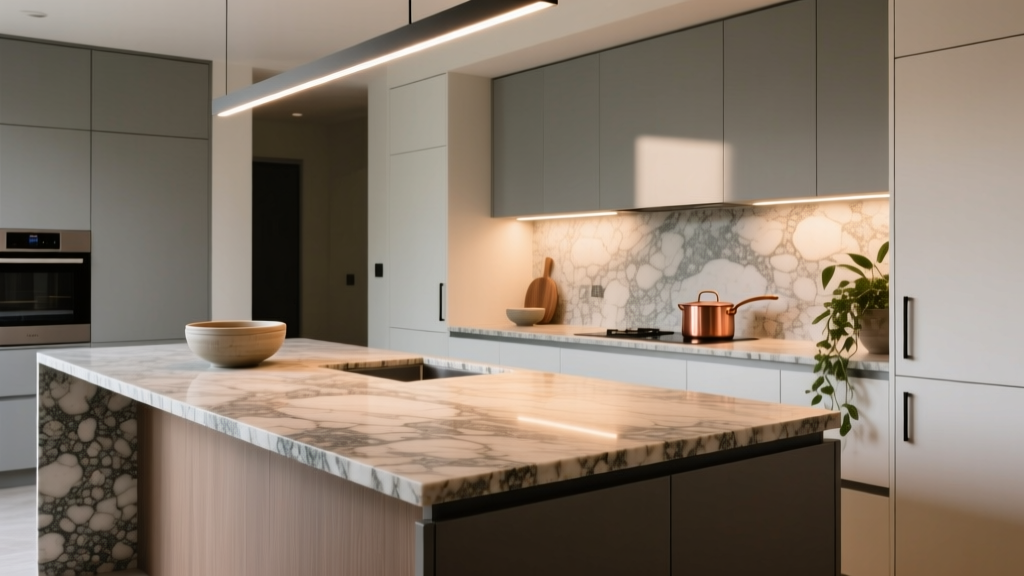
Kitchen Leathered Finish Granite Guide - The Decor Mag
A countertop does more than hold your cutting board and coffee maker—it sets the tone for your entire kitchen renovation. If you’re looking for a surface that feels elevated but still livable (especially in a busy household), leathered finish granite has become one of the most requested options in today’s kitchen design.
Homeowners love it because it bridges the gap between polished elegance and real-world practicality. A leathered finish offers a soft sheen, rich texture, and better day-to-day forgiveness than high-gloss surfaces. It also pairs beautifully with current kitchen trends—warm wood tones, mixed metals, organic textures—while staying grounded in timeless functionality.
This guide breaks down what leathered granite is, when it makes sense, what it costs, how it compares to other countertop materials, and how to design around it for a kitchen that looks great and works hard.
What Is Leathered Finish Granite?
Leathered granite (sometimes called “brushed” granite) starts as a slab that’s typically honed (matte) and then mechanically brushed with diamond-tipped brushes. This process pulls out the natural highs and lows in the stone’s mineral structure, creating a subtly textured surface with a low to medium sheen.
Leathered vs. Polished vs. Honed: Quick Comparison
- Polished granite: High-gloss, reflective, shows smudges and water spots more easily; color and veining appear most vibrant.
- Honed granite: Smooth matte, modern look; can show fingerprints and oils depending on the stone; may etch less noticeably but can look “chalky” if poorly sealed.
- Leathered granite: Soft sheen with texture; hides fingerprints and minor crumbs better; feels warm and tactile; pattern can look deeper and more dimensional than honed.
Why Homeowners Choose Leathered Granite
- Better at hiding daily mess: The texture breaks up smudges and streaks.
- More grip: Items like cutting boards and mixing bowls are less likely to slide.
- Natural, high-end look: It complements both modern and traditional kitchen design styles.
- Less “showroom shiny”: Great for homeowners who want a relaxed, curated kitchen instead of a glossy finish.
Best Leathered Granite Choices for Kitchens
Not every granite looks good leathered. Stones with movement, crystals, or pronounced mineral variation tend to shine—literally and visually—when brushed. Ask your fabricator to show the same color in polished and leathered finishes; the difference can be dramatic.
Popular Leathered Granite Colors and Looks
- Absolute Black (leathered): Sophisticated, velvety, and forgiving; pairs well with white oak cabinets and brass hardware.
- Steel Grey / Silver Grey: A versatile mid-tone for busy family kitchens; great with stainless appliances.
- Black Forest / Via Lactea / Cosmic Black: Bold movement for statement islands; looks striking with slab backsplashes.
- Colonial White / River White (select slabs): Softer, lighter kitchens; confirm texture doesn’t emphasize pits.
- Fantasy Brown (often a dolomitic marble, not true granite): Frequently leathered; beautiful, but treat it like a softer stone—ask about sealing and durability.
Pro Tip: Inspect the “Pitting” Before You Commit
Some granites naturally have tiny pits or fissures. Leathering can make these features more noticeable, which many people find charming—but it can also catch crumbs. In the slab yard, run your hand over the surface and look at it under strong lighting.
How Leathered Granite Performs in Real Kitchens
Durability and Heat Resistance
Granite is one of the most durable natural stones for kitchen countertops. Leathering doesn’t weaken the slab; it only changes the surface texture. You can place hot pans briefly, but using trivets is still recommended to prevent thermal shock and protect sealers.
Stain Resistance and Sealing
Leathered granite is not “maintenance-free.” It still needs sealing, and because the texture increases surface area, a good sealer matters.
- Typical sealing schedule: Every 1–3 years, depending on stone porosity and the sealer used.
- Quick water test: Place a few drops of water on the counter for 10 minutes. If it darkens, it’s time to reseal.
Cleaning and Daily Maintenance
For everyday kitchen organization and hygiene, keep cleaning simple and consistent.
- Daily: Warm water + a few drops of mild dish soap, microfiber cloth.
- Weekly: Stone-safe cleaner if desired (avoid harsh degreasers).
- Avoid: Vinegar, bleach, ammonia, abrasive powders, and scrubby pads that can degrade sealer over time.
Crumb tip: Use a soft-bristle brush or handheld vacuum for textured areas near the cooktop and behind small appliances—especially if you choose a heavily leathered slab.
Designing a Kitchen Around Leathered Granite
Leathered granite thrives when it’s part of a balanced material palette. The surface reads organic and substantial, so pair it with finishes that either warm it up or sharpen the contrast.
Cabinet Pairings (On-Trend and Timeless)
- White cabinets: Classic, bright, and resale-friendly; leathered black or grey granite adds depth without excessive shine.
- Warm wood tones (white oak, walnut): A top kitchen design trend; leathered granite reinforces the natural look.
- Painted color cabinets (greens, deep blues, taupes): Leathered surfaces keep the mood grounded and sophisticated.
- Two-tone kitchens: Use leathered granite on the island for contrast, and a lighter perimeter top if you want the island to feel like furniture.
Backsplash Ideas That Work Especially Well
- Full-height slab backsplash: Seamless, easy to clean, and very current; best for dramatic stones with movement.
- Handmade-look ceramic tile: Adds softness and texture that complements leathered granite.
- Simple subway tile (matte or satin): Timeless; lets the granite be the focal point.
- Quartz or porcelain backsplash: If you prefer fewer natural variations and easier wipe-down behind the range.
Edge Profiles and Thickness Recommendations
Leathered granite looks best when the edge detail matches the kitchen’s style and the stone’s movement.
- Most popular thickness: 3 cm (about 1 1/4") for a substantial, modern look with fewer seams.
- 2 cm (about 3/4"): Often requires plywood build-up; can work in certain budgets but confirm fabricator standards.
Recommended edges:
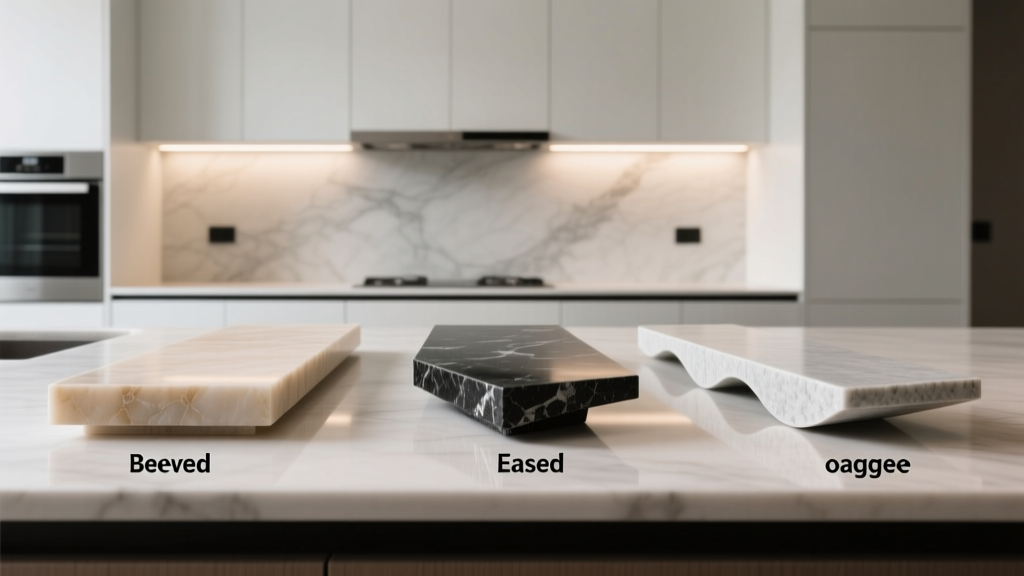
- Eased edge: Clean and modern; easiest to keep looking crisp.
- Half bullnose: Softens the look; good for family kitchens.
- Ogee or ornate profiles: Better for traditional kitchens; can feel busy with highly patterned stone.
Kitchen Layout Considerations (Practical Measurements)
Countertops perform best when the layout supports how you actually cook, clean, and store items. Use these planning benchmarks:
- Walkway clearance: 42" minimum for one cook; 48" ideal for two cooks in a working kitchen.
- Island overhang: 12" standard for seating; up to 15" with appropriate support brackets. Confirm with your fabricator for stone span limits.
- Work zones: Aim for 36"–48" of uninterrupted prep space near the sink or cooktop.
- Seams: Place seams away from sink cutouts when possible; ask for seam locations on the template drawing.
Leathered Granite vs. Quartz vs. Porcelain: Material Comparisons
When you’re budgeting a kitchen renovation, it helps to compare not just the look, but the long-term upkeep and performance.
Granite (Leathered)
- Pros: Natural uniqueness, excellent heat resistance, hides smudges, adds texture and depth.
- Cons: Needs sealing; texture can catch crumbs; color consistency varies by slab.
Quartz (Engineered Stone)
- Pros: Non-porous, low maintenance, consistent patterning, wide range of styles.
- Cons: Not as heat tolerant; can look more uniform; heavy veining styles can feel trend-driven.
Porcelain Slabs
- Pros: Very heat resistant, non-porous, thin options, modern look, good for waterfall edges and full-height backsplashes.
- Cons: Can chip on impact at edges; fewer fabricators specialize in it; pattern can repeat.
Design takeaway: If you want natural character with a relaxed, touchable finish, leathered granite is a sweet spot between statement-making and practical kitchen design.
Cost Ranges and Budget Considerations
Leathered finish granite pricing varies by stone rarity, slab thickness, location, and fabrication complexity. Leathering itself can add a modest premium compared to polished, but the bigger cost drivers are the stone selection and the number of cutouts.
Typical Installed Cost (U.S. Ranges)
- Entry-level leathered granite: $50–$80 per sq. ft. installed
- Mid-range options: $80–$120 per sq. ft. installed
- Premium/rare stones: $120–$200+ per sq. ft. installed
What Can Increase the Price
- Waterfall edges (often adds $50–$150+ per linear foot depending on stone and labor)
- Multiple seams due to layout or slab size
- Farmhouse or undermount sink cutouts and reinforced rails
- Cooktop cutouts and pop-up outlet holes
- Premium edge profiles
- Matching slab backsplash sections
Smart Ways to Stay on Budget
- Choose a simpler edge: An eased edge looks high-end and costs less than ornate profiles.
- Reduce seams through layout: A good kitchen layout can sometimes reduce slab waste.
- Use granite where it matters: Feature leathered granite on the island; consider a lower-cost surface on perimeter counters if you need to balance the budget.
- Ask about remnants: Great for beverage stations, laundry rooms, or small pantry counters.
Common Mistakes to Avoid
- Assuming leathered means “no sealing needed”: Many leathered granites still require regular sealing to prevent darkening and stains.
- Not viewing the exact slab: Online photos can’t capture the real movement, pits, or color shifts.
- Overcomplicating the design palette: If the stone has strong pattern movement, keep cabinet door style, hardware, and backsplash quieter.
- Poor lighting planning: Under-cabinet lighting is essential to show the texture and avoid shadowy prep zones. Aim for consistent LED strips (2700K–3000K for warm kitchens; 3000K–3500K for a crisper look).
- Ignoring daily workflow: A gorgeous countertop can’t fix a cramped aisle. Prioritize clearances and work zones before upgrading finishes.
- Using harsh cleaners: Acidic sprays can degrade sealer and dull the look over time.
Recommended Products and Design Approaches
Sealants and Cleaners (What to Look For)
- Penetrating/impregnating sealer: Designed for natural stone; helps reduce staining without creating a surface film.
- Stone-safe daily cleaner: pH-neutral, non-abrasive; especially helpful around the cooktop.
- Microfiber cloths: Better than paper towels for reducing streaking and catching fine grit.
Hardware and Fixture Pairings
- Faucets: Brushed nickel and stainless are timeless; brushed brass warms black or grey leathered granite; matte black looks sharp with light cabinets.
- Sinks: Undermount stainless is most practical; composite sinks pair well with textured stone for a cohesive look.
- Cabinet hardware: Pulls are more ergonomic than knobs for most base cabinets; use 5"–8" pulls for a modern look on drawers.
FAQ: Leathered Finish Granite in the Kitchen
Does leathered granite scratch more easily than polished granite?
No. The durability is primarily determined by the granite itself, not the finish. The leathered texture may hide minor wear better than a glossy polished surface.
Is leathered granite harder to clean?
It can be slightly more effort than polished if your stone has deeper texture or natural pitting. Most homeowners find it easy with a microfiber cloth and mild soap, plus an occasional soft brush near high-crumb areas.
Can leathered granite be used for a waterfall island?
Yes. Leathered granite looks stunning on waterfall edges, especially with dramatic veining. Confirm slab thickness (often 3 cm) and ask your fabricator about mitered edges and seam placement for the cleanest result.
Will leathered granite look darker than polished?
Sometimes. The brushing can change how light reflects, making some colors appear deeper and more textured. Always compare the same stone in different finishes under similar lighting.
How do I know if my granite needs resealing?
Use the 10-minute water test: if the stone darkens where water sits, it’s time to reseal. Also watch for areas near the sink that start to look blotchy or absorbent.
Is leathered granite a good choice for resale value?
Granite remains a strong selling point, and leathered finishes are widely appealing because they feel upscale yet practical. Choose versatile colors (black, grey, soft white tones) for the broadest buyer appeal.
Next Steps: How to Choose the Right Leathered Granite for Your Kitchen
- Collect inspiration photos that show cabinet color, backsplash style, and lighting similar to your home.
- Visit a slab yard and view full slabs in person—bring cabinet, flooring, and paint samples.
- Ask for a maintenance plan from your fabricator: sealer type, sealing frequency, and approved cleaners.
- Confirm layout details during templating: seam locations, overhang support, sink reveal style, and edge profile.
- Plan lighting (under-cabinet + overhead) to highlight the leathered texture and improve everyday functionality.
Leathered finish granite is a smart way to add texture, warmth, and durability to a kitchen renovation—without sacrificing a polished, designer look. For more countertop ideas, kitchen organization tips, and renovation planning guides, explore the latest inspiration on thedecormag.com.
More Articles
 Kitchen Countertop Edge Profiles: Best Choices (2026)
 How to Design a Kitchen That Feels Collected - The Decor Mag
 Best Kitchen Appliance Cord Management - The Decor Mag
 Best Kitchen Lighting for Function & Style (2026)
 Best Kitchen Dish Drying Rack Solutions - The Decor Mag
 Cheap vs Premium Bedroom: What You’re Really Paying For — A Kitchens Kitchen Specialist’s Analysis
 Create Care and Maintenance: A Practical, Brand-Specific Guide for Modern Kitchens
 World Kitchens Essentials: Core Tools, Ingredients, and Techniques Across Seven Global Cuisines
 Best Kitchen Trash Can Hideaway Solutions - The Decor Mag
 Best Kitchen Wrap Storage Solutions - The Decor Mag