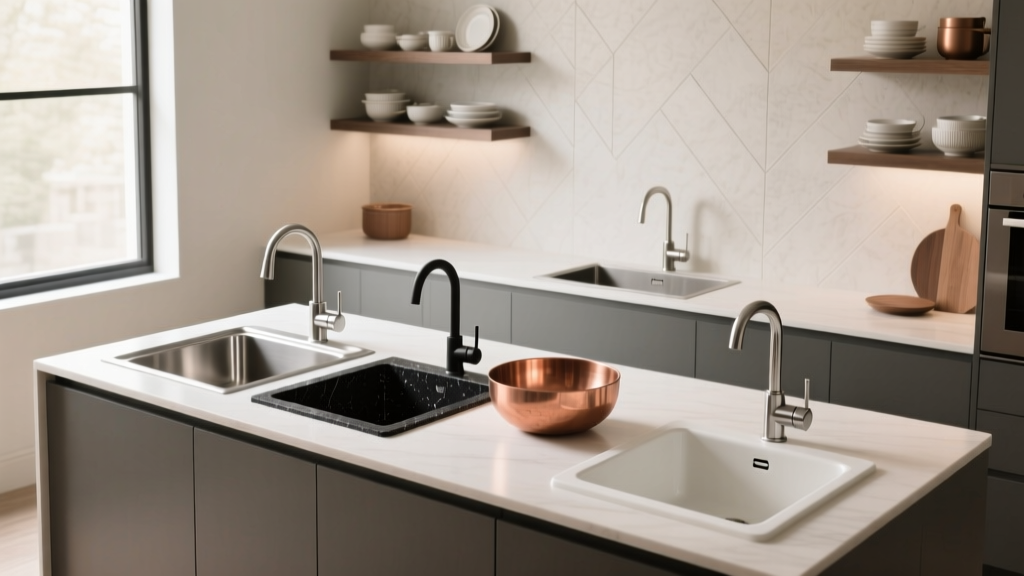
Kitchen Sink Styles and Materials Compared - The Decor Mag
The kitchen sink does more daily work than almost any other fixture in your home. It’s where produce gets rinsed, pasta water drains, hands get washed mid-cooking, and oversized sheet pans land after dinner. Yet during a kitchen renovation, many homeowners choose a sink based on looks alone—only to realize later that the depth is wrong, the corners are hard to clean, or the finish shows every water spot.
A well-chosen sink improves kitchen workflow, supports organization, and elevates the overall design. Whether you’re planning a full kitchen remodel or upgrading a few high-impact items, understanding sink styles and materials helps you make a decision that fits your layout, cooking habits, and budget—without sacrificing long-term durability.
Below, you’ll find a practical comparison of today’s most popular kitchen sink styles and materials, plus sizing tips, cost ranges, maintenance guidance, and common mistakes to avoid.
Start Here: How to Choose the Right Kitchen Sink
Before comparing styles, take five minutes to evaluate how you use your kitchen. These factors will steer you toward the best sink type and material.
Key questions to guide your choice
- How do you wash dishes? Dishwasher-heavy homes can prioritize a large single bowl; hand-washers often prefer a double bowl or a workstation setup.
- What’s your cabinet size? The sink must fit the base cabinet and leave room for mounting hardware, plumbing, and accessories.
- Do you cook with large cookware? Stock pots, roasting pans, and baking sheets need width and depth (and a low divider if you go double bowl).
- What’s your countertop material? Some sinks (like farmhouse/apron-front) add load and require cabinet modifications; undermount sinks pair best with solid surfaces like quartz or granite.
- How much maintenance do you tolerate? Stainless steel is forgiving; fireclay and matte finishes look stunning but may require gentler cleaning habits.
Quick measurement guide (practical numbers that matter)
- Standard base cabinet sizes: 30", 33", 36" (a 36" cabinet offers the most flexibility).
- Common sink widths: 25"–33" for most kitchens; 30" is a popular “sweet spot.”
- Typical sink depth: 8"–10". Deeper sinks hide dishes but may be less ergonomic for shorter users.
- Minimum cabinet size rule: Choose a sink that’s 2"–3" narrower than the sink base cabinet (check manufacturer specs for exact requirements).
- Faucet reach: Aim for a spout that lands water near the drain, not against the back wall, to reduce splashing.
Kitchen Sink Installation Styles Compared
Sink “style” often refers to how it mounts to the countertop and cabinet. Your choice impacts cleaning, visual design, and renovation complexity.
Undermount sinks
Best for: Quartz, granite, solid surface countertops; modern and transitional kitchens.
- Pros:
- Clean, seamless look; crumbs wipe directly into the sink.
- Maximizes counter edge visibility (great for stone patterns).
- Easy to pair with accessories like sliding boards and colanders.
- Cons:
- Requires professional installation and proper support.
- Water can collect along the underside lip if not sealed well.
- Typical cost range: $250–$1,200 for the sink (installation varies by countertop fabricator).
Drop-in (top-mount) sinks
Best for: Budget-friendly upgrades, laminate countertops, rental-friendly renovations.
- Pros:
- Often the most affordable option.
- Easier DIY swap if the cutout matches.
- Works well with laminate where undermount isn’t ideal.
- Cons:
- Rim collects grime; harder to wipe counters clean.
- More visually “busy” than undermount styles.
- Typical cost range: $120–$700.
Farmhouse (apron-front) sinks
Best for: Timeless kitchens, modern farmhouse, transitional spaces, statement-making focal points.
- Pros:
- Ergonomic: the front apron reduces leaning over the counter.
- High design impact; looks custom.
- Often roomy enough for oversized cookware.
- Cons:
- Cabinet modifications commonly required.
- Heavier materials (fireclay/cast iron) may need extra support.
- Apron can show wear depending on finish and cleaning habits.
- Typical cost range: $400–$2,000+ (plus possible cabinet carpentry costs).
Integrated (countertop-built) sinks
Best for: Seamless contemporary design, ultra-easy wipe-down, minimalist kitchens.
- Pros:
- No seams around the sink perimeter to collect residue.
- Extremely clean, modern appearance.
- Cons:
- Most common with solid surface or certain stone fabrication methods.
- Repairs can be more specialized depending on the material.
- Typical cost range: Often bundled with countertop pricing; expect $800–$2,500+ depending on material and fabrication.
Bowl Configurations: Single vs Double vs Workstation
Single-bowl sinks
Best for: Busy cooks, large cookware, small kitchens needing maximum usable space.
- Recommended size: 28"–33" wide, 9"–10" deep (balance capacity with ergonomics).
- Why it works: One uninterrupted basin fits sheet pans and stock pots with less angling.
Double-bowl sinks (equal or offset)
Best for: Households that hand-wash frequently, or like separating prep from cleanup.
- Look for: A low divider (typically 50/50 or 60/40) to allow larger items.
- Recommended size: 30"–36" wide for comfortable basin sizes.
- Tradeoff: Each bowl is smaller, so large pans can be awkward.
Workstation sinks (trend-forward, highly functional)
Best for: Kitchen organization, meal prep efficiency, entertaining.
- What makes it different: Built-in ledges support sliding accessories—cutting boards, drying racks, colanders.
- Why it’s trending: Combines sink + prep zone, especially popular in modern kitchens and space-smart renovations.
- Budget range: $500–$2,500 depending on material and accessory set.
Kitchen Sink Materials Compared
Material influences durability, noise, maintenance, and how the sink looks next to countertops and cabinet finishes. Here’s how the most common options compare.
Stainless steel (most popular for a reason)
- Best for: Most kitchens; modern, transitional, and even classic designs.
- Durability: Excellent; resists chips and heat.
- Noise: Varies—choose models with sound-deadening pads and undercoating.
- Maintenance: Easy; shows water spots depending on finish and water hardness.
- What to buy: 16-gauge (premium) or 18-gauge (good). 20-gauge is thinner and can feel “tinny.”
- Cost range: $150–$1,200.
- Design tip: Brushed or satin finishes hide scratches better than mirror-polished steel.
Fireclay (timeless, elevated farmhouse look)
- Best for: Farmhouse and transitional kitchens; statement sinks.
- Durability: Very strong surface; can chip if a heavy pan hits an edge.
- Maintenance: Use non-abrasive cleaners; avoid harsh scouring powders that dull the glaze.
- Cost range: $600–$2,000+.
- Design tip: Pairs beautifully with quartz counters and unlacquered brass or matte black fixtures for current trend appeal.
Cast iron with enamel (classic and substantial)
- Best for: Traditional kitchens, vintage-inspired renovations, homeowners who want a sink that feels “built-in.”
- Durability: Excellent, but enamel can chip with impact; very heavy.
- Maintenance: Gentle cleaners; avoid metal scouring pads.
- Cost range: $400–$1,500.
- Installation note: Confirm cabinet support—weight is a real factor.
Granite or quartz composite (quiet, matte, design-forward)
- Best for: Contemporary kitchens, neutral palettes, homeowners wanting scratch resistance and sound absorption.
- Durability: Highly resistant to scratches and chips; can be vulnerable to extreme thermal shock (don’t dump boiling water into an ice-cold sink).
- Maintenance: Generally easy; lighter colors may show stains if spills sit too long.
- Cost range: $300–$1,200.
- Trend note: Matte black and warm gray composite sinks are popular in modern kitchen design, especially with slab-front cabinetry.
Copper (warm, artisanal, patina-loving)
- Best for: Statement kitchens, rustic or eclectic spaces; homeowners who like evolving finishes.
- Durability: Strong; develops patina and may show spots—often part of the appeal.
- Maintenance: Avoid harsh chemicals; decide if you want to preserve shine (waxing) or let it patina naturally.
- Cost range: $800–$2,500+.
- Design tip: Copper pairs well with natural wood tones and creamy stone counters for a high-end, layered look.
Natural stone (marble, soapstone) and concrete (boutique options)
- Best for: Custom, design-led renovations.
- Durability: Varies; marble can etch and stain, soapstone is more forgiving; concrete can crack if not properly reinforced.
- Maintenance: Often requires sealing and careful cleaning.
- Cost range: $1,000–$4,000+.
- Recommendation: Choose these materials only if you’re comfortable with patina and upkeep—or if your fabricator specializes in them.
Design Recommendations by Kitchen Layout
Small kitchens and galley layouts
- Choose a single-bowl undermount around 25"–28" wide to maximize usable basin space.
- Consider a workstation sink to add prep functions without adding a separate island.
- Pair with a pull-down faucet and a compact disposal air switch to keep the counter uncluttered.
L-shaped kitchens
- Place the sink near the main prep zone (typically between fridge and cooktop).
- A 30"–33" single bowl suits most families.
- If you entertain, consider an offset double bowl so one side stays available for rinsing while the other holds dishes.
Islands and open-concept kitchens
- A quiet material (composite or well-insulated stainless) helps reduce noise in open spaces.
- Choose a sink with a clean rear drain and consider an accessory cover (cutting board) to keep the island looking tidy.
- For heavy cooking households, add a secondary prep sink (15"–18") in the island and keep the main cleanup sink on the perimeter.
Budget and Cost Ranges (Sink + Real-World Add-Ons)
Sink pricing can be deceptively simple. The basin is only part of the budget—installation details add up quickly during a kitchen renovation.
- Budget-friendly refresh ($200–$600): Drop-in stainless sink + basic faucet swap. Best when the existing cutout is reused.
- Mid-range renovation ($600–$1,800): Undermount stainless or composite sink + upgraded pull-down faucet + accessories (grid, strainer, soap dispenser).
- Premium upgrade ($1,800–$4,000+): Fireclay or cast iron farmhouse sink + cabinet modification + premium faucet/filtration + custom accessories.
Common add-on costs to plan for:
- Sink grid: $30–$120 (protects the bottom from scratches).
- Upgraded drain/strainer: $20–$80.
- Garbage disposal: $120–$350 (plus installation).
- Water filtration faucet: $150–$600.
- Plumbing adjustments: Varies; relocating the drain line or adding an air gap can increase labor.
Maintenance Tips That Keep a Sink Looking New
- Rinse and wipe daily: A quick wipe with a microfiber cloth prevents mineral buildup and dulling.
- Use a bottom grid: Especially helpful for stainless and fireclay to reduce scratches and impact chips.
- Avoid harsh abrasives: They can permanently haze enamel, fireclay glaze, and some composite finishes.
- Mind thermal shock: Don’t pour boiling water into a sink packed with ice or cold water—particularly with composite and natural stone.
- Remove rust sources: Cast iron pans left wet can create surface staining on some materials (even if the sink itself doesn’t rust).
Common Kitchen Sink Mistakes to Avoid
- Choosing the sink after the countertop template is done: The sink should be selected early so cutouts, support, and faucet holes are planned correctly.
- Going too deep without considering ergonomics: A 10" deep sink is great for hiding dishes, but it can strain backs for shorter users—especially if paired with a thick countertop.
- Ignoring cabinet size and sink mounting requirements: Farmhouse sinks often need a custom base cabinet or modifications; undermount sinks need proper rails/support.
- Picking a finish that fights your water quality: Hard water can make polished stainless and glossy finishes look spotty. Matte composites and brushed steel are more forgiving.
- Forgetting accessories and workflow: A sink is a system. A grid, angled drain, accessory ledges, and a high-quality strainer make daily use noticeably smoother.
FAQ: Kitchen Sink Styles and Materials
What’s the most durable kitchen sink material for everyday use?
High-quality stainless steel (16–18 gauge) is one of the most durable and repair-tolerant options. It won’t chip like enamel and handles heat well. For a quieter sink with excellent scratch resistance, granite/quartz composite is also a strong contender.
Is an undermount sink worth it for a kitchen remodel?
If you’re installing quartz, granite, or solid surface countertops, an undermount sink is usually worth the upgrade. It’s easier to wipe crumbs into the basin and gives your counters a cleaner, more modern look—an advantage for both daily living and resale appeal.
What sink size works best for a 33-inch sink base cabinet?
Many homeowners choose a 30"–32" sink for a 33" cabinet, but the right size depends on the sink model and mounting method. Check the manufacturer’s “minimum cabinet size” spec and leave room for clips, rails, and plumbing.
Do farmhouse sinks scratch or chip easily?
Farmhouse is a style; durability depends on material. Fireclay and enamel cast iron are very tough, but they can chip if a heavy pan hits the edge. Using a sink grid and avoiding impact at the apron lip helps prevent damage.
Are workstation sinks just a trend, or are they practical?
They’re practical—especially in kitchens where counter space is limited. The built-in ledge system supports cutting boards and drying racks, improving kitchen organization and prep efficiency. Choose a workstation sink if you’ll actually use the accessories weekly, not just occasionally.
How do I keep stainless steel sinks from looking spotted?
Rinse after use and wipe dry with a microfiber cloth. For deeper cleaning, use a stainless-friendly cleaner and rub with the grain. If your home has hard water, consider a filtered faucet or water softening strategy to reduce mineral spotting.
Next Steps: Choose a Sink That Supports Your Daily Routine
To narrow your options quickly, start with your cabinet size, choose an installation style that fits your countertop, then decide on a bowl configuration based on how you cook and clean. From there, pick a material that matches your maintenance comfort level—and invest in the small upgrades (like a grid and a well-designed strainer) that make a sink feel premium every day.
If you’re planning a kitchen renovation, take these action steps:
- Measure your sink base cabinet and note plumbing constraints.
- Decide: single bowl, low-divide double, or workstation based on your workflow.
- Choose a material aligned with your cleaning habits and design style.
- Finalize sink and faucet selections before countertop templating.
For more kitchen design ideas, renovation planning guides, and smart organization upgrades, explore the latest on thedecormag.com.
More Articles
 Science for Beginners: Clear, Kitchen-Tested Principles You Can Use Today
 Kitchen to Outdoor Flow Design (2026)
 How to Repair Sustainably: Practical Strategies for Extending the Life of Kitchen Appliances, Cookware, and Fixtures
 Best Kitchen Canister Set Displays - The Decor Mag
 The Practical Kitchens Kitchen Design & Buying Guide: Space, Function, and Real-World Value
 Best Kitchen Small Appliance Storage - The Decor Mag
 Kitchen Fluted Detail Cabinet Trend - The Decor Mag
 Kitchen Warm Wood Cabinet Comeback - The Decor Mag
 Kitchen Statement Range as Focal Point - The Decor Mag
 Best Kitchen Mug Display Ideas - The Decor Mag