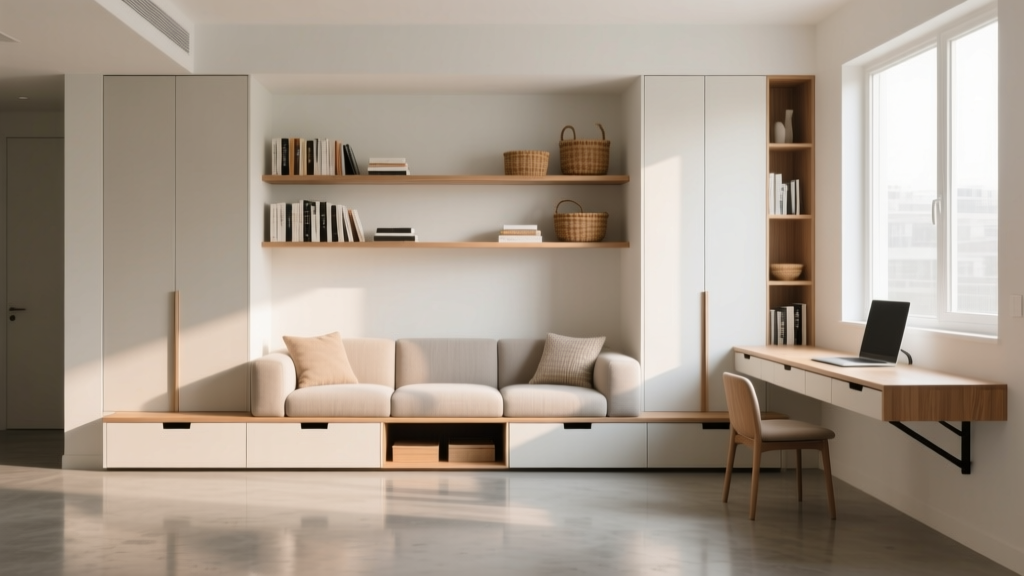
Small Living Room Storage Solutions - The Decor Mag
A small living room can feel like the busiest intersection in your home: it’s where you relax, host, work, play, and (somehow) store everything that doesn’t have a better address. When storage is limited, clutter piles up fast—making the space feel tighter, darker, and harder to enjoy. The good news is you don’t need a bigger living room to make it feel more spacious. You need smarter storage.
This guide breaks down practical, design-forward small living room storage solutions that work for both homeowners and renters. You’ll learn how to identify your “clutter zones,” choose the right furniture (with real measurements), use vertical space without making the room feel heavy, and blend storage seamlessly into your living room decor. Expect step-by-step tips, budget ranges, and real-world scenarios you can adapt to your space.
Start With a Quick Storage Plan: What Are You Actually Storing?
Before buying baskets or another “cute” shelf, take 15 minutes to define what needs to live in your living room. Small spaces thrive on intention.
Step-by-step: A 3-zone approach
- Daily use (remotes, chargers, throw blankets): store within arm’s reach of seating.
- Weekly use (board games, candles, extra coasters): store in closed storage within the room.
- Occasional use (seasonal decor, extra pillows): store higher up or in an adjacent closet.
Now identify your top clutter hotspots. In most small living rooms, they’re usually:
- The coffee table surface
- The “drop zone” by the entry
- The media area (cords, devices, controllers)
- The sofa (blankets, pillows migrating daily)
Use Vertical Space Like a Designer (Without Overcrowding)
When floor space is limited, walls become your best friend. Vertical storage solutions also draw the eye upward, which visually expands a small living room.
Floating shelves that don’t look cluttered
Floating shelves are a classic small living room idea, but scale and spacing matter.
- Depth: 8–10 inches is ideal for books, small bins, and decor without jutting out.
- Spacing between shelves: 12–15 inches for a balanced look.
- Placement: Keep the lowest shelf at least 16–20 inches above a sofa back to avoid a cramped feeling.
Material recommendations: oak veneer (warm and durable), painted MDF (budget-friendly), or powder-coated metal brackets (sleek, modern). Matte finishes hide fingerprints better than glossy ones.
Wall-mounted cabinets for hidden storage
If you want a clean, minimalist living room, consider a shallow wall-mounted cabinet. Look for 10–14 inch depth so it stores plenty while keeping the room airy.
Budget range: $80–$250 for flat-pack options; $300–$900 for higher-end pieces with soft-close doors.
Pegboards and rail systems (a trend that’s sticking)
Modular wall systems—think pegboards, rails with hooks, and adjustable shelves—are trending because they’re flexible and renter-friendly (many can be installed with minimal holes). They’re great for small living rooms that double as workspaces.
- Use hooks for headphones, tote bags, or dog leashes.
- Add small shelves for mail, keys, and candles.
- Choose wood tones or soft neutrals to keep it decor-forward.
Multifunctional Furniture: The Storage MVPs
The best small living room furniture does at least two jobs: comfort + storage, style + function. These pieces reduce visual clutter because they replace multiple items with one intentional anchor.
Storage ottomans and lift-top coffee tables
For most living rooms, this is the single easiest upgrade.
- Ottoman storage: Ideal for throws, kids’ toys, and extra pillows.
- Lift-top coffee table: Great for laptops, dining on the sofa, and hiding daily clutter fast.
Measurements that work:
- Leave 14–18 inches between sofa and table/ottoman for comfortable movement.
- Coffee table height should be within 1–2 inches of your sofa seat height.
Material tip: Upholstered ottomans in performance fabric (or faux leather) handle wear better in high-traffic rentals and family homes.
Budget range: $90–$250 for ottomans; $150–$600 for lift-top tables depending on hardware quality.
Storage benches under windows (or behind the sofa)
If you have a window wall, a storage bench can add seating and hidden storage without taking up the prime “center” of the room. In narrow spaces, a slim bench behind a floating sofa can also define zones in an open-plan layout.
Recommended sizing:
- Bench depth: 14–18 inches for a low-profile footprint.
- Bench height: 17–19 inches for comfortable seating.
Sofas with storage (when it’s worth it)
Some sectional sofas include lift-up storage or pull-out drawers. They’re especially useful if you have no closet nearby. Choose models with sturdy hardware and ventilated compartments if you’ll store textiles.
Budget range: $900–$2,500 for reliable quality; under $800 often means flimsy mechanisms.
Small Living Room Shelving and Built-ins: Big Impact, Smart Footprint
Built-ins are a classic designer move, but you can mimic the look on almost any budget using modular shelving.
Go tall and slim with bookcases
Tall, narrow bookcases store more while using less floor space. A good target is 70–84 inches tall and 10–14 inches deep. Anchor them to the wall for safety (especially with kids or pets).
Style tip: For a curated look, mix:
- 60–70% books or closed bins
- 20–30% decor (vases, framed prints)
- 10% negative space (empty shelf segments)
Modular wall units around the TV
Media clutter is one of the biggest challenges in living room organization. A modular wall unit gives you closed storage for devices and open shelves for styling.
- Choose a console with cord cutouts and ventilation.
- Use lidded boxes for controllers and adapters.
- Add LED bias lighting behind the TV to soften the look and reduce screen glare.
Budget range: $200–$700 for modular flat-pack systems; $900–$3,000 for custom cabinetry.
Hidden Storage Ideas You Might Be Overlooking
Some of the best small space storage solutions are the ones you don’t immediately see.
Under-sofa and under-chair storage
- Use low-profile bins (look for 6–8 inch height clearance).
- Store off-season throws, spare cables, or kids’ art supplies.
- Choose felt-bottom bins to protect floors and slide quietly.
Behind-the-sofa console or slim shelf
If your sofa floats away from the wall, a behind-the-sofa console (as narrow as 6–10 inches deep) can hold lamps, books, and baskets. It instantly creates order and a more “finished” look.
Door-mounted organizers (renter-friendly win)
If your living room has a closet, over-the-door organizers can store:
- Board games and puzzles
- Craft supplies
- Tech accessories and charging cords
Look for fabric pocket organizers with reinforced stitching if you’re storing heavier items.
Real-World Storage Scenarios (And What Actually Works)
Scenario 1: The renter with a 10' x 12' living room and zero closet space
Goals: Hide daily clutter, create a media zone, add storage without drilling too much.
- Add a lift-top coffee table for remotes, chargers, and paperwork.
- Use two tall bookcases (10–12 inches deep) on one wall to create a “library” feel.
- Place lidded baskets on lower shelves for items you don’t want visible.
- Install two floating shelves above the desk or sofa using appropriate anchors (or opt for a leaning shelf if drilling is limited).
Estimated budget: $250–$900 depending on furniture quality and whether pieces are new or secondhand.
Scenario 2: A small family living room with toys everywhere
Goals: Keep the room adult-friendly while making cleanup fast.
- Swap side tables for storage cubes with drawers or doors.
- Create a “toy parking zone” using two large baskets (18–22 inches wide) in a corner.
- Choose a storage ottoman as the main coffee table alternative to remove sharp edges.
- Use labels on bins (inside cabinets if you prefer a cleaner look).
Estimated budget: $150–$600.
Scenario 3: The minimalist who hates visual clutter
Goals: Calm, airy, curated small living room decor with hidden storage.
- Pick a closed media console with doors (not open shelving).
- Use one statement cabinet (shallow, wall-mounted if possible) instead of multiple small pieces.
- Limit open shelves to one vignette wall and keep items tonal (warm woods, soft whites, muted stoneware).
Estimated budget: $400–$1,800.
Styling Storage So Your Living Room Still Feels Like a Living Room
Storage should support your living room design, not dominate it. A few styling principles keep function looking intentional.
- Match finishes to your palette: If your room is warm (oak, beige, brass), choose baskets in natural fibers. For cool palettes (gray, black, chrome), try felt bins or matte metal.
- Use repetition: Three identical baskets look calmer than three random containers.
- Balance open and closed storage: Too much open shelving reads cluttered; too much closed storage can feel heavy. Aim for a mix.
- Try the “one-surface rule”: Keep one surface (coffee table or console) mostly clear—just a tray, a book stack, and a candle or small vase.
Common Mistakes to Avoid in Small Living Room Storage
- Choosing furniture that’s too deep: A 20-inch-deep bookcase can eat a small room. Stick closer to 10–14 inches for most storage pieces.
- Overusing open shelves: Open storage requires constant styling. If you’re busy, prioritize doors and drawers.
- Ignoring cord management: Visible wires instantly add visual noise. Use cord clips, cable sleeves, and consoles with cutouts.
- Buying storage without decluttering first: More bins won’t fix too much stuff. Edit first, then contain.
- Blocking walkways: Keep main pathways at least 30–36 inches wide when possible (even 28 inches can work in tighter apartments if kept consistent).
FAQ: Small Living Room Storage Solutions
What’s the best storage furniture for a very small living room?
Start with a storage ottoman or lift-top coffee table because it replaces an existing piece while adding hidden storage. Then add vertical storage like a tall, slim bookcase (10–14 inches deep).
How do I add storage to a living room without making it look crowded?
Prioritize closed storage (doors/drawers), choose pieces with legs to show some floor, and keep bulky items off the ground. Matching baskets and a limited color palette also make storage look calmer.
Are floating shelves safe for heavy items?
They can be, but only if installed into studs or with the correct wall anchors. For heavy books, use shelves with sturdy brackets or a bookcase instead. Keep shelf depth around 8–10 inches for a lighter visual footprint.
What’s a renter-friendly way to add more storage?
Try leaning shelves, over-the-door organizers, modular pegboards with minimal hardware, and storage furniture (ottomans, benches). Use removable hooks for lightweight items and avoid adhesive solutions for anything heavy.
How do I organize a small living room with kids’ toys?
Use large, easy-to-grab baskets for quick cleanup, store “messy” categories (like building sets) in lidded bins, and keep a consistent drop zone. A storage ottoman doubles as a soft, safe coffee table alternative.
What storage solutions work best for small living rooms with a TV?
A closed media console with cord management is the foundation. Add labeled boxes inside for devices and accessories, and consider a modular wall unit if you need extra shelves for books and decor.
Next Steps: A Simple Weekend Game Plan
If you want results fast, tackle your small living room storage in this order:
- Declutter one category (papers, cords, or toys) so you’re not organizing excess.
- Choose one “hero” storage piece (storage ottoman, lift-top coffee table, or closed media console).
- Add vertical storage (floating shelves or a tall, slim bookcase) to get items off the floor.
- Contain the small stuff with matching baskets, bins, and a tray for the coffee table.
- Finish with styling: one lamp, one plant, and one curated stack of books instantly makes storage look intentional.
Small living rooms can be organized, beautiful, and easy to live in—with the right storage doing the heavy lifting behind the scenes. For more small living room ideas, living room decor trends, and layout inspiration, explore the latest guides on thedecormag.com.
More Articles
 Luxury Living Room Design Trends - The Decor Mag
 Open Concept Living Room Furniture Arrangement
 Living Room Earthy Organic Modern - The Decor Mag
 How to Mix Patterns in Living Room Decor - The Decor Mag
 Living Room TV Stand Styling Tips - The Decor Mag
 Best Swivel Chair Options for Living Rooms - The Decor Mag
 Best Slipcover Sofa Picks - The Decor Mag
 Best Coffee Table Books for Styling - The Decor Mag
 How to Choose the Right Sofa Depth - The Decor Mag
 How to Style a Living Room with a Large Rug - The Decor Mag